
The global drinking water market is becoming more diverse, competitive, and carefully regulated. Buyers now compare source, treatment, mineral content, packaging, shelf life, and delivery reliability. This guide examines the top types of drinking water expected to attract global buyers in 2026. It covers spring water, mineral water, purified water, sparkling water, alkaline water, and functional options.
Each category serves a different need. Spring water may appeal to buyers seeking a natural source and a clear origin story. Mineral water offers measurable mineral content, but its taste can vary greatly. Purified water provides consistency and flexible treatment control. Sparkling water adds convenience for restaurants, hotels, and retail channels. Alkaline and enhanced waters may attract health-conscious consumers, although their benefits should not be overstated without strong evidence.
Drink Water should be safe, traceable, and suitable for its intended market. Buyers should review laboratory reports, source protection records, treatment details, and recognized certifications. Packaging materials also matter, especially where heat, long transport routes, or recycling limits affect product quality. Local requirements may differ, so one specification cannot fit every country.
There is no perfect category. A low-mineral product may suit infant-focused markets, while a mineral-rich product may better fit premium hospitality. Taste testing remains useful. Numbers alone miss consumer preference. This overview uses practical procurement considerations and public health principles, but every buyer should verify current standards, supplier performance, and product claims before making a contract decision.
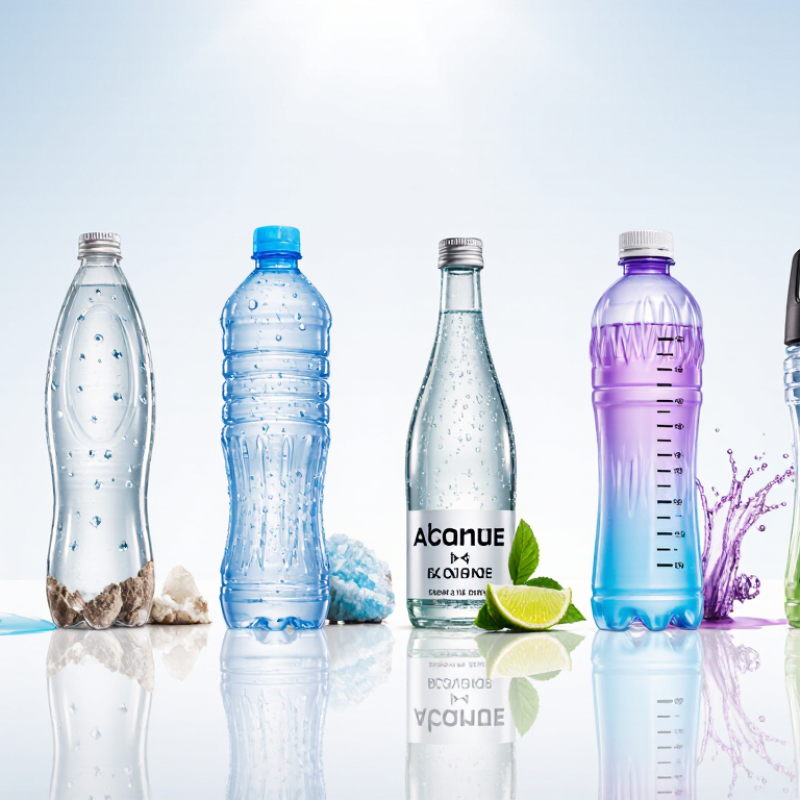
Drinking water types differ by source, treatment, mineral content, and carbonation. Municipal water usually comes from surface or groundwater sources. Treatment may include filtration, disinfection, and mineral adjustment. It is often the most practical choice for everyday supply, but local quality can vary.
The WHO and UNICEF Joint Monitoring Programme reported that 2.2 billion people lacked safely managed drinking water services in 2022.
Spring water comes from an underground source and should reach the surface naturally. Mineral water contains naturally occurring minerals, such as calcium and magnesium, within regulated limits. Purified water receives treatment that removes impurities, while distilled water uses evaporation and condensation. Sparkling water contains added or natural carbon dioxide. Its sharp mouthfeel is easy to recognize. However, carbonation does not automatically indicate higher quality.
Global buyers should examine laboratory results, source protection, treatment records, and packaging conditions. The Codex Alimentarius standard for bottled and packaged drinking waters provides useful international reference points. The WHO Guidelines for Drinking-water Quality also stress microbial safety and chemical risk control. Labels still need careful reading. “Natural” can describe origin, not complete safety.
A 2023 United Nations University report noted the growing global dependence on bottled water, yet access, waste, and affordability remain concerns. I would not judge water by taste alone. Mineral balance, transport temperature, and storage time can quietly change the buying decision.
Natural, Purified, Mineral, Spring, and Alkaline Water: A 2026 Buyer’s Guide
Global buyers are comparing water types more carefully as supply risks and consumer expectations increase. The WHO and UNICEF Joint Monitoring Programme reported that 2.2 billion people lacked safely managed drinking water in 2022. That gap matters. For importers, safety verification should come before packaging, taste, or marketing claims.
Natural water can retain its original mineral profile, but its source requires continuous microbiological monitoring. Spring water is collected from an underground source, although “spring” does not automatically mean superior quality. Mineral water contains stable levels of naturally occurring minerals, such as calcium and magnesium. Buyers should check laboratory results, source protection records, and mineral consistency across batches. Minerals matter.
Purified water passes through treatment processes that reduce impurities and often produces a neutral taste. It can suit offices, hospitality, and regions with variable source quality. Alkaline water usually has a higher pH, but evidence for broad health benefits remains limited. The World Health Organization’s Guidelines for Drinking-water Quality focus on safety, contaminants, and treatment performance rather than alkaline positioning. A 2022 WHO technical publication also warned that bottled water is not automatically safer than properly managed tap water.
The practical lesson is less glamorous. Ask for recent third-party testing. Review treatment methods. Confirm local compliance. Product claims should match measurable chemistry, not vague wellness language. Some buyers may still overvalue pH while overlooking packaging exposure and storage temperature. That deserves reconsideration.
| Water Type | Primary Source | Typical Treatment | Typical Mineral / TDS Profile | Typical pH | Key Buyer Advantages | Important Purchasing Checks | Best-Fit Applications |
|---|---|---|---|---|---|---|---|
| Natural Water | Naturally occurring surface water or groundwater, depending on local regulations and the product definition. | May receive filtration, disinfection, or other treatment permitted by the destination market. | Highly variable; mineral content depends on geology and source protection. | Approximately 6.5–8.5 is common, but no single global range applies. | Broad sourcing options; can support natural-origin positioning when documentation is available. | Verify source classification, microbiological controls, contaminant testing, and destination-country labeling rules. | General retail, food service, hospitality, and institutional supply. |
| Purified Water | Municipal, surface, or groundwater that is processed to meet a defined purity standard. | Common processes include reverse osmosis, distillation, deionization, filtration, and disinfection; the exact process varies. | Low mineral content is typical after treatment; minerals may be added back for taste. | Often approximately 5.5–7.5, depending on treatment, storage, and mineral adjustment. | Consistent taste and composition; suitable where predictable quality is important. | Confirm treatment validation, certificates of analysis, residual disinfectant controls, packaging integrity, and applicable purity definition. | Vending, offices, hospitality, food service, and markets seeking a clean and neutral profile. |
| Mineral Water | Protected underground source naturally containing dissolved minerals and trace elements. | Usually limited treatment; regulations in some markets restrict processes that alter the water’s essential mineral characteristics. | Stable mineral composition; in the United States, “mineral water” generally requires at least 250 mg/L total dissolved solids. | Commonly approximately 6.5–8.5, depending on the source. | Distinct taste, traceable geological origin, and a mineral profile that can be communicated on the label. | Check mineral analysis, source protection, consistency over time, permitted treatment, and country-specific use of the term “mineral water.” | Premium retail, restaurants, hospitality, wellness-oriented channels, and consumers seeking mineral character. |
| Spring Water | An underground formation that naturally flows to the surface or is collected from the same underground source through a borehole. | May be filtered or disinfected where legally permitted, while maintaining the required source identity. | Variable; commonly low to moderate TDS, depending on the aquifer and geological conditions. | Often approximately 6.5–8.5, but source-specific testing is required. | Natural-source positioning with a clear geographic and geological story. | Confirm that the source meets the destination market’s legal definition, plus flow protection, sanitary surveys, and ongoing microbiological monitoring. | Retail, hospitality, restaurants, tourism, and products emphasizing natural origin. |
| Alkaline Water | Can be sourced from municipal water, groundwater, or natural mineral water; “alkaline” describes chemistry rather than source. | May be produced by electrolysis, mineral addition, or blending with naturally alkaline water. | Mineral content varies widely; added calcium, magnesium, bicarbonate, or other minerals should be declared where required. | Typically above pH 7; many products target approximately pH 8–9.5. | Differentiated product concept and a distinct taste profile for wellness-oriented segments. | Verify measured pH at filling, mineral additions, substantiation of health claims, labeling restrictions, and compliance with local advertising laws. | Functional beverage channels, fitness retail, wellness hospitality, and premium convenience formats. |
For global buyers in 2026, drinking water should be assessed by safety evidence, not fashionable labels. The main options include municipal water, filtered water, spring water, mineral water, and purified water. Each type depends on its source and treatment controls. WHO’s Guidelines for Drinking-water Quality identify microbial contamination as an immediate health priority. Testing should confirm Escherichia coli absence, chemical limits, and treatment performance. A low total dissolved solids figure does not prove safety.
The WHO/UNICEF JMP 2023 update reported that 2.2 billion people lacked safely managed drinking water in 2022. This gap makes reliable treatment especially important in developing supply chains. Common methods include coagulation, filtration, activated carbon, reverse osmosis, ultraviolet treatment, and chlorination. Buyers should request recent laboratory results, source protection records, and maintenance logs. Codex Standard CXS 227-2001 also provides international guidance for packaged drinking water. However, local regulations may set stricter limits. One certificate cannot replace independent verification.
Tips: Check testing dates and laboratory accreditation. Confirm packaging protects water from heat and sunlight. Review mineral claims against laboratory data. Ask whether disinfectant levels remain controlled during storage. I would not approve a supplier from paperwork alone. A factory visit can reveal overlooked issues, such as dirty filling areas or poorly sealed caps. Some purchasing teams focus too heavily on taste. That is understandable, but taste is not a safety test. Report sources: WHO Guidelines for Drinking-water Quality, 2022; WHO/UNICEF Joint Monitoring Programme, 2023; Codex Alimentarius CXS 227-2001.
2026 Top Types of Drinking Water for Global Buyers
Global buyers should match water types with real consumer needs, not packaging trends alone. Purified water suits price-sensitive households and regions needing consistent mineral control. Mineral water appeals to consumers seeking natural mineral content and a distinctive taste. Sparkling water fits social occasions, while electrolyte water may serve active consumers, though its benefits should not be overstated.
Demand is shaped by access, trust, and local habits. WHO and UNICEF’s Joint Monitoring Programme reported that 2.2 billion people lacked safely managed drinking water in 2022. This creates strong demand for reliable packaged and treated water. The United Nations University Institute for Water, Environment and Health estimated the global bottled water industry exceeded 270 billion US dollars in 2021. Yet the same report warned about plastic waste and unequal access. Convenience sells. Sustainability still needs better execution.
Tips: Check local water quality, climate, income, and recycling systems before choosing a category. Use independent laboratory testing and clear mineral labels. Avoid claiming that added electrolytes improve everyone’s health. A low-sugar functional drink may fit athletes, but ordinary consumers may prefer simple purified water. Our assumptions can be wrong; pilot sales and retailer feedback often reveal the gap between stated preferences and actual purchases.
Matching water types with consumer needs and global market demand
Total dissolved solids (TDS) indicate the approximate concentration of dissolved minerals and salts in water. Purified and desalinated water generally fit consumers seeking a light taste and consistent composition, while spring and mineral water better match buyers looking for natural mineral content. Sparkling water can serve premium, food-service, and convenience-focused demand, although its TDS varies by source.
Data shown are indicative category ranges rather than legal limits. Actual TDS varies by source, treatment method, and local regulation. WHO does not define a universal health threshold for TDS in drinking water.
2026 Top Types of Drinking Water for Global Buyers?
International buyers should match water type with destination demand and documented treatment. Purified water offers consistent taste, while spring and mineral water depend on protected sources and stable mineral profiles. Functional waters may attract attention, but their claims require careful scientific and regulatory review.
The WHO and UNICEF Joint Monitoring Programme reported that 2.2 billion people lacked safely managed drinking water in 2022.
This gap makes traceability more important than attractive labeling.
Packaging affects freight cost, shelf life, and environmental scrutiny. PET is lightweight and practical for large shipments. Glass supports a premium position but increases breakage and transport weight. Recycled content can improve packaging performance, yet supply quality may vary between countries.
The OECD reported that only 9% of global plastic waste was recycled in 2019.
A supplier should therefore provide material specifications, migration tests, recycled-content evidence, and packaging-batch records. Small details matter.
Certifications should be checked against the importing market, not collected as decoration. ISO 22000 or a recognized food-safety certification can demonstrate controlled processes. HACCP records, laboratory results, source permits, and recent audit reports add stronger evidence.
I would not treat one certificate as proof of complete reliability. Verify the issuing body, inspection date, product scope, and factory address.
Ask for retained samples and independent microbiological testing. Supplier communication can still fail under pressure. Clear Incoterms, complaint procedures, and shipment-temperature controls reduce that risk.
Phone: (256) 845-1255 or (256) 845-4493
Fax: (256) 845-1321 or (256) 845-4468
© 2025 Heritage Wire Harness, LLC