
Blog

2026 Top Red Light Therapy Spa Equipment for Global Buyers

Choosing the right equipment requires more than comparing glowing panels and attractive supplier prices. This 2026 guide examines Red Light Therapy Spa systems for global buyers seeking reliable performance, practical installation, and responsible client care. It considers red and near-infrared wavelengths, irradiance accuracy, treatment coverage, cooling systems, eye protection, software controls, and documented safety testing. Small details matter. A loose cable, unclear timer, or poorly measured output can affect daily operations.

Michael R. Hamblin, a leading photobiomodulation researcher, explains, “Photobiomodulation is the use of light to stimulate healing, relieve pain and inflammation, and prevent tissue damage.” His statement supports a measured approach rather than exaggerated promises. Professional buyers should request laboratory reports, user instructions, warranty terms, and service records before purchasing. They should also confirm whether equipment meets applicable requirements in the destination market. Standards and certification pathways vary globally.

Real spa experience often exposes weaknesses that product pages ignore. Some devices look powerful but provide uneven coverage across the body. Others become uncomfortable during longer sessions. No machine is perfect. That deserves honest attention. The best choice depends on treatment goals, room size, staff training, maintenance access, and client expectations. A dependable Red Light Therapy Spa investment should support consistent protocols, transparent communication, and realistic results. This guide compares leading equipment categories while recognizing an important limitation: marketing language can move faster than independent evidence. Careful buyers should remain curious, document performance, and avoid promises that the technology cannot responsibly support.
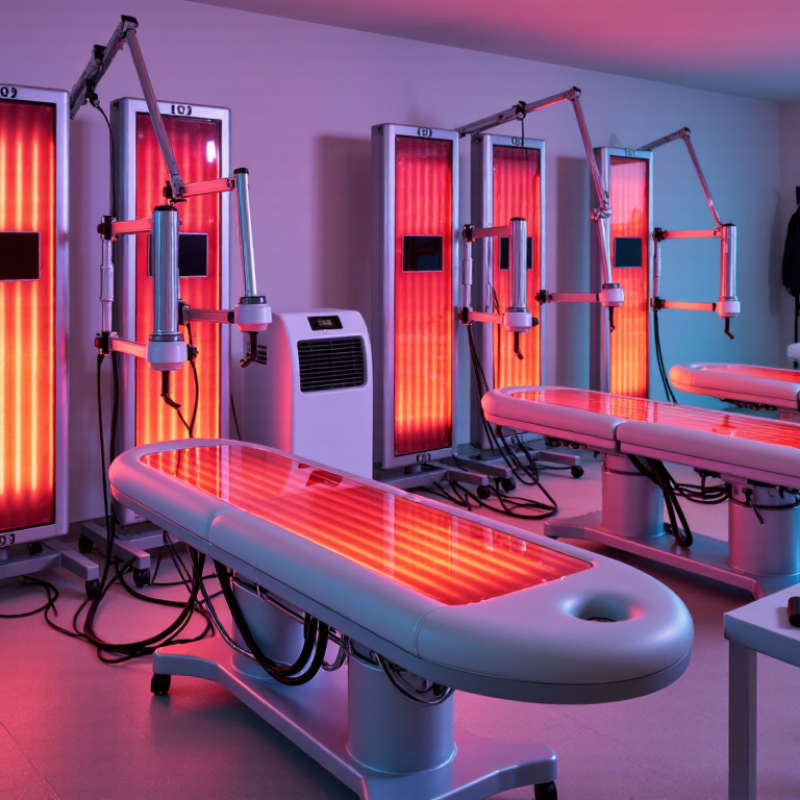
2026 Top Red Light Therapy Spa Equipment for Global Buyers

Red Light Therapy Spa Equipment: Definition, Types, and Core Functions

Red Light Therapy Spa Equipment: Definition, Types, and Core Functions

Red light therapy spa equipment uses specific light wavelengths to support non-invasive wellness and skincare services. It is commonly associated with photobiomodulation, using red light near 630–660 nanometers and near-infrared light near 810–850 nanometers. Actual specifications vary by device and supplier.

Common types include full-body panels, light beds, facial masks, and handheld applicators. Panels can treat larger areas, while masks fit shorter facial sessions. Handheld units allow focused work around small zones.

In a working spa, adjustable timers, stable positioning, and simple cleaning surfaces matter every day. A complicated device may slow staff down.

Core Functions

Core functions include controlled light delivery, session timing, cooling, protective eyewear, and irradiance monitoring.

Reliable equipment should provide clear technical data, electrical safety documents, and maintenance guidance. Operators also need practical training. They should check skin sensitivity, follow local professional rules, and keep session records.

A bright device is not automatically a better device.

Output figures can be confusing without distance and measurement conditions. That detail is easy to miss. Comfort also matters; excessive heat may reduce client trust, even when the light settings appear correct.

Global buyers should compare wavelength accuracy, service support, replacement parts, and documentation before purchase. Some specifications remain difficult to verify, so careful questioning is necessary.

How to Evaluate Light Wavelengths, Power, and Treatment Coverage

For 2026 spa equipment purchases, wavelength selection deserves more attention than appearance or screen size. Red light commonly falls near 630–660 nanometers, while near-infrared light often ranges from 810–850 nanometers. These bands may reach different tissue depths, but results vary between users and treatment goals. Avoid accepting broad claims without test data.

Power must be measured at the client’s skin, not only at the LED source. Ask for verified irradiance in milliwatts per square centimeter, measured at several distances. A simple dose calculation helps: irradiance multiplied by treatment time equals energy density.

For example, 50 mW/cm² used for ten minutes delivers about 30 J/cm². More power is not automatically better. Excessive exposure may create discomfort, heat, or poor customer experiences.

Coverage is equally practical. Inspect whether light reaches the face, shoulders, torso, and legs evenly. A client should not need repeated repositioning. Request irradiance maps, cooling details, timer controls, and cleaning instructions. I would also check electrical certifications and local compliance requirements before importing equipment. They differ across markets. Ask for independent laboratory reports, not only supplier photographs. In real spa settings, cables, ventilation, and busy schedules can affect performance. That detail is easy to overlook. A pilot installation with staff feedback may reveal weaknesses that technical brochures hide. Some specifications still remain uncertain, so document assumptions before making a large purchase.

Key Safety Standards and Certification Requirements for Global Buyers

For global buyers, red light therapy spa equipment should be assessed as a safety system, not merely as attractive lighting. Confirm the intended use first. Wellness claims and medical claims may trigger different rules in each market. Ask for test reports covering IEC 60601-1 electrical safety, IEC 60601-1-2 electromagnetic compatibility, and IEC 62471 photobiological safety where applicable. These documents should identify the exact model, test laboratory, sample configuration, and test date. Generic certificates are weak evidence.

Check whether the manufacturer maintains an ISO 13485 quality system when the product is regulated as medical equipment. ISO 14971 risk management can show how overheating, incorrect dosage, electrical faults, and eye exposure were assessed.

For European sales, verify the correct conformity route under the applicable rules, rather than treating CE marking as a universal approval. Other regions may require local registration, importer records, labeling, or electrical certification. Requirements change.

Inspect the device yourself when possible. Measure wavelength, irradiance, timer accuracy, surface temperature, and emergency shutoff performance. Review user instructions in the destination language. Traceable serial numbers and maintenance records support safer operation. A certificate can still miss a design change. That is an uncomfortable detail. Buyers should request current declarations and compare them with the delivered unit, because paperwork alone cannot prove consistent production.

Comparing Installation, Maintenance, and Operating Costs

Installation, maintenance, and operating costs often determine whether red light therapy equipment remains profitable after launch. A ceiling-mounted system may require reinforced supports, dedicated circuits, ventilation checks, and professional commissioning. A freestanding unit usually needs less construction. That difference can reduce opening delays and contractor fees.

Energy use is measurable. The U.S. Energy Information Administration reported average commercial electricity prices near 13 cents per kilowatt-hour in 2024. A 2.4-kilowatt system operating eight hours daily would consume about 19.2 kilowatt-hours, costing roughly 2.50 dollars per day at that rate.

Actual costs vary by country, tariffs, duty cycles, and standby power. The estimate is useful, but imperfect. The U.S. Department of Energy also reports that LED systems can use at least 75% less energy than incandescent lighting, although therapy equipment includes controls and cooling components.

Maintenance deserves closer attention. ASHRAE Standard 180 emphasizes scheduled inspection, cleaning, airflow checks, and documented servicing for commercial HVAC-related environments.

Operators should inspect lenses, cooling fans, cables, and timers weekly. Filters may need more frequent replacement in dusty rooms.

The International Facility Management Association consistently identifies labor as a major operating expense, so cleaning time and technician access should enter the budget. A practical reserve is sensible: set aside funds for cooling-fan replacement, calibration checks, and unexpected downtime.

Many buyers underprice labor. That mistake is common. A detailed service log, trained staff, and accessible components can protect uptime better than a lower purchase price.

Selecting the Right Equipment for Different Spa Treatment Goals

Choosing red light therapy spa equipment starts with the treatment goal, not the machine’s appearance. Skin rejuvenation usually benefits from uniform facial coverage, stable wavelengths, and adjustable intensity. A guest seeking relaxation may prefer a larger panel with gentle output and a quiet cooling system. Recovery-focused sessions often require flexible positioning for shoulders, legs, or the back.

Check measured irradiance, treatment distance, timer accuracy, and heat management before purchasing. Marketing numbers can look impressive but remain difficult to compare. Ask for independent testing or clear technical documentation. In practice, a device with moderate power and consistent coverage may create better experiences than a stronger unit with uneven hotspots. Comfort matters. Guests should not feel trapped beneath excessive heat or bright glare.

Global buyers should also review electrical standards, user instructions, cleaning requirements, and local compliance rules. Staff need practical training on eye protection, session timing, skin sensitivity, and realistic expectations. Red light equipment can support appearance and relaxation goals, but it should not replace medical diagnosis or treatment. I would avoid promising rapid results. Results vary, and that limitation deserves honest discussion. A short trial with client feedback may reveal problems that specifications miss.

Go to Top