
Blog

7 Best Functional Meters for Global Buyers

Choosing a Functional Meter for international use is not a simple matter of comparing prices. Buyers must examine accuracy, measurement range, safety ratings, display clarity, and after-sales support. A meter that performs well in a quiet laboratory may struggle on a humid construction site.

Lord Kelvin, a pioneer in electrical measurement, said, “When you cannot express it in numbers, your knowledge is of a meagre and unsatisfactory kind.” His warning remains relevant today. Reliable numbers support safer maintenance, faster fault detection, and better purchasing decisions.

Global buyers also face practical differences. Voltage standards vary between regions. Plugs, test leads, certifications, and user manuals may not match local expectations. A bright backlit screen helps technicians work inside dark control cabinets. A strong protective case matters when tools fall from a service vehicle. Automatic ranging saves time, but experienced users may still prefer manual control for sensitive tests.

This guide reviews seven Functional Meter options for different working environments and budgets. It considers real operating details, not only impressive specifications. Some models appear excellent on paper. Their long-term durability may tell another story.

No single meter is perfect. That is worth remembering.

The right choice depends on who uses it, where it operates, and what it must measure repeatedly. Readers should verify current certifications, warranty terms, and regional compatibility before purchasing. Small omissions can become expensive problems when equipment crosses borders.
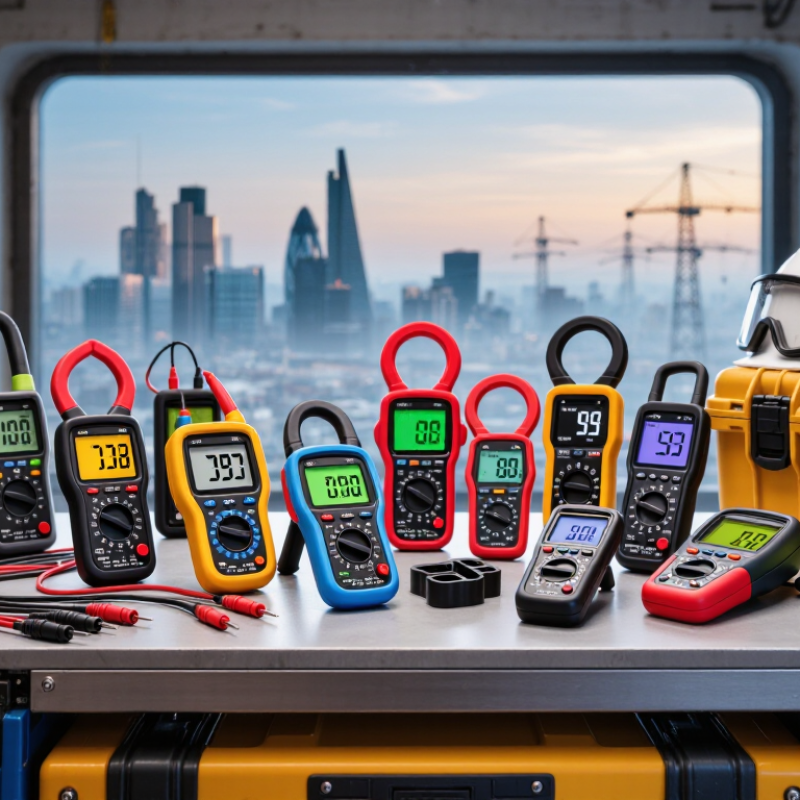
7 Best Functional Meters for Global Buyers

What Functional Meters Are and How They Measure Performance

Functional meters are instruments that verify how an electrical system performs under real conditions. They measure voltage, current, resistance, frequency, capacitance, insulation, or power quality. The seven useful categories include digital multimeters, clamp meters, insulation testers, earth-resistance meters, power-quality analyzers, LCR meters, and process calibrators.

Performance is not only the number shown on the screen. Accuracy compares the reading with a traceable reference. Resolution shows the smallest visible change. Repeatability checks whether the same test produces similar results.

Response time matters when a motor starts or a voltage briefly falls. Safety ratings also matter, especially CAT ratings defined under IEC 61010. IEC 61557 further addresses measurement equipment used in low-voltage distribution systems.

These standards make specifications easier to compare, but they do not replace field judgment.

The International Energy Agency’s Electricity 2024 report projects global electricity demand growth of about 4% in 2024 and 2025. More equipment means more verification work. A clamp meter can reveal a 12-amp load without opening a cabinet, while an insulation tester can expose weak cable insulation before heating begins.

I still recheck unstable readings. Humidity, probe pressure, and damaged leads can distort results. NIST Technical Note 1297 explains that measurement uncertainty should include these influences, not just the meter’s advertised accuracy. That point is often missed.

A cheaper meter may look precise, yet its calibration history remains unclear. For global buyers, traceability, environmental ratings, overload protection, and service support deserve equal attention.

Key Features That Define a Reliable Functional Meter

A reliable functional meter should produce stable readings in real working conditions, not only in a controlled laboratory. Global buyers should examine measurement accuracy, operating range, response time, and repeatability. During field inspections, I look for readings that remain consistent after repeated tests. Clear readings matter. A bright backlit display helps in warehouses, workshops, and outdoor areas. Physical buttons are often more practical than a complicated touchscreen, especially when users wear gloves. Simple controls reduce training time and avoid preventable mistakes.

Safety features deserve close attention. Buyers should check overload protection, insulated connections, automatic shutoff, and clearly marked measurement limits. The enclosure should resist dust, moisture, and occasional drops. An appropriate ingress rating can indicate better protection, but it should match the actual workplace. Wider ranges are not always better. Excessive range may reduce resolution for small measurements. That trade-off is easy to overlook.

Reliable data handling also improves long-term value. Functional meters with data logging, export options, or wireless reporting can support maintenance records and quality checks. However, software should be tested before purchase. Poor compatibility can create more work, not less. Look for traceable calibration records, practical user manuals, and responsive technical support. Regional power requirements and language options should also be confirmed. No meter is perfect. Even a well-built instrument needs regular verification, careful storage, and trained users. One honest weakness may be limited battery life, but replaceable batteries can make field service easier.

Seven Leading Functional Meters for Different Testing Needs

7 Best Functional Meters for Global Buyers

Seven Leading Functional Meters for Different Testing Needs

Choosing a functional meter starts with the measurement, not the product label. A digital multimeter handles voltage, current, resistance, and continuity checks. It suits control panels, appliances, and routine maintenance. A clamp meter measures current around an energized conductor. This reduces the need to disconnect wiring. Check the jaw size carefully. A narrow jaw can limit real field use.

An insulation resistance tester checks cable and motor insulation with controlled test voltage. It is useful during commissioning and preventive maintenance. An LCR meter measures inductance, capacitance, and resistance in components. Technicians often use it when repairing filters or power supplies. A frequency counter provides precise frequency readings for generators and electronic circuits. Small display errors can still matter. Verify its accuracy before making adjustments.

A power quality analyzer records voltage dips, harmonics, and load changes. It helps explain flickering lights or unexpected equipment trips. An earth resistance tester evaluates grounding paths at sites and installations. Soil moisture can affect readings, so repeat tests under similar conditions. In practice, no meter is perfect. I once trusted a stable reading from a poorly positioned probe. The result looked convincing but needed correction. Buyers should compare safety ratings, calibration support, input protection, and local measurement standards. Clear manuals matter too. A sophisticated meter is less useful when operators cannot interpret its readings safely.

7 Best Functional Meters for Global Buyers

Seven leading functional meter categories compared by their representative maximum test or input voltage.

The values represent common class-level capabilities rather than any specific brand or model. Select the meter type according to the testing requirement, safety category, and expected electrical range.

Comparing Accuracy, Functions, Durability, and Ease of Use

Choosing among the 7 best functional meters requires more than reading the largest accuracy number. A meter rated at ±0.5% may outperform a cheaper unit in controlled conditions, yet unstable leads can distort low-voltage readings. Accuracy matters. NIST Technical Note 1297 recommends reporting measurement uncertainty with an expanded coverage factor of k=2, representing approximately 95% confidence. Global buyers should therefore examine accuracy, uncertainty, calibration evidence, and temperature conditions together.

Functions should match the worksite. Essential features include AC/DC voltage, current, resistance, continuity, capacitance, and frequency. True-RMS measurement improves readings on non-sinusoidal loads, especially variable-speed equipment. A low-pass filter can reduce noise around drives and inverters. However, extra functions often increase menu complexity. That gap matters. Clear symbols, a bright display, large terminals, and one-handed controls can prevent avoidable errors.

Durability needs measurable evidence. IEC 61010 safety categories help buyers compare electrical environments, while IEC 60529 IP54 indicates protection from limited dust and splashing water. Look for recessed inputs, reinforced cases, replaceable test leads, and a readable display after repeated drops. Battery life also affects field reliability; automatic power-off saves energy, but it can interrupt long observations. In practice, no meter is perfect. Some specifications remain difficult to verify without laboratory testing, so independent calibration records and realistic user reviews deserve careful attention.

7 Best Functional Meters for Global Buyers - Comparing Accuracy, Functions, Durability, and Ease of Use

Comparison of representative meter categories and commonly available specifications. Actual performance may vary by measurement range, accessories, operating conditions, and the latest product datasheet.
Meter Category Typical Accuracy Core Measurement Functions Special Functions Safety Rating Durability Features Ease of Use Best For
Advanced Handheld Digital Multimeter DC voltage: typically ±0.5% of reading
Resolution: up to 6,000 counts
AC/DC voltage, AC/DC current, resistance, capacitance, frequency, continuity, and diode testing True-RMS AC measurement, minimum/maximum recording, relative mode, auto-ranging, and backlight Usually CAT III 600 V or CAT IV 600 V, depending on configuration Rubber protective holster, overload protection, replaceable fuse, and drop resistance commonly around 1–2 m Large display, rotary selector, audible continuity alert, and automatic power-off Electrical maintenance and general field work
AC/DC Clamp Meter AC current: typically ±1.5% of reading
Jaw capacity: commonly 30–50 mm
AC/DC current, AC/DC voltage, resistance, continuity, and frequency Inrush current, peak hold, low-pass filtering, non-contact voltage detection, and temperature input on some versions Commonly CAT III 600 V or CAT IV 600 V Reinforced jaw mechanism, impact-resistant housing, input protection, and insulated probe storage Measures current without disconnecting conductors; one-handed operation and backlit display Motor control, distribution panels, and HVAC service
Insulation Resistance Tester Insulation resistance: typically ±2–5% of reading
Test voltage accuracy: commonly ±5%
Insulation resistance, AC/DC voltage, continuity, and leakage-related checks Test voltages commonly include 50 V, 100 V, 250 V, 500 V, and 1,000 V; timed test, polarization index, and dielectric absorption ratio Often CAT III 600 V; automatic discharge after testing is standard on many models Heavy-duty case, high-voltage input protection, fused leads, and dust-resistant construction Preset test voltages, lock-on test button, clear pass/fail indication, and data hold Cables, motors, switchgear, and building installations
Automotive Diagnostic Multimeter DC voltage: typically ±0.5–0.8% of reading
Resistance: commonly ±1%
DC voltage, current, resistance, frequency, duty cycle, continuity, and diode testing Temperature, RPM, dwell angle, pulse width, min/max recording, and battery charging analysis Typically CAT III 600 V for low-voltage automotive electrical systems High-current input fuse, protected test leads, shock-resistant housing, and reverse-polarity protection Automotive icons, dedicated function buttons, bright display, and optional inductive pickup Vehicle electrical diagnostics and repair workshops
Process Loop Calibrator Current measurement/source accuracy: commonly ±0.05–0.2% of reading 4–20 mA measurement, current sourcing, current simulation, and loop-powered measurement 24 V loop supply, percentage display, stepped/ramped output, HART-compatible resistance on selected versions, and loop power indication Safety category varies; many professional units are rated up to CAT III 300 V Overload protection, current-limited output, rugged rubber boot, and protected terminals Simple source/measure controls, large numeric display, zero/span adjustment, and long battery life Instrumentation, automation, and industrial commissioning
High-Resolution Bench Multimeter DC voltage: commonly ±0.0035–0.01% of reading
Resolution: 5½ to 6½ digits
High-resolution AC/DC voltage, AC/DC current, resistance, capacitance, frequency, and temperature Trend charts, statistical measurements, limit testing, remote sensing, memory, and USB or LAN connectivity Measurement-category rating depends on terminals; front terminals are often CAT I or CAT II Fan-cooled or ventilated enclosure, overload protection, replaceable input fuse, and controlled indoor operation Graphical display, menu-driven setup, programmable ranges, and computer-based data logging Laboratories, production testing, and calibration work
Rugged Industrial Multimeter DC voltage: typically ±0.5% of reading
Resolution: commonly 4,000–6,000 counts
AC/DC voltage, AC/DC current, resistance, continuity, capacitance, frequency, and diode testing True-RMS measurement, low-impedance voltage mode, temperature measurement, min/max recording, and non-contact voltage detection Often CAT IV 600 V or CAT III 1,000 V, subject to the exact model and accessories IP-rated enclosure on some versions, sealed rotary switch, reinforced holster, and drop protection around 2 m High-contrast display, tactile controls, audible alerts, magnetic hanging option, and backlight Plant maintenance, utilities, construction, and outdoor service
Selection guidance: Choose a handheld multimeter for broad electrical testing, a clamp meter when circuit interruption is undesirable, an insulation tester for motor and cable health checks, a loop calibrator for process instruments, and a bench meter when laboratory-level resolution and data logging are priorities. Always verify CAT rating, fuse type, environmental rating, and test-lead compatibility before purchase.

Global Buying Considerations for Functional Meters

7 Best Functional Meters for Global Buyers

Global Buying Considerations for Functional Meters

A functional meter should match the work, not merely the catalog. Buyers should define voltage, current, resistance, frequency, capacitance, temperature, and continuity needs. Field technicians also need clear displays, glove-friendly controls, and reliable protection against overloads. Small details matter.

Safety ratings deserve close attention. IEC 61010-1 classifies measurement equipment by electrical environment and transient risk. A meter for industrial panels needs a higher category rating than one for low-voltage electronics. Check the stated voltage, category, fuse design, and test-lead rating together. Never judge safety from the category label alone.

Accuracy claims need context. NIST Technical Note 1297 explains Type A and Type B uncertainty evaluations. It also uses a coverage factor of k=2 for approximately 95% coverage under common assumptions. Buyers should request calibration results, uncertainty data, and traceability to national standards. ISO/IEC 17025 supports confidence in competent calibration laboratories. A certificate without uncertainty is incomplete.

Global sourcing adds practical complications. Confirm mains compatibility, plug options, language settings, spare fuses, and regional service access. IEC 60529 ingress ratings help compare dust and water protection, but testing conditions may not match a wet workshop. I have seen buyers overvalue maximum digits and undervalue recovery after overload. That assumption is often wrong. Logging, wireless transfer, and replaceable leads may save more time than extra resolution. Choose carefully.

Go to Top