Why Choose a 7.5KW Belt Driven Screw Air Compressor?
A 7.5kW Belt-Driven Screw Air Compressor can suit workshops that need a steady supply of compressed air throughout the working day. Its screw element produces airflow continuously, while the belt transfers power from the motor to the air end. That matters. Compared with a small piston compressor that cycles frequently, a screw model may better support several tools or a production task with regular air demand. Actual performance depends on pressure, duty cycle, and the compressor’s published flow rate, so check those figures before choosing.
The belt drive also offers practical flexibility. A technician can inspect belt tension and condition during routine maintenance, and replacement may be straightforward when parts are accessible. But a loose or worn belt can reduce efficiency. Small details count. Consider the installation, too: leave room for cooling airflow, allow access to filters, and check the noise level against your workspace needs. A receiver tank and suitable air treatment may also be necessary, depending on the tools and air quality required.
This compressor is not automatically the right choice for every shop. If demand is occasional, a smaller unit may be more economical; if several machines run at once, confirm the compressor can meet peak demand. I would compare verified flow and pressure data, service requirements, warranty coverage, and local support before deciding. The best fit is the one that works reliably under your real operating conditions—not just the one with the most attractive specification sheet.
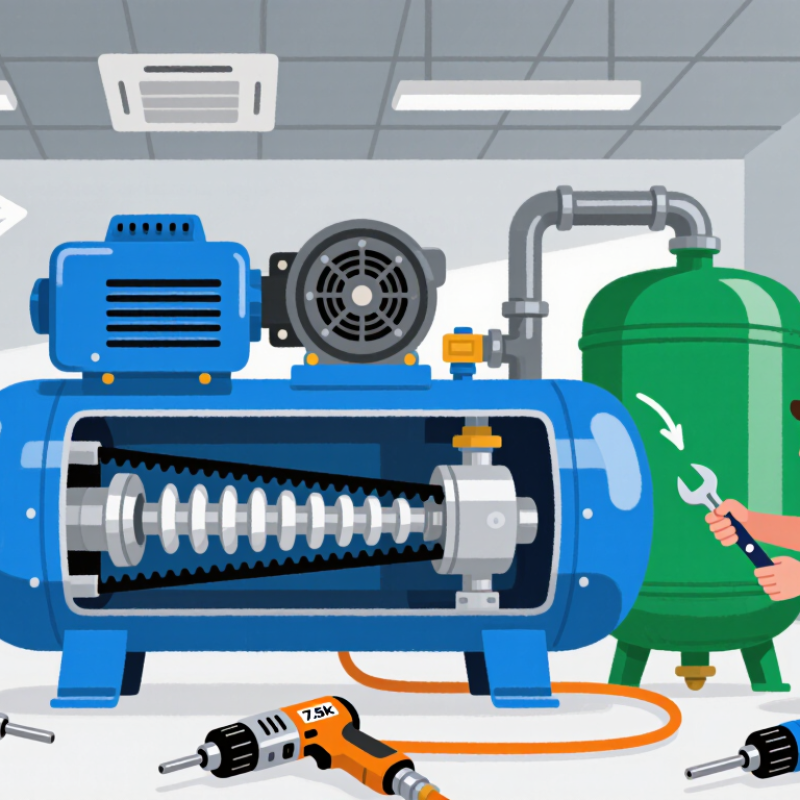
What a 7.5 kW Belt-Driven Screw Air Compressor Is
A 7.5 kW belt-driven screw air compressor uses an electric motor and pulleys to turn a screw air end. As the rotors spin, they draw in air, reduce its volume, and discharge it at pressure. The belt connects motor and air end, allowing power transmission through pulleys. It can also make some maintenance tasks straightforward. But belt tension and alignment need regular checks. The 7.5 kW rating describes motor power, not the volume of usable air. Check the manufacturer’s stated flow at your required pressure before comparing models.
The US Department of Energy’s Improving Compressed Air System Performance sourcebook notes that compressed air can account for about 10% of industrial electricity use, and up to 30% in some facilities. That makes matching compressor output to real demand important. A 7.5 kW unit may suit a small workshop or a steady group of pneumatic tools, but simultaneous demand can exceed its capacity. I’d check actual tool consumption, duty cycle, and pressure losses in the pipework; estimates are easy to get wrong.
Tips: Check belt condition and tension during scheduled maintenance. Compare flow at working pressure, not just motor kilowatts. Allow for dryers, filters, and leaks. A quiet test run is useful, but it cannot replace measuring pressure at the point of use.
What a 7.5 kW Belt-Driven Screw Air Compressor Is
A 7.5 kW belt-driven screw air compressor uses a 7.5 kW motor to power its rotary screw air end through a belt and pulleys. The chart shows the motor’s rated power converted into different units; the figures are equivalent, not separate performance ratings. Actual airflow and electrical consumption depend on the compressor model, operating pressure, and motor efficiency.
How Its Belt-Driven Screw Mechanism Works
In a 7.5 kW belt-driven screw compressor, the motor turns a pulley, and the belt transfers rotation to the air-end pulley. Pulley sizes help set rotor speed for the compressor’s operating range. Inside the air-end, intermeshing helical rotors draw in air. As the rotor pockets shrink, trapped air is compressed and pushed toward the discharge port. In oil-injected designs, oil helps seal clearances, carry away heat, and lubricate moving parts. A separator then removes most oil from the compressed air.
The U.S. Department of Energy’s Improving Compressed Air System Performance: A Sourcebook for Industry estimates that compressed air uses about 10% of industrial electricity, though the share varies by facility. That makes drive condition worth checking. A loose belt can slip and heat up; excessive tension can load the bearings. Check belt alignment and tension, and watch for unusual vibration or dust around the pulleys. Small details matter.
A 7.5 kW rating describes motor power, not guaranteed airflow. Compare the compressor’s delivered flow at the required pressure, rather than relying on motor size alone. I would also leave room for operating conditions: intake temperature, filter restriction, and maintenance can change actual output. Not always obvious. A pressure gauge and service records help show whether the machine is delivering consistently.
Key Performance and Efficiency Advantages
A 7.5 kW belt-driven screw air compressor can provide steady air for workshops with regular, sustained demand. Unlike a piston unit that cycles frequently, a screw compressor is designed for longer operating periods. That can help keep air pressure more consistent when several tools run across a shift. The belt drive also separates the motor from the air end, making belt replacement straightforward when wear appears. Performance still depends on correct sizing, though; a unit that is too small may struggle during peak demand.
Efficiency comes from matching output to actual use, not from motor power alone. Check the compressor’s flow rate at the required pressure, then compare it with the combined demand of connected equipment. A receiver tank can help manage short bursts, while leak repairs prevent wasted air. Clean ventilation matters too. A dusty, hot corner can raise operating temperatures and affect performance. One easily missed detail: belts need periodic tension checks, since a loose belt can slip and waste energy.
Tips: Keep the intake filter clean, inspect belts for cracks, and record pressure readings during a normal workday. Listen for changes in vibration. Small changes can signal a maintenance need, but readings should be checked before assuming a fault.
Why Choose a 7.5KW Belt Driven Screw Air Compressor? - Key Performance and Efficiency Advantages | Performance Dimension | Typical Value or Characteristic | Practical Advantage |
| Motor power | 7.5 kW, equivalent to approximately 10.1 mechanical horsepower | A compact power class suited to many small and medium workshops and production areas. |
| Working pressure | Common configurations are offered around 7–10 bar; available pressure depends on the model. | Can serve a range of pneumatic tools and processes when the selected pressure matches their requirements. |
| Air delivery | A broad indicative range for this power class is about 0.8–1.2 m³/min (approximately 28–42 cfm), depending on pressure and compressor design. | Provides useful airflow for multiple intermittent-demand applications; confirm free air delivery at the required pressure before sizing. |
| Belt-drive arrangement | Transfers motor power to the air end through pulleys and a belt. | Belt inspection and replacement are generally straightforward. Correct belt tension and alignment help maintain reliable operation. |
| Energy use | At full rated motor output, 7.5 kW corresponds to 7.5 kWh of energy per hour of operation; actual electricity use varies with load and system conditions. | Matching compressor capacity to air demand and reducing leaks can help control operating costs. |
| Routine maintenance | Typical checks include belt condition and tension, air-filter condition, oil level where applicable, and cooler cleanliness. | Regular checks can help prevent avoidable downtime and support consistent airflow. |
| Installation planning | Requires a suitable electrical supply, ventilation, service clearance, and correctly sized air piping. | Good installation reduces avoidable pressure loss and helps the compressor operate in its intended conditions. |
| Best-fit applications | Often considered for workshops, light manufacturing, and other sites with moderate compressed-air demand. | A practical option when its verified airflow, pressure, and duty rating align with the site's measured demand. |
| Selection note: Values shown are indicative, not guaranteed specifications. Confirm delivered airflow, pressure, duty rating, electrical requirements, and energy performance against the exact compressor datasheet. |
Industries and Tasks Suited to This Compressor
A 7.5 kW belt-driven screw air compressor can suit workshops that need steady compressed air across a working day. Its belt drive allows straightforward inspection and servicing, while the screw mechanism is designed for continuous operation. Still, suitability depends on the machine’s rated pressure and delivered airflow, not motor power alone. Check both against the tools’ requirements.
Automotive repair shops may use this size for impact wrenches, tyre inflation, and spray equipment, provided several tools are not drawing air at once. Small woodworking shops can run nailers, sanders, or dust-cleaning nozzles. In light manufacturing, it may support air cylinders, packing equipment, and assembly tools. Listen for pressure drops during simultaneous use. That tells you something.
A common sizing mistake is choosing a compressor from the largest tool’s label and overlooking its duty cycle. Add up realistic air demand, then allow for leaks and future equipment. A belt-driven model also needs room for ventilation and routine belt checks. Not every shop needs one. For intermittent, low-volume tasks, a smaller unit may be easier to justify. The numbers can be imperfect; measure actual demand before committing.
Factors to Consider Before Choosing a Model
A 7.5 kW belt-driven screw air compressor can suit workshops with steady compressed-air demand, but motor power alone does not tell you whether it is the right model. Compare the stated free air delivery at your required working pressure with the tools’ actual consumption. Ask for the performance figures at that pressure, not just a headline airflow number. Flow matters.
Consider how many tools will run at once and for how long. A small spray gun used intermittently has different needs from a production line running several pneumatic tools through a full shift. Check the duty cycle and receiver tank size, too. A larger tank can help manage short demand peaks, but it cannot compensate for a compressor that produces too little air. A rough demand estimate is useful, though it can miss leaks or future expansion.
Belt drive adds practical checks. Confirm that belts are accessible for inspection and replacement, and ask how often tension and alignment should be checked. Think about room ventilation, operating temperature, noise, and available floor space. Service access matters on busy days. Compare filtration and moisture-management options if air quality affects your process. It is easy to choose on purchase price alone; that may feel reasonable at first, but maintenance and energy use can change the real cost over time.