Top 10 Benefits of Using Batching Plant Cement for Your Projects?
In the construction industry, efficiency and quality are paramount. Batching Plant Cement has emerged as a vital tool for modern projects. This specialized cement, produced in bulk using advanced technology, ensures consistent mix quality and reduces waste. By incorporating Batching Plant Cement, projects can achieve enhanced durability and strength in their structures.
However, while Batching Plant Cement streamlines processes, it does require careful management. Mixing ratios must be precisely calculated to avoid discrepancies. Without proper oversight, the benefits can quickly turn into drawbacks. It's essential for contractors to balance convenience with accuracy to harness the full potential of this material.
Adopting Batching Plant Cement can significantly impact project timelines. Faster setups mean projects can move forward without unnecessary delays. Yet, the reliance on this technology should not diminish traditional practices. Combining modern techniques with field experience guarantees both innovation and reliability in construction.
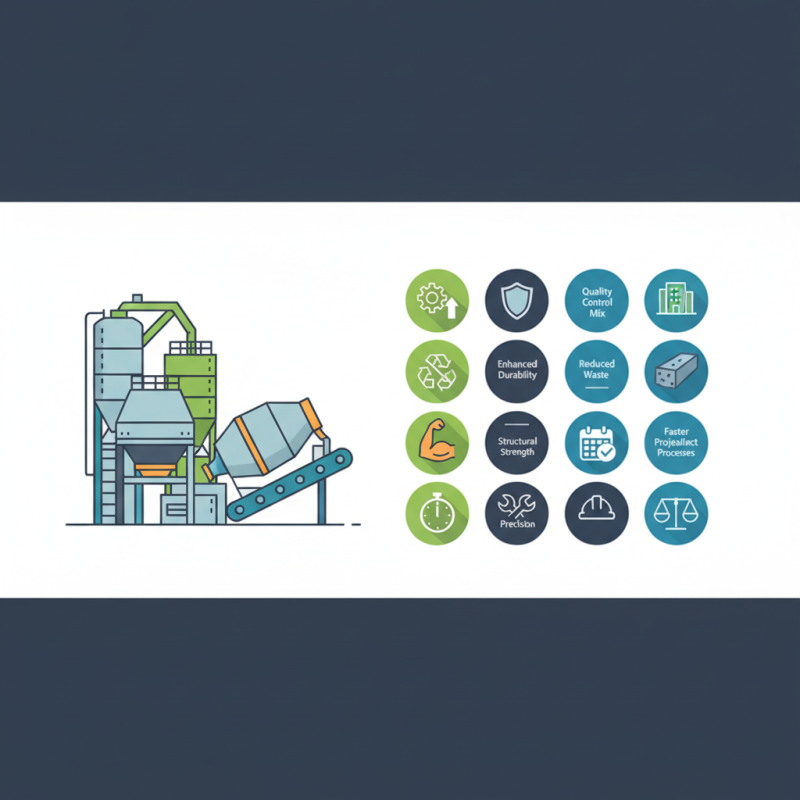
Advantages of Batching Plant Cement in Construction Projects
Batching plant cement offers numerous advantages in construction projects. One of the primary benefits is consistency. Each batch is mixed to precise specifications. This reduces variability in strength and durability. Workers can rely on the quality, which enhances overall project performance. By standardizing the mix, projects can achieve better structural integrity.
Another key advantage is efficiency. Batching plants can produce large volumes of cement in short periods. This capability speeds up construction timelines significantly. Site managers can schedule tasks better, knowing cement will arrive on time. However, this efficiency might require adjustments in logistics. Understanding transportation and storage is crucial.
Lastly, the environmental aspect cannot be overlooked. Batching plant processes often lead to reduced waste. By optimizing material use, projects can be more sustainable. Still, it’s essential to consider the carbon footprint of batching operations. Balancing efficiency with eco-friendliness is a complex challenge in today's construction landscape.
Enhanced Quality Control Through Batching Plant Operations
Enhanced quality control is a major advantage of using batching plant cement. Each batch is mixed with precision, ensuring consistency. This reduces the risk of weak spots in the final mix. With accurate measurements, you can maintain the strength and durability required for construction projects. Fluctuations in material quality are minimized, leading to a more reliable outcome.
The batching process allows for constant monitoring. Operators can evaluate each ingredient’s properties before mixing. Any discrepancies can be addressed on the spot. This level of control ensures that the cement meets industry standards. Even a small variation can affect structural integrity. Thus, attention to detail is crucial in achieving optimal results.
However, it’s essential to recognize potential challenges in batching plant operations. Equipment malfunctions can disrupt production. Human error during the measurement process can lead to inconsistencies. Continuous training and thorough checks are vital to mitigate these risks. Balancing efficiency with quality control remains a constant endeavor for project managers.
Top 10 Benefits of Using Batching Plant Cement for Your Projects
| Benefit | Description | Impact |
| Enhanced Quality Control | Batching plants provide precise control over the mixture proportions, ensuring consistent quality. | Higher structural integrity and durability of concrete. |
| Reduced Waste | Accurate measurement minimizes excess materials, leading to less waste. | Cost savings and environmentally friendly operations. |
| Faster Production Times | Automation and efficient batching processes speed up production. | Increased project turnaround times. |
| Consistency | Uniform output reduces variability in concrete quality. | Improved reliability for structural applications. |
| Customization | Mixes can be tailored to specific project requirements. | Enhanced performance characteristics suited for varied applications. |
| Labor Efficiency | Reduces manual labor needed for mixing and measuring. | Lower labor costs and decreased risk of human error. |
| Scalability | Easily scale production to meet project demands. | Flexibility to handle large and small projects efficiently. |
| Improved Safety | Automated processes reduce potential hazards during mixing. | Safer work environments for construction crews. |
| Data Tracking | Digital systems track production data for analysis and improvement. | Enhanced ability to monitor quality and productivity. |
| Reduced Transportation Costs | Local batching plants decrease travel distance for materials. | Saves money and time on logistics. |
Cost-Effectiveness of Batching Plant Cement for Large-Scale Projects
Batching plant cement is increasingly recognized for its cost-effectiveness in large-scale projects. According to industry reports, the use of ready-mixed concrete can reduce costs by up to 15%. This reduction is primarily due to minimized waste and efficient material management. By using batching plants, constructors can ensure precise measurements and mix consistency, significantly cutting down on excess materials.
Moreover, a study by the National Ready Mixed Concrete Association highlights that batching plants can improve project timelines by 20%. Fast delivery and the ability to produce large volumes of concrete streamline operations. However, not every project benefits equally. For smaller-scale projects, using batching plants might not yield the same financial advantages. The initial setup costs can deter some contractors, leading to potential overinvestment.
One must also consider the logistical aspects. The location of the batching plant plays a crucial role. A plant too far from the site can lead to increased transportation costs, eroding potential savings. Those involved in the planning phase should weigh these factors carefully. It's essential to analyze both short-term expenses and long-term benefits to making an informed decision.
Time Efficiency and Project Scheduling Benefits of Using Batching Plants
Using batching plant cement can significantly enhance time efficiency in construction projects. A recent report by the National Ready Mixed Concrete Association highlighted that projects using batching plants can see time savings of up to 30%. This efficiency stems from the ability to produce concrete on-site, ensuring that the material is ready when needed, reducing downtime.
Additionally, batching plants streamline project scheduling. By eliminating delays associated with transporting materials, project managers can adhere more closely to timelines. The American Concrete Institute states that proper scheduling using batching plants can lead to project completion ahead of schedule by as much as 20%. These time gains can be crucial in a competitive marketplace. However, relying solely on batching plants may lead to challenges, such as over-reliance on specific equipment types or operator expertise, which require ongoing assessment and training.
Moreover, the consistency of concrete quality from batching plants can sometimes be a double-edged sword. While it generally improves durability, regional variations in materials can affect outcomes. Therefore, regular quality control checks are essential to maintain the expected standards. Overall, integrating batching plants can drive efficiencies but also requires careful management to mitigate potential risks.
Environmental Sustainability of Batching Plant Cement Solutions
The environmental sustainability of batching plant cement solutions is increasingly relevant as the construction industry faces pressure to reduce its carbon footprint. According to the Global Cement and Concrete Association, cement production accounts for about 8% of global CO2 emissions. Batching plant cement offers a path toward minimizing this impact through efficient production and tailored recipes. By utilizing local materials and optimizing the mixing process, emissions can be significantly reduced.
A study by the World Business Council for Sustainable Development emphasizes that effective batching production can reduce waste and improve resource efficiency. For instance, many facilities now recycle by-products in cement production, leading to a closed-loop system. Yet, challenges remain. Cement produced in batches may still involve emissions, especially if fossil fuels are part of the energy mix. Additionally, the industry must navigate the balance between efficiency and long-term environmental goals.
Investing in batching plants also means adopting modern technologies. Innovations like carbon capture and storage systems are being explored to further address emissions. While promising, these technologies require time, funding, and coordination among stakeholders. The journey toward full sustainability is complex and demands continuous reflection and improvement from all participants in the industry.