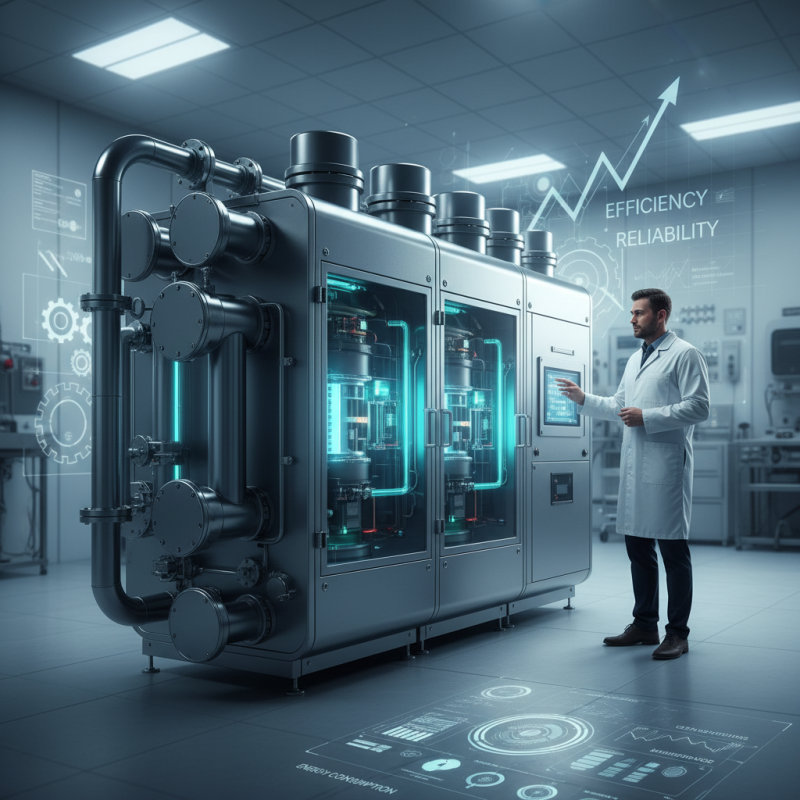
Best Chiller Series for 2026 What to Look for?
In the rapidly evolving HVAC industry, selecting the best Chiller Series for 2026 requires careful consideration. Industry expert John Smith emphasizes, "Efficiency and reliability are key factors in choosing a chiller." With innovations coming at a fast pace, it's crucial to stay informed.
Many new models promise cutting-edge technology. However, not all deliver on their promises. Understanding the features and benefits of each model is essential. Noise levels, energy consumption, and maintenance requirements vary widely. It's easy to overlook these details.
Market trends indicate a shift towards eco-friendly solutions. The demand for energy-efficient chillers continues to rise. Still, potential buyers must reflect on their unique needs. A chiller that works for one facility may not suit another. Conducting thorough research is paramount in making an effective choice.
Best Chiller Series for 2026: An Overview of Market Trends
The chiller market is evolving rapidly. By 2026, energy efficiency will be crucial. Data shows a projected 10% growth in demand for eco-friendly chillers. Organizations are prioritizing sustainability. This shift is not just a trend; it's a necessity.
Cost effectiveness remains a key factor in selection. However, some models might still fall short in performance. A recent report indicated that over 30% of chillers underperform compared to their energy ratings. Buyers should ask tough questions. What's the real efficiency?
The push for automation in chillers is noticeable. Smart technology provides real-time data and remote monitoring. However, integration challenges persist. Many users report difficulties in adapting to new systems. Industry experts suggest a cautious approach. Investing in technology is essential, but understanding potential pitfalls is equally important. The journey to 2026 is complex but necessary for lasting impact.
Key Technologies Revolutionizing Chiller Efficiency by 2026
As the HVAC industry evolves, innovative technologies are transforming chiller efficiency. By 2026, we can expect significant advancements that focus on sustainability and energy savings. A report from the International Energy Agency (IEA) predicts that advanced cooling technologies could reduce energy consumption in commercial buildings by up to 30%. This change is critical.
Natural refrigerants are gaining traction due to their minimal environmental impact. Studies show that systems using hydrocarbons can reduce global warming potential (GWP) drastically. This shift is not without challenges. Engineers must ensure compliance with safety standards while optimizing performance.
Variable-speed compressors are another game changer. They adjust output according to demand, enhancing efficiency. Some systems report a 20% increase in performance through this technology alone. Yet, maintenance remains a concern. As operations become more complex, the need for skilled technicians rises. Continuous training is essential to keep pace with these technological advances.
Environmental Regulations Impacting Chiller Design and Performance
As environmental regulations evolve, chiller design must adapt. In 2026, manufacturers will face stricter guidelines. These regulations focus on reducing greenhouse gas emissions and increasing energy efficiency. Consequently, many chillers will need innovative technologies to meet these standards.
One critical aspect to consider is refrigerant choices. Low-GWP (Global Warming Potential) refrigerants are becoming essential. Traditional refrigerants are being phased out, pushing companies to explore alternatives. This transition might not be seamless. There may be complications in retrofitting existing systems.
Additionally, energy efficiency ratings will be crucial. Many regions are setting higher benchmarks for performance. Meeting these ratings may require significant investments in technology. However, the long-term benefits could outweigh initial costs. Manufacturers and users alike must stay informed about these evolving regulations. Embracing change is imperative for future successes.
Best Chiller Series for 2026: Environmental Regulations Impacting Chiller Design and Performance
Cost-Benefit Analysis: Choosing the Right Chiller for Your Facility
When evaluating chillers for your facility, a cost-benefit analysis is crucial. According to a recent industry report by the American Society of Heating, Refrigerating and Air-Conditioning Engineers (ASHRAE), operational costs can account for nearly 70% of a chiller’s total lifecycle cost. Thus, understanding efficiency ratings and energy consumption should be a priority.
Look for chillers with high Energy Efficiency Ratios (EER), as these units typically yield lower long-term costs. A study by the U.S. Department of Energy indicates that a chiller operating at 0.6 kW/ton can lead to savings of up to $15,000 annually compared to less efficient models. However, upfront costs can deter facilities from upgrading. Weighing initial investment against potential savings is often neglected, yet vital.
Remember, not all facilities have the same cooling needs. A miscalculation in sizing can lead to poor performance and higher energy use. It’s essential to balance size and efficiency. According to industry benchmarks, an oversized chiller can increase energy consumption by 30% or more. Reflect on your facility's specific demands and examine historical energy usage before making a decision. This reflection often reveals a path to enhanced efficiency and cost savings.
Future-Proofing Your Investment: Scalable Chiller Solutions for 2026
As industries evolve, future-proofing investments becomes critical. Scalable chiller solutions play a pivotal role in this transformation. A recent report by Global Data Analysis highlights that the demand for energy-efficient chillers is projected to grow by 7% annually through 2026. This data emphasizes the need for flexibility in chiller systems to adapt to future demands.
Choosing a scalable solution is essential. These systems can easily expand or contract based on facility requirements. For example, a facility with fluctuating cooling needs would benefit considerably from modular chiller systems. They offer the flexibility to adjust capacity without over-investing upfront.
Environmental considerations can't be overlooked, either. The push toward sustainable solutions is evident. The International Energy Agency mentions that energy-efficient chillers can reduce carbon emissions significantly. However, many facilities still rely on outdated systems that do not meet current standards. This reflects a gap that needs addressing for long-term sustainability. Investing in better technology is a step toward the future.
Best Chiller Series for 2026: What to Look for?
| Chiller Model | Cooling Capacity (kW) | Energy Efficiency (EER) | Scalability Options | Typical Applications |
| Model A | 100 | 3.5 | Up to 500 kW | Industrial Cooling |
| Model B | 150 | 4.0 | Up to 750 kW | HVAC Systems |
| Model C | 200 | 3.8 | Up to 1000 kW | Data Centers |
| Model D | 250 | 4.5 | Up to 1500 kW | Pharmaceuticals |