
2026 Best DC Chargers for EV Charging Stations
Choosing a DC charger is not just a matter of chasing the highest power rating. The right unit must match vehicle needs, site capacity, operating conditions, and expected traffic. A charger rated for fast output may deliver less when several vehicles share available power. Details matter.
This guide to the 2026 Best DC Chargers for EV Charging Stations examines practical factors buyers can verify. These include charging power, connector options, power sharing, software compatibility, warranty terms, and maintenance support. Site owners should also consider cable reach, screen visibility in bright sunlight, and protection from rain or dust. Small design choices affect daily use.
No single model suits every station. A highway location may prioritize rapid charging and dependable service, while a workplace may value flexible power allocation. Installation costs and grid limits also shape the decision. These details are easy to underestimate.
The recommendations should be checked against current product specifications and local installation requirements before purchase. Compare documented performance, not just marketing claims. Ask suppliers how uptime is measured and which support services are included. A clear answer is useful. A vague one deserves another question.
The goal is a shortlist grounded in real operating needs, rather than a universal winner. Even careful comparisons have limits: product availability and specifications can change. Treat this guide as a starting point, then confirm the details for your site.
Understanding DC Fast Chargers and Their Role in EV Stations
2026 Best DC Chargers for EV Charging Stations
Understanding DC Fast Chargers and Their Role in EV Stations
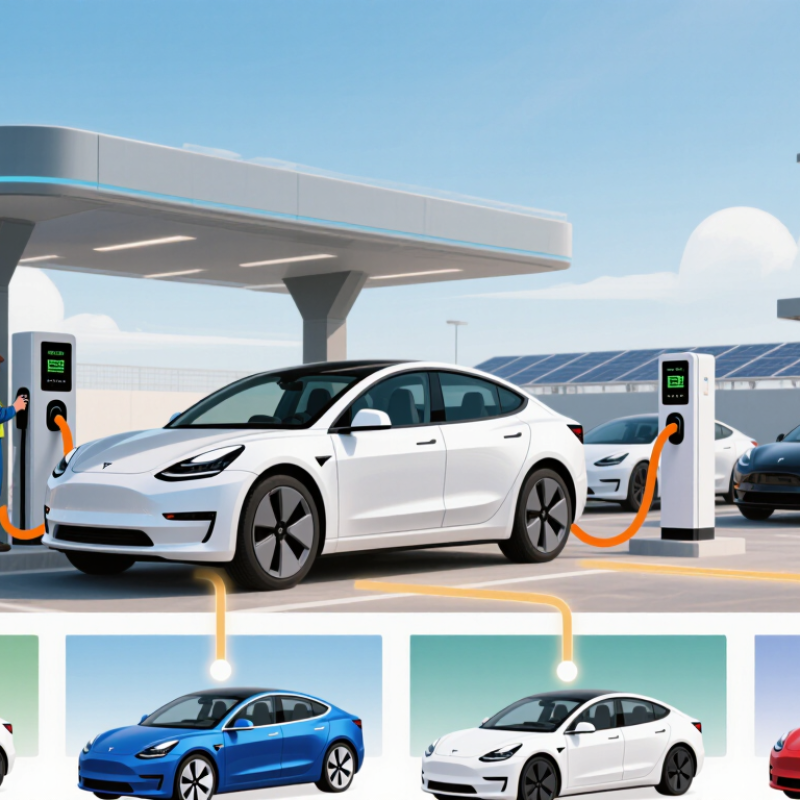
DC fast chargers convert grid electricity into direct current for the vehicle battery. They bypass the onboard AC charger. This enables much higher charging power. The U.S. Department of Energy identifies DC fast charging as equipment typically delivering 50 kW or more. Newer systems can exceed 150 kW, depending on vehicle compatibility and site capacity.
Demand is growing quickly. The International Energy Agency reported more than four million public charging points worldwide in 2023. Public fast-charging infrastructure also expanded strongly that year. However, maximum output does not guarantee faster charging. Battery temperature, state of charge, cable limits, and vehicle acceptance rates all affect real charging time. A 350 kW unit may deliver far less power during a cold morning.
Station planning requires practical judgment. Operators should examine transformer capacity, peak demand, cable length, accessibility, and maintenance response times. The National Renewable Energy Laboratory highlights uptime as a critical factor in public charging performance. A powerful charger that remains offline is not a reliable asset. Load management can also reduce grid stress and operating costs, especially at busy sites.
Field experience reveals an uncomfortable detail. Drivers usually remember failed sessions more than impressive specifications. Therefore, charger selection should balance power, reliability, payment usability, safety controls, and future vehicle compatibility. Technical forecasts can still be wrong. Real charging data from the installed site should guide later upgrades.
| DC Charger Category | Typical Rated Power | Typical DC Output Voltage | Maximum Output Current | Estimated 10–80% Charging Time* | Best Application | Space and Electrical Requirements | Key Advantages | Main Limitations |
|---|---|---|---|---|---|---|---|---|
| Compact DC Fast Charger | 20–50 kW | 200–500 V DC | Up to approximately 125 A | 45–90 minutes | Retail parking, workplaces, small urban sites and fleet depots with longer dwell times | Moderate electrical capacity; may be suitable for locations with limited grid availability | Lower installation cost, simpler site planning and reduced demand on the local electrical system | Longer charging sessions; limited suitability for highway and high-turnover locations |
| Standard DC Fast Charger | 60–150 kW | 200–920 V DC | Up to approximately 250 A | 20–45 minutes | Public charging stations, shopping centers, parking facilities and mixed-use commercial sites | Requires dedicated three-phase service in many installations and adequate transformer capacity | Good balance between charging speed, installation cost and compatibility with many EVs | Actual power may be reduced by vehicle battery limits, temperature and state of charge |
| High-Power DC Fast Charger | 150–250 kW | 300–1,000 V DC | Up to approximately 500 A | 12–25 minutes | High-traffic urban stations, highway service areas and commercial fleet operations | High-capacity grid connection, larger switchgear, thermal management and careful cable routing | Shorter customer dwell times and higher charger utilization potential | Higher capital cost, greater peak-demand charges and more stringent thermal requirements |
| Ultra-High-Power DC Charger | 250–500 kW | 400–1,000 V DC | Up to approximately 600 A with liquid-cooled cables | 8–18 minutes | Highway corridors, heavy-use charging hubs and time-sensitive commercial fleets | Very high grid capacity, advanced power distribution, robust cooling and substantial site infrastructure | Maximum charging throughput for compatible vehicles and reduced queueing at busy sites | Only a limited number of vehicles can accept the full rated output; highest equipment and grid costs |
| Modular DC Charging System | 60–240 kW per cabinet or dispenser group | 200–1,000 V DC | Typically 200–500 A per charging outlet | 15–45 minutes, depending on power sharing | Multi-port charging hubs, fleet depots and sites that may expand over time | Central power cabinets, multiple dispensers, communications networking and scalable electrical distribution | Power can be dynamically shared among vehicles; easier capacity expansion and improved asset utilization | Individual vehicles may receive less power when several outlets operate simultaneously |
| Battery-Buffered DC Charger | 60–240 kW output with a smaller grid connection | 200–1,000 V DC | System-dependent; often up to approximately 500 A | 15–45 minutes, subject to stored energy | Rural sites, constrained urban locations, temporary charging hubs and weak-grid applications | Requires an integrated stationary battery, energy-management system and space for thermal equipment | Can reduce grid-upgrade requirements and support high-power charging where grid capacity is limited | Additional battery cost, energy losses, maintenance needs and limited output during prolonged heavy use |
| Fleet-Oriented DC Charger | 50–180 kW per vehicle, depending on fleet type | 300–1,000 V DC | Typically 150–400 A | 20–90 minutes, depending on vehicle battery size | Delivery vans, taxis, buses and commercial vehicles with scheduled charging windows | Requires load management, vehicle scheduling, durable cable handling and site-specific circulation space | Supports predictable energy planning, centralized monitoring and high daily utilization | Charging demand can be highly concentrated; larger vehicles may require substantially more energy |
*Estimated 10–80% charging times are indicative calculations for a passenger EV with a 60 kWh usable battery and suitable vehicle acceptance capability. Real-world results vary according to battery size, battery temperature, state of charge, charger efficiency, cable limits, local electrical conditions and the vehicle’s maximum DC charging rate.