
Blog

Who Are the Best Decorative Sconces Suppliers in China?

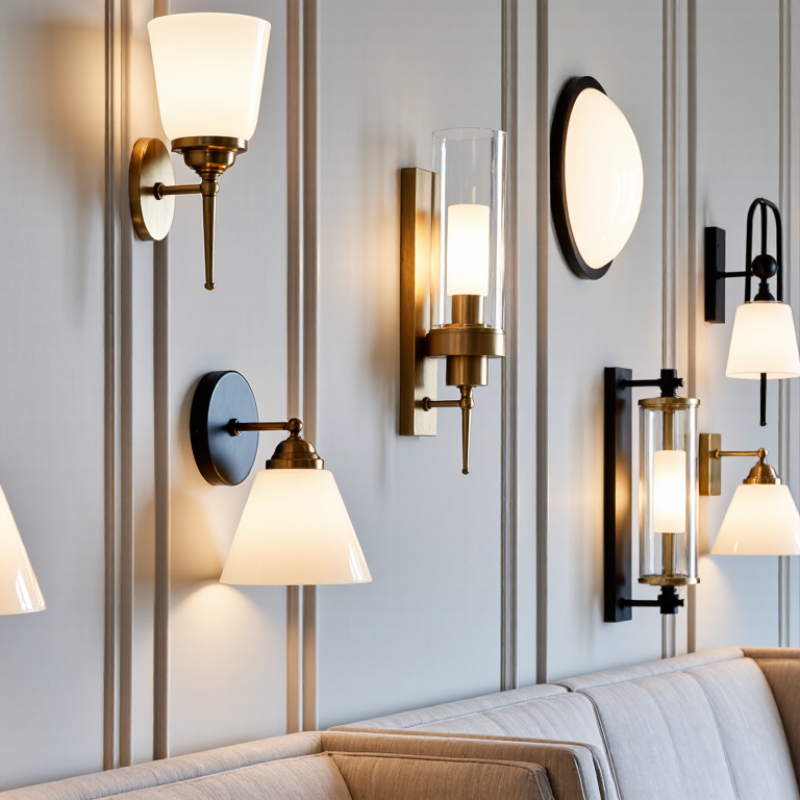
Decorative Sconces bring light closer to the surfaces people notice: a hallway wall, a hotel headboard, or a textured dining-room finish. Their appeal is visual, but sourcing them is a practical decision. Buyers must compare metal thickness, finish consistency, shade fit, light output, packaging, and production capacity. A polished product photo cannot answer every question. Samples can.

The wider market offers useful context, though it does not measure sconces alone. Grand View Research’s Global Lighting Market report estimated the global lighting market at USD 118.5 billion in 2023, with projected growth of 5.4% annually from 2024 to 2030. This broad figure signals a large, changing category, not guaranteed demand for any individual design. That distinction matters. To identify China’s strongest suppliers, this guide looks beyond catalog size and price. It considers manufacturing experience, material and finish options, quality-control practices, customization, communication, and export support. Buyers should request current product specifications, clear lead-time estimates, and samples from shortlisted factories. Independent audits and documented test results can also help verify supplier claims. Still, paperwork does not replace inspection. A small flaw in a brushed finish may disappear online, then stand out beside warm evening light. Supplier rankings also depend on the project: a boutique hotel and a high-volume retailer may need different partners. The comparison that follows treats “best” as a fit, not a universal label.
Who Are the Best Decorative Sconces Suppliers in China?

What Are Decorative Sconces and How Are They Used?

Decorative sconces are wall-mounted light fixtures that add both illumination and visual detail. They may cast light upward, downward, or through a shade, creating different effects on a wall. Beside a bathroom mirror, a pair can reduce harsh facial shadows; along a hallway, they can provide a gentle path of light. In a living room, a shaded sconce can soften a reading corner without taking up table space. Placement matters. A fixture mounted too high may glare, while one placed too low can feel cramped.

The International Energy Agency reports that lighting accounts for about 15% of global electricity use and 5% of greenhouse gas emissions. Those figures cover lighting overall, not decorative sconces alone, but they make efficient lamp choices relevant. The U.S. Department of Energy says LED bulbs use at least 75% less energy and last up to 25 times longer than incandescent bulbs. That matters. For a sconce, check whether its lamp can be replaced, then compare brightness, color temperature, and shade direction. A warm, diffused glow often suits bedrooms; brighter, clearer light is more practical beside mirrors. Still, a beautiful fixture can disappoint if it throws light into the eyes. Measure the wall and test the intended height before choosing.

What Criteria Define a Leading Decorative Sconce Supplier in China?

A leading decorative sconce supplier in China should show more than attractive product photos. Ask for clear drawings, dimensions, mounting details, and material specifications. For a brass-look wall light, confirm whether the finish is solid brass, plated metal, or coated alloy. These choices affect appearance, weight, and care. Request a sample and inspect its edges, socket fit, and finish under warm and cool light. Small flaws matter.

Reliable production controls are equally important. Ask how incoming components, wiring, and finished units are checked, and whether inspection records can be shared. A capable supplier should explain testing methods and provide relevant product documentation for the intended market. Check whether packaging protects glass shades and projecting arms; a neat carton is not enough if the fixture shifts inside. Ask about minimum order quantities, realistic lead times, and how design changes affect cost.

Communication reveals a lot. A useful contact answers technical questions directly and flags limitations early, rather than promising every option. Compare the quotation with the approved sample and written specifications. No factory is flawless. A minor mismatch can happen, so clarify how defects, replacements, and schedule changes are handled.

Which Chinese Suppliers Specialize in Decorative Sconce Manufacturing?

Who Are the Best Decorative Sconces Suppliers in China?

Which Chinese Suppliers Specialize in Decorative Sconce Manufacturing?

Chinese decorative sconce suppliers often fall into three groups: integrated lighting factories, metalworking manufacturers, and workshops focused on glass or ceramic components. Integrated factories may handle housing, wiring, assembly, and packing under one roof. Metal specialists can be better suited to custom brass, iron, or aluminum details. Component-focused workshops may offer distinctive shades, but usually need a reliable partner for final assembly.

Look beyond polished catalog photos. Ask how the supplier controls dimensions, surface finish, and wiring during production. A practical sample review should include the sconce switched on and off, close-up finish checks, and confirmation that mounting parts fit your intended wall box. Request drawings, material specifications, and relevant test documentation for the destination market. Clear records are useful. They also reveal gaps.

Some factories are strong at repeatable production but less flexible with small custom orders. Others welcome design changes, yet struggle to keep every finish consistent across a larger batch. That trade-off deserves an honest conversation. Ask about minimum order quantities, sample charges, lead times, and how defects are handled. A short factory video or live production call can add context, though it cannot replace independent checks. No supplier is perfect; the best fit is the one that explains its limits clearly.

What Products, Customization, and Certifications Do These Suppliers Offer?

China’s decorative sconce suppliers often offer wall lights in brass, aluminum, iron, glass, ceramic, and wood. Common styles include adjustable reading lights, slim hallway fixtures, and sculptural bedside sconces. Ask for clear details on lamp holders, compatible bulbs, dimensions, finish options, and installation requirements. A warm brass sample can look quite different under a cool showroom light.

Customization may cover dimensions, metal finishes, glass shades, cable lengths, packaging, and logo placement. For a project order, request a drawing and physical sample before approving production. Check how the finish handles fingerprints and whether the mounting plate fits your junction box. Small details matter. A polished catalog is not proof of consistent output; sample batches can reveal uneven color or rough edges.

Certification needs depend on the destination market and product design. Ask suppliers for current test reports and certificates that match the exact fixture, not just the factory. ISO 9001 can indicate a documented quality-management system, while product-market requirements may involve safety and material checks. Verify issuing bodies and model numbers independently. I would not treat a certificate image as enough; paperwork can be incomplete, and that deserves a closer look.

Who Are the Best Decorative Sconces Suppliers in China? - What Products, Customization, and Certifications Do These Suppliers Offer?

Supplier type or capability Typical sconce products Customization to ask about Standards and documentation to verify Useful checks when comparing suppliers
Decorative lighting manufacturer Wall lights for residential and hospitality settings, including glass, metal, ceramic, and mixed-material designs. Finish, dimensions, shade material, lamp holder or LED configuration, packaging, and logo or label requirements. Ask which electrical safety standards apply in the destination market. IEC or EN 60598 requirements may be relevant; the applicable parts depend on the luminaire and installation. Request product specifications, drawings, sample photos, and test reports for the exact model and configuration.
OEM or ODM lighting supplier Catalog designs or customer-developed sconces, such as bedside reading lights, bathroom wall lights, and decorative indoor fixtures. Design changes, color and finish options, electrical components, dimensions, branding, and retail packaging; confirm tooling and minimum-order terms. For shipments to the EU, confirm applicable product and market requirements, including CE conformity documentation where required and RoHS compliance where applicable. CE is a conformity marking, not a general quality award. Clarify ownership of custom drawings and tooling, approval samples, change control, and who is responsible for market-specific compliance.
Metal and glass fabrication specialist Sconces featuring formed or machined metal parts, glass shades, and combinations of metal and glass. Metal finish, glass color or shape, component dimensions, mounting details, and coordination with the chosen electrical parts. Check material and finish specifications, electrical component documentation, and the relevant luminaire safety test evidence for the completed product. Review finish samples and packaging tests; confirm replacement-part availability for fragile shades and other components.
LED-focused lighting supplier Integrated-LED sconces and fixtures using replaceable LED lamps, with options that may include dimming or different light distributions. Color temperature, dimming compatibility, driver, beam or light distribution, and LED module or lamp choice. Request relevant safety and performance reports for the complete luminaire and its electrical components. Confirm dimmer compatibility and the intended mains voltage. Compare stated input voltage, wattage, color temperature, color-rendering information, dimming method, and warranty terms.
Export-oriented supplier Decorative indoor wall lights prepared for export markets, with product and packaging options based on the buyer's requirements. Market-specific plug, wiring, voltage, labeling, instructions, carton markings, and shipping packaging, subject to product design and regulations. For North America, ask whether the exact product has applicable NRTL listing or certification, such as UL or ETL, if required by the buyer or authority. For China, verify whether the exact product falls within the CCC catalogue and applicable requirements. Check certificate or listing scope, model numbers, issuing body, validity, and whether the supplied configuration matches the documented product.
Quality and production management Not a product category; applies to suppliers making different types of decorative sconces. Ask about inspection criteria, incoming-material checks, production testing, traceability, and corrective-action procedures. ISO 9001 relates to quality-management systems, not product safety certification. Verify the certificate's scope, site, and validity independently. Request a sample inspection plan and recent, relevant test documentation; do not treat a management-system certificate as proof that every product complies.

Compliance depends on the specific product, configuration, destination market, and applicable regulations. Ask each supplier for current documents covering the exact model you intend to purchase.

How Can Buyers Evaluate and Verify Decorative Sconce Suppliers?

A dependable decorative sconce supplier should be able to explain how a product is made, not just share attractive catalog photos. Ask for the factory address, production capabilities, and recent project references. Then compare those details with the supplier’s business records and, if possible, arrange a factory visit or live video walk-through. Look for actual assembly lines, material storage, and finished fixtures—not only a showroom.

Check a physical sample under ordinary room lighting. Inspect the finish around the shade, the joints, screw holes, and wall plate. Confirm dimensions, materials, socket type, wiring details, and installation instructions in a written specification. Ask for relevant test reports and verify the report number, product model, and issuing laboratory directly. Details matter. A report for a similar-looking fixture may not cover the model you plan to buy.

Before placing a large order, agree on a sample approval process, production schedule, packaging standard, and inspection criteria. Request dated photos or a third-party inspection before shipment, including close-ups of finishes and carton labels. Speak with past buyers about delivery consistency and how the supplier handled defects. A polished sample can still disappoint in bulk production; I have to admit that photos alone never settle that question. Keep key promises in writing, and treat vague answers as a reason to ask again.

Go to Top