
10 Best Electronic Voltage Stabilizers for Home Use
Voltage changes can be hard to notice until lights flicker, a refrigerator clicks off, or an appliance displays an error. An Electronic Voltage Stabilizer can help keep supply voltage within a suitable range for connected equipment. It is not a universal fix. Its usefulness depends on the incoming supply, the appliance, and the stabilizer’s capacity.
This guide compares ten models for common home needs, from protecting a refrigerator or television to supporting several devices. It looks at rated capacity, operating range, response time, overload protection, efficiency, noise, and installation requirements. A unit that is too small may struggle when a compressor starts. A larger model may cost more and take up valuable space. Check the appliance’s wattage and starting demand, then compare them with the manufacturer’s specifications. Read the manual carefully. Have a qualified technician assess fixed installations or persistent supply problems.
Brand reputation matters, but so do clear specifications, warranty terms, and accessible service. Product claims can sound reassuring; real performance still depends on your home’s wiring and local voltage conditions. No shortlist can predict every household’s needs. That is worth remembering. Use these picks as a starting point, and confirm compatibility before buying.
What Electronic Voltage Stabilizers Do in a Home
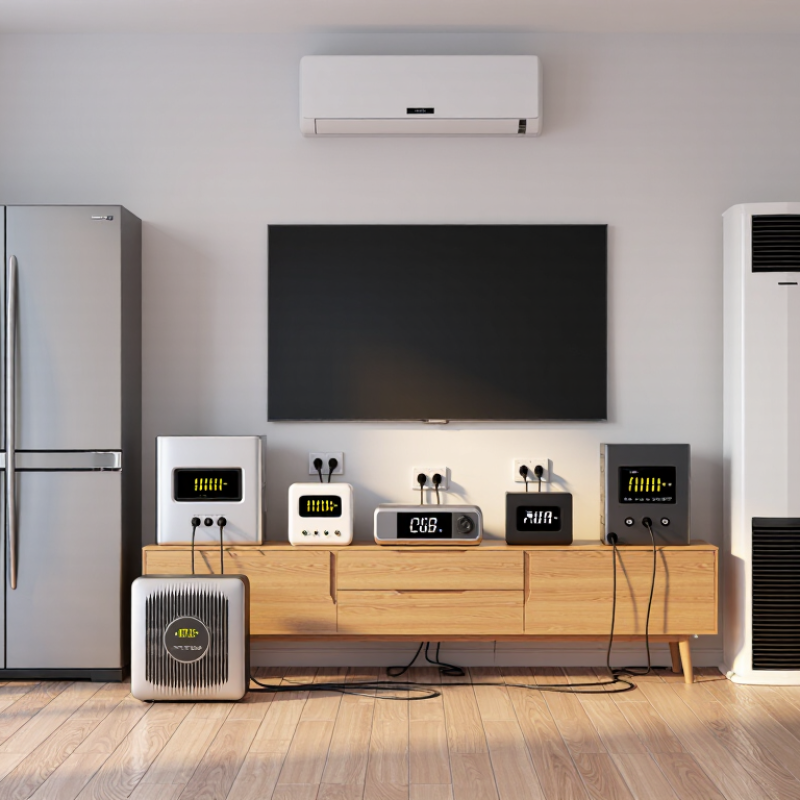
An electronic voltage stabilizer monitors incoming mains voltage and adjusts it toward a steadier level for connected appliances. Sensing circuits detect a rise or dip, while electronic switching components correct the output within the unit’s rated range. This can help reduce electrical stress on refrigerators, televisions, and computers during recurring voltage fluctuations. Not magic.
A stabilizer cannot supply power during an outage, and it may not stop damage from every lightning strike or wiring fault. Its protection depends on the input range, rated capacity, response time, and condition of the home’s electrical system. Check the appliance load before choosing a unit; a refrigerator’s startup demand can be higher than its normal running demand. Small detail, big difference.
Placement matters too. Keep the stabilizer ventilated, dry, and accessible, rather than tucked behind stacked boxes. If it clicks often, feels unusually hot, or shows repeated overload warnings, unplugging it and asking a qualified electrician to inspect the setup is sensible. Honestly, the numbers on product labels can be hard to compare, so matching the stated voltage range and capacity to local supply conditions may take more care than expected.
10 Best Electronic Voltage Stabilizers for Home Use - What Electronic Voltage Stabilizers Do in a Home
These are practical stabilizer selection profiles, not specific product models. Capacity and operating-voltage ranges are indicative; check an appliance’s rated and starting load, local supply voltage, and the stabilizer’s specification before purchase. A voltage stabilizer regulates voltage; it does not provide backup power during an outage.
| Rank | Home-use selection | Typical capacity to consider | Typical input range to look for | Suitable application | Useful features | Key selection note |
|---|---|---|---|---|---|---|
| 1 | Whole-home electronic stabilizer | Size for the home’s calculated maximum demand; commonly several kVA | Choose to match the measured local voltage variation | Multiple household circuits and appliances | Overload and over/under-voltage protection; suitable installation enclosure | Have a qualified electrician size and install it; account for simultaneous loads and motor starting current. |
| 2 | Air-conditioner stabilizer | Often about 3–5 kVA for one residential unit; confirm the unit’s rating | A broad range suited to local supply conditions | One room air conditioner | Compressor delay, overload protection, clear status display | Check the air conditioner’s rated current and starting characteristics; inverter units may have different requirements. |
| 3 | Refrigerator stabilizer | About 1–2 kVA is a common starting point for a household refrigerator | Select according to the refrigerator’s permitted input voltage and local supply | Refrigerator or freezer | Compressor start delay, thermal protection, overload cutoff | Motor compressors can draw more current at startup than during normal running. |
| 4 | Television and entertainment stabilizer | About 0.5–1 kVA for a modest electronics load | Match the equipment input ratings and local voltage conditions | Television, streaming device, and small audio equipment | Over-voltage cutoff, overload protection, adequate outlets | Add the devices’ wattage and allow headroom; do not exceed the stabilizer’s rated load. |
| 5 | Computer and home-office stabilizer | About 0.5–1.5 kVA, depending on the computer and peripherals | Choose a range appropriate to measured supply fluctuations | Desktop computer, monitor, router, and peripherals | Fast voltage correction, overload protection, output indication | A stabilizer is not a UPS and cannot keep a computer running when mains power fails. |
| 6 | Washing-machine stabilizer | About 1–3 kVA, subject to the machine’s rated input | Verify compatibility with the appliance’s stated voltage range | One washing machine | Overload and low-voltage cutoff; durable, ventilated enclosure | Heating elements and motors can make the load higher than expected; use the nameplate rating. |
| 7 | Home water-pump stabilizer | Often 1–3 kVA for a small domestic pump; confirm motor data | Select for the measured low and high supply voltages | Single-phase household water pump | Motor-starting capacity, overload cutoff, moisture-appropriate installation | Pump starting current can be several times its running current; check the motor’s rated current. |
| 8 | Kitchen-appliance stabilizer | About 1–3 kVA for a selected appliance, not necessarily an entire kitchen | Match the appliance’s input specification and local supply | One compatible appliance, such as a microwave or small refrigerator | Overload protection, suitable outlet rating, clear operating indicators | High-wattage cooking appliances may require a dedicated circuit and may not suit a small plug-in stabilizer. |
| 9 | Multi-appliance room stabilizer | About 2–5 kVA, depending on the combined connected load | Choose based on the site’s recorded voltage range | Several low- to medium-power devices in one room | Overload indication, thermal protection, adequate terminals or outlets | Count loads that may run simultaneously and account for power factor and motor startup. |
| 10 | Wide-input-range stabilizer | Available in different capacities; size to the connected load | Some models are designed for approximately 90–280 V input; verify the exact specification | Homes with substantial, recurring voltage swings | Wide operating range, clear cutoff limits, overload and thermal protection | A wider range is not automatically better; confirm the required output voltage and appliance compatibility. |