
Blog

7 Best GRP Storage Tanks for Water Storage

Reliable water storage starts with choosing a tank that fits the site, the water, and the daily demand. A Grp Storage Tank, made from glass-reinforced plastic, is often considered for its corrosion resistance, modular construction, and relatively low weight. These qualities can make transport and installation easier, especially where access is limited. But the material alone does not guarantee a suitable tank. Details matter.

This guide explores seven GRP storage tank options for homes, farms, commercial buildings, and industrial facilities. It considers practical factors such as storage capacity, panel design, support requirements, access points, weather exposure, and ease of maintenance. For water intended for drinking, buyers should verify that the tank and its internal lining meet relevant potable-water requirements in their location. Manufacturer specifications and qualified installation advice also matter, particularly when a tank must withstand wind, seismic movement, or unusual site conditions.

A low purchase price can be appealing, yet it may not reflect the full cost of a base, fittings, delivery, or ongoing inspection. Not always. The right choice depends on real operating needs, not a ranking alone. Some details may seem minor until a leaking connection or difficult inspection causes trouble. Use the comparisons ahead as a starting point, then check each product’s current technical data and suitability with its supplier.
7 Best GRP Storage Tanks for Water Storage

What GRP Water Storage Tanks Are and How They Work

GRP means glass-reinforced plastic, a composite made from glass fibres and resin. Many water storage tanks use separate moulded panels bolted together on site. This design allows large tanks to pass through narrow access routes. It also makes repairs to individual panels more practical. Not every installation is identical. Panel thickness, internal supports, and protective coatings vary with tank size and use.

Water enters through an inlet and collects inside the sealed tank. A float valve may control filling, while an overflow pipe carries away excess water. An outlet connects the stored supply to a building or pump. Vents help air move in and out as the water level changes. Access covers allow inspection and cleaning. The tank needs a firm, level base; even a small uneven area can strain joints. That detail is easy to miss.

Tips: Check that the tank is rated for its intended water use, especially if the supply is for drinking. Follow the maker’s installation and cleaning instructions, and inspect seals for leaks. Keep the overflow visible and clear. A quick visual check helps, but it cannot replace scheduled maintenance.

GRP Water Tank Capacity by Footprint

GRP (glass-reinforced plastic) water tanks are commonly assembled from panels. These examples show the geometric capacity of square footprints at a 1.5 m water depth: footprint area × water depth. They are calculations, not product specifications, and exclude freeboard and usable-capacity allowances.

Key Factors for Evaluating GRP Tanks for Water Storage

7 Best GRP Storage Tanks for Water Storage

Key Factors for Evaluating GRP Tanks for Water Storage

Choosing a GRP tank starts with the water, site, and operating conditions—not appearance. AWWA’s 2024 State of the Water Industry report found that about 82% of respondents identified aging infrastructure as a major concern. That makes long-term maintenance and access worth evaluating early. For drinking water, check that materials meet NSF/ANSI/CAN 61 requirements for health effects. Also confirm the tank’s design basis, panel connections, and suitability for the expected water temperature and chemistry.

Inspect the foundation requirements, too. A slightly uneven slab can stress joints and cause leaks, even when panels look sound. Ask how the design accounts for wind, seismic loads, and local climate. Review UV protection, internal lining, gaskets, and the method for replacing damaged panels. BS EN 13280 provides specifications for GRP sectional tanks intended for cold water; confirm that the proposed tank and documentation match the project’s actual use. Small details matter. A polished brochure is not a substitute for drawings, test records, and clear maintenance instructions.

Tips: Request documented evidence of potable-water suitability, structural calculations, and inspection access. Compare usable capacity, not just nominal volume. Check whether installers can reach bolts and joints after commissioning. Ask for proof. One easy-to-miss issue is future cleaning: access openings should suit the planned inspection method, not merely fit the drawing.

7 Best GRP Storage Tanks for Water Storage – Key Factors for Evaluating GRP Tanks for Water Storage

GRP Tank Type Typical Application Capacity and Installation Key Advantages Important Evaluation Checks
1. Sectional panel tank Commercial buildings, facilities, and water systems requiring a large above-ground storage tank Assembled on site from bolted panels; dimensions and capacity can be configured for the available space. Can be transported through restricted access routes and expanded or configured to suit site requirements. Check panel and joint design, internal supports, access requirements, foundation levelness, and the specified design standard.
2. One-piece molded tank Small buildings, utility rooms, and sites that can accommodate delivery of a complete tank Factory-made as a single unit; size is limited by manufacturing and transport constraints. Fewer site-assembled joints and a comparatively straightforward installation when access is suitable. Confirm delivery access, lifting method, support requirements, outlet locations, and compatibility with the stored water.
3. Cylindrical vertical tank Rainwater, process water, or general-purpose storage where vertical space is available Usually supplied as a factory-made vessel; footprint, height, and capacity depend on the design. Uses a compact footprint relative to its height and is available in a range of vessel configurations. Check wind and seismic design where relevant, anchorage, full-tank support, access openings, and operating temperature limits.
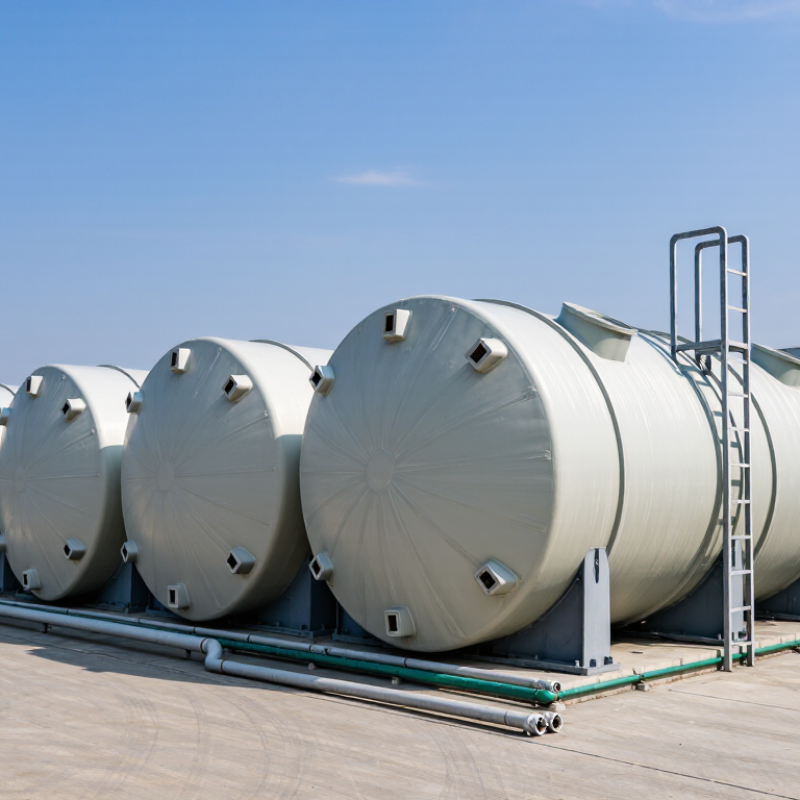
4. Horizontal cylindrical tank Sites with height restrictions, transport applications, or installations needing a low-profile vessel Factory-made and installed on designed saddles or supports; available capacity varies by model. Can fit beneath height-limited structures and may be suited to vehicle or equipment layouts when specifically engineered. Verify support spacing, restraint against movement, sloshing considerations, and whether the tank is designed for stationary or mobile service.
5. Underground GRP tank Rainwater harvesting, fire-water storage, or sites where above-ground space is limited Buried installation; allowable burial depth and groundwater conditions depend on the tank design and installation method. Keeps stored water and equipment out of sight and frees up surface space. Confirm soil and groundwater loads, traffic loading, bedding and backfill specifications, buoyancy restraint, and access for inspection.
6. Insulated GRP tank system Installations exposed to temperature fluctuations or where reducing heat gain or loss is important May use a factory-insulated vessel or a separately specified insulation and cladding system. Can help moderate temperature changes; insulation performance depends on the complete system and conditions. Check insulation specification, weather protection, condensation control, access to fittings, and whether temperature control is actually required.
7. Potable-water-certified GRP tank Drinking-water storage in buildings, treatment systems, and public or private water supplies Available in sectional or factory-made forms; capacity should be selected to match demand and replenishment needs. Can be specified with materials and surfaces intended for potable-water service. Verify current local approval or certification for all water-contact materials, hygienic access, screened vents, cleaning provisions, and required water turnover.

Selection note: Tank suitability depends on the stored water, installation environment, design loads, applicable local codes, and the manufacturer's documented specifications. Potable-water approval should be verified for the complete water-contact system, not inferred from the tank material alone.

Seven GRP Storage Tank Options for Different Water Needs

A compact molded GRP tank can suit a small home, workshop, or remote site with limited space. Its simple shape is easy to position, but access for cleaning still matters. Modular sectional tanks work better when storage demand is larger or the tank must pass through a narrow doorway. Panels can be assembled on site. Check the supporting base and joint details carefully. An underground GRP tank saves surface space and can collect rainwater, though excavation, drainage, and access covers need proper planning. Elevated tanks use height to provide gravity-fed supply. Their support structure must be designed for the full tank load, not just the water’s everyday weight.

Insulated GRP tanks help limit temperature swings where water quality or process conditions are sensitive. A potable-water configuration should use materials approved for drinking-water contact; confirm this in the product documentation. Fire-reserve tanks provide dedicated capacity for emergency systems, while keeping that supply separate from routine use can make monitoring clearer. These are seven distinct options, but the right choice depends on demand, site conditions, and maintenance access. A common sizing mistake is relying on average use alone. Peak demand matters. I would also question any layout that leaves no safe way to inspect the tank interior or fittings.

Comparing Tank Capacity, Materials, and Installation Requirements

GRP tank capacity should match peak demand, refill time, and required emergency reserve—not just daily consumption. A 50,000-gallon tank may suit one site but leave another short during a long supply interruption. Allow for unusable bottom volume and any dedicated fire reserve. Small details matter.

ASCE’s 2021 Infrastructure Report Card estimates that about 6 billion gallons of treated water are lost daily in the United States. That figure supports careful contingency planning, but storage cannot replace leak control.

Panelized GRP tanks can be configured for different footprints and heights. More volume may mean a taller structure, which increases demands on the foundation and tank design. GRP resists corrosion and weighs less than many metal alternatives, yet resin selection, water chemistry, temperature, and sunlight exposure still matter.

AWWA D121 provides a design and construction framework for bolted, aboveground FRP panel-type water tanks. Potable-water projects should also check applicable NSF/ANSI/CAN 61 certification for materials that contact drinking water.

Installation can decide whether the tank performs as intended. The base must be level and engineered for the full water load; one cubic metre of water weighs roughly one tonne. Confirm drainage, anchoring, wind and seismic requirements, and space for panel assembly before delivery.

Access is often underestimated. A site may fit the finished tank but not the workers or equipment needed to assemble it. Review the supplier’s drawings with a qualified engineer, and verify local site conditions rather than relying on a standard layout.

How to Select and Maintain a GRP Water Storage Tank

Choosing a GRP water storage tank starts with the water demand, not the catalogue capacity. Estimate peak use and allow for periods when supply may be interrupted. A school, for example, may need enough reserve for busy mornings and cleaning. It is easy to focus on volume and overlook delivery access. That detail matters.

Check the tank’s dimensions, panel layout, and connection points against the site before ordering. Confirm that the base is level, stable, and designed for the filled tank’s weight. Ask how the tank’s internal lining suits its intended water use, and review the supplier’s installation instructions. A shaded location can reduce direct heat exposure. Still, site conditions vary.

After installation, inspect joints, seals, access covers, vents, and overflow pipes on a regular schedule. Look for damp patches, loose fittings, or debris around the base. Keep a dated maintenance log, even if it feels tedious. For drinking water, use cleaning methods and materials approved for that purpose, following qualified guidance. Avoid high-pressure tools unless the tank instructions permit them; they may damage surfaces. One useful habit is checking the tank after storms, when movement or blocked overflows can be easier to spot.

Go to Top