What Is the Best Powerline Transformer Type in 2026?
Choosing the best Powerline Transformer in 2026 is not a contest between product labels. It is a match between equipment and the network it must serve. A rural feeder with long spans faces different demands from a compact urban circuit. Load profile, voltage class, installation environment, expected growth, and maintenance access all matter. Small details count. A warm enclosure after a summer peak can reveal what a nameplate alone cannot.
Distribution engineer and author Thomas A. Short’s published work supports a practical rule, paraphrased here: “Select the transformer for the feeder’s actual load and operating conditions, not a generic ranking.” That is useful, but not a complete answer. Utility specifications, efficiency data, protection coordination, cooling method, and lifecycle cost also deserve careful review. A technically sound choice on paper may still be awkward to install or service.
This guide compares common transformer types and explains where each may fit. It considers conventional liquid-filled units, dry-type designs, and newer options where relevant. There is no universal winner. In some projects, the lowest purchase price looks persuasive; later, losses or access constraints may change the calculation. I would also question any recommendation made without a real load study. The best choice depends on verified site conditions, reliable manufacturer data, and the utility’s requirements—not a confident headline alone.
What Powerline Transformers Do in Modern Electric Grids
What Is the Best Powerline Transformer Type in 2026?
What Powerline Transformers Do in Modern Electric Grids
A powerline transformer changes voltage as electricity moves from generators to homes and businesses. At a power station, large units raise voltage for long-distance transmission. Higher voltage helps reduce energy lost as heat in power lines. Near towns, substations lower it to levels suitable for local distribution. That is the trade.
Transformers also help grids connect equipment operating at different voltage levels. Tap changers can adjust the voltage ratio within a set range, helping manage changing conditions. They do not correct every fluctuation. A technician checking a substation might inspect bushings, cooling systems, oil temperature, and signs of leaks. A steady hum is normal, but unusual noise or heat deserves investigation.
The best type depends on where the transformer operates and what the grid requires. Oil-filled units often serve outdoor substations, while dry-type models may suit indoor installations. Capacity, cooling, available space, maintenance access, and expected load all matter. The neat diagram in a textbook leaves out one practical challenge: demand changes, and equipment ages. Choosing well means matching the unit to real operating conditions, not just its nameplate rating.
Major Powerline Transformer Types and Their Functions
Powerline transformers serve different points in the electricity network, so the best type depends on its location and load. Step-up transformers at generating stations raise voltage for long-distance transmission. Higher voltage helps reduce current and transmission losses. Large substations use step-down transformers to lower voltage before power moves into regional networks.
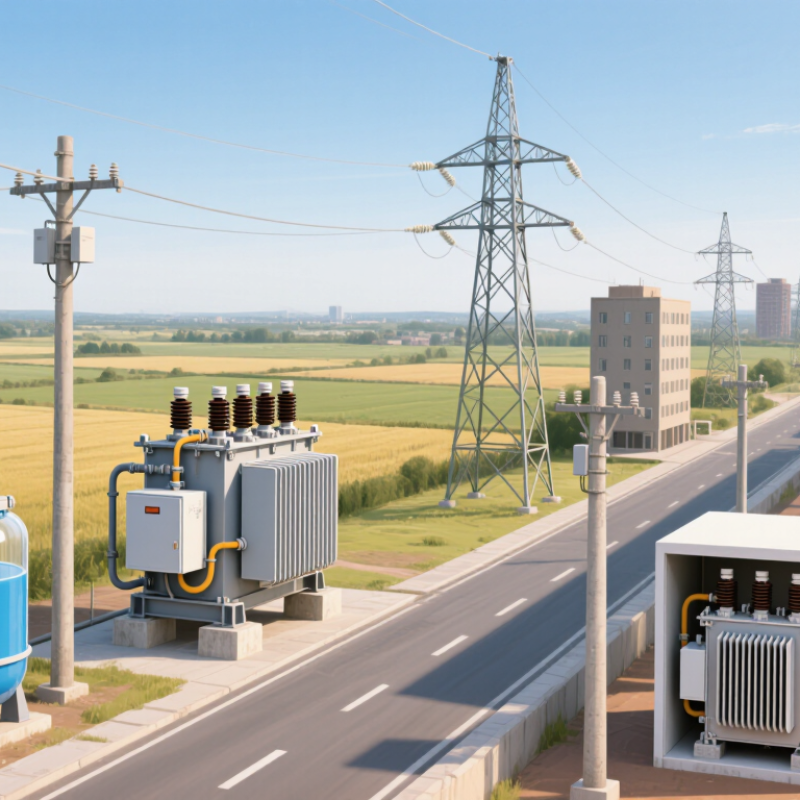
Distribution transformers bring voltage down again near homes, shops, and workshops. You may see pole-mounted units above a street or pad-mounted units beside a building. Three-phase transformers commonly serve industrial loads, while single-phase units often supply individual homes. Autotransformers can adjust voltage between connected grid levels, but they do not provide the same electrical isolation as conventional designs. The categories can overlap in practice.
Tips: Match transformer capacity to peak demand, not just typical use. Check cooling method, installation space, and expected load growth with a qualified power engineer. A unit that looks oversized may still be unsuitable if its voltage rating or protection settings are wrong. Real sites can be less tidy than diagrams.
How Transformer Types Compare Across Grid Applications
Choosing a powerline transformer in 2026 means matching its job to the grid node, not chasing one universal best design. At a generating station, a large power transformer raises voltage for long-distance transmission. Lower current means less resistive loss along the line. At substations, autotransformers can connect nearby voltage levels efficiently. Compact, but not always ideal. Separate-winding units provide electrical isolation where protection plans or fault conditions require it. Near homes and workshops, distribution transformers step voltage down. Pole-mounted units suit dispersed feeders; pad-mounted units fit underground streets. Dry-type designs can suit indoor sites, though ventilation and space remain important.
The IEA’s 2023 Electricity Grids and Secure Energy Transitions report says annual grid investment must exceed $600 billion by 2030, roughly double recent levels. It also notes transmission projects can take five to 15 years to develop.
That makes transformer capacity, replacement access, and future load growth practical planning issues. The U.S. Department of Energy’s 2022 Electric Grid Supply Chain Review examines vulnerabilities affecting large power transformers and high-voltage equipment. In practice, engineers compare load profiles, short-circuit duty, cooling, noise limits, footprint, and failure consequences. A high-capacity unit may look efficient on paper, yet leave little room for maintenance. Field conditions vary. Growth forecasts deserve scrutiny, too.
Key Criteria for Selecting the Best Type in 2026
The best powerline transformer type in 2026 depends on the network, not a single headline rating. Start with the load profile: note peak demand, daily variation, and likely growth. A unit sized only for today may run hot during summer peaks. Too much capacity can also waste money and space.
Match the transformer’s voltage, phase configuration, and impedance to the system. Check insulation and cooling requirements against the installation site, including humidity, dust, and available clearance. For outdoor locations, enclosure design and corrosion resistance matter. They are not minor details. I still find future load growth easy to underestimate, especially when a feeder serves new buildings or charging equipment.
Compare lifecycle costs, not just purchase price. Review expected losses, maintenance access, spare-part availability, and the service life specified by the manufacturer. Ask for verified test data, including temperature rise and efficiency at relevant loads. A tap changer may help manage voltage variation, but it adds equipment that needs inspection. The right choice should also fit local utility specifications and be assessed by a qualified power engineer. Specs can look tidy on paper; actual site conditions are less tidy.
Grid Trends Shaping Transformer Design and Performance
What Is the Best Powerline Transformer Type in 2026?
Grid Trends Shaping Transformer Design and Performance
In 2026, the “best” powerline transformer depends less on one technology than on the grid it must serve. Solar and wind add variable generation, while electric vehicles create sharper local peaks. These shifts favor units designed for changing loads, reverse power flow, and higher efficiency. A well-sized liquid-filled transformer may suit a utility substation, while dry-type designs can fit indoor sites where fire safety and space matter. Neither is automatically superior.
Design choices increasingly include low-loss core steels, improved insulation, and sensors that track temperature, load, and dissolved gases. These features can help operators spot stress before a fault interrupts service. Yet digital monitoring is useful only when alarms are maintained and someone can interpret them. Grid conditions also differ by region, so a model optimized for steady demand may perform poorly under frequent cycling. That trade-off is easy to underestimate.
Tips: Match capacity to measured peak demand, not an optimistic forecast. Check cooling, noise, installation space, and maintenance access. Request verified efficiency data at realistic loading levels. Leave room for uncertainty; forecasts change, and oversizing has costs too.