What is the Best Rechargeable Lithium Battery for Your Needs?
Choosing the right Rechargeable Lithium Batteries can be overwhelming. With so many options available, understanding which one suits your needs is crucial. Dr. Emily Carter, a leading expert in battery technologies, states, "The right battery can enhance device performance and longevity." This highlights the importance of making an informed choice.
Rechargeable lithium batteries come in various types, each designed for specific applications. Some batteries are better for high-drain devices like cameras and drones, while others are suited for lower-power applications like remote controls. It's essential to consider your usage patterns before selecting a battery. You might find that the most popular battery isn’t necessarily the best for your needs.
Moreover, factors such as capacity, discharge rate, and cycle life play significant roles in battery performance. A wrong choice can lead to shorter usage times or even device malfunctions. Exploring these variables helps create a better understanding of how rechargeable lithium batteries can affect your gadgets. It's not merely about brands or labels; it's about selecting the perfect fit for your unique requirements.
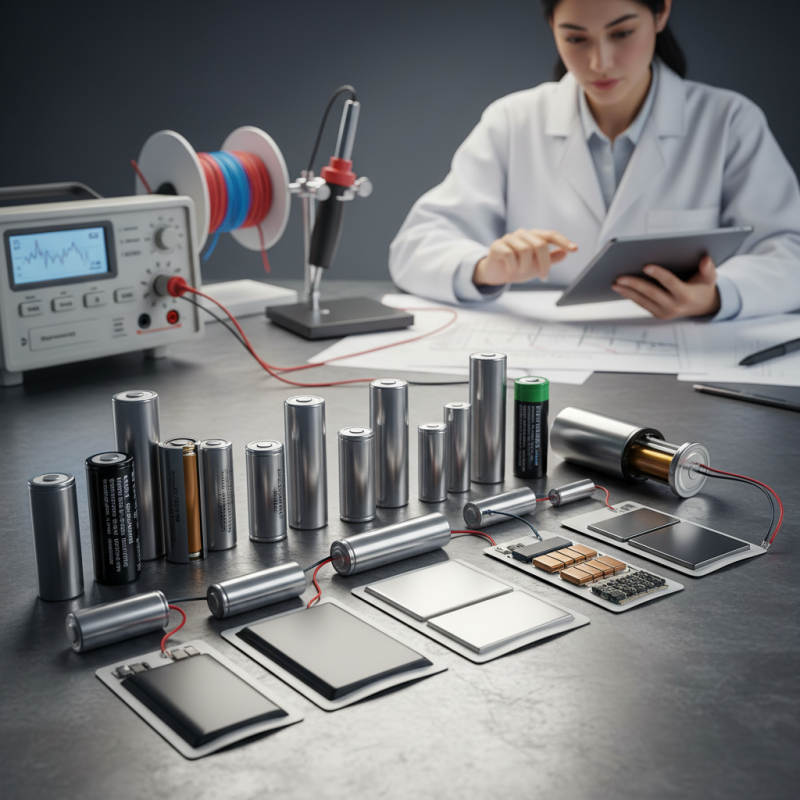
Understanding Different Types of Rechargeable Lithium Batteries Available
Understanding the different types of rechargeable lithium batteries available can greatly influence your choice. Lithium-ion and lithium polymer are the most common types on the market. Lithium-ion batteries are popular for their higher energy density. They are widely used in smartphones and laptops. On the other hand, lithium polymer batteries are known for their lightweight and flexible design. This makes them ideal for drones and remote control devices.
Next, consider the chemistry variations within these types. Some lithium-ion batteries use cobalt oxide, providing high energy but at a higher cost. Others may use iron phosphate, which offers more stability and longer life. The choice often boils down to your specific energy needs and how you intend to use the battery. Each option has its trade-offs. For instance, a battery with a longer life cycle may take longer to charge. This could be a drawback for users needing quick turnaround times.
It is also essential to think about safety and environmental impact. Not all batteries have equal safety ratings. Some may pose risks like overheating or leakage. Researching these factors is crucial. By evaluating your requirements, you can choose a battery that not only meets your needs but also aligns with your safety and ecological values.
Key Specifications: Capacity, Voltage, and Discharge Rates Explained
When choosing a rechargeable lithium battery, understanding key specifications is crucial. Capacity refers to how much energy the battery can store, usually measured in milliampere-hours (mAh). A higher capacity means longer usage time. However, larger batteries may also be heavier and bulkier, which can be an issue for portability. Assess your needs to find the right balance.
Voltage plays a significant role too. It indicates the electrical potential difference provided by the battery. Common voltages for lithium batteries range from 3.6 to 3.7 volts. Choosing the right voltage depends on the devices you intend to use. Mismatched voltage can lead to device malfunctions or even damage.
Discharge rates show how quickly a battery can release energy. This is vital for high-drain devices. A battery with a higher discharge rate will perform better in power-intensive applications. However, this can sometimes lead to shorter overall lifespan. Finding the right combination of capacity, voltage, and discharge rates tailored to your specific needs is essential. It's a balancing act that requires careful thought and consideration of usage scenarios.
Comparative Analysis: Lithium Ion vs. Lithium Polymer Batteries
Lithium-ion and lithium-polymer batteries are two popular options in the rechargeable battery market. Both types have unique benefits and limitations, making them suitable for different applications. Lithium-ion batteries generally offer higher energy density. According to a 2021 report from the International Battery Association, these batteries can provide up to 150 Wh/kg. This makes them ideal for devices that require long-lasting power, such as laptops and electric vehicles.
On the other hand, lithium-polymer batteries offer greater flexibility in design. They can be manufactured in various shapes and sizes. Additionally, they are often lighter than their lithium-ion counterparts. Research from the Battery University shows that lithium-polymer batteries can deliver around 100 Wh/kg. However, they may not perform as well under extreme temperatures. This can raise concerns for users who operate in harsh environments.
Choosing between these two options can be challenging. It's important to consider specific needs. Cost is another factor. Lithium-ion batteries tend to be less expensive. But longevity and recharging cycles should also factor into the decision. Users must weigh performance against their requirements. The right choice depends on the context of use, whether it’s for power tools or consumer electronics.
Applications and Best Use Cases for Rechargeable Lithium Batteries
Rechargeable lithium batteries offer versatile applications across various sectors. They are widely used in consumer electronics, electric vehicles, and renewable energy storage. According to a report by the International Energy Agency, the demand for lithium batteries is expected to grow significantly. By 2030, the market size may reach over 100 billion dollars. This highlights the need to choose the right battery type for your specific needs.
In consumer electronics, lithium-ion batteries power devices like smartphones and laptops, providing high energy density. These batteries are lightweight and have a long lifespan, making them ideal for portable devices. Conversely, lithium polymer batteries offer even more flexibility in design. They are often used in drones and electric bicycles, where weight and shape are critical. Studies indicate that lithium phosphate batteries perform exceptionally well in electric vehicles. They provide greater thermal stability and safety, despite slightly lower energy density.
However, not every lithium battery is suitable for every application. For example, while lithium polymer batteries can be lightweight, their cost may be prohibitive for some applications. Additionally, lithium-ion batteries require careful management to avoid overheating. This raises concerns over safety and longevity. Understanding your specific needs and the environment in which the battery will operate is crucial for making an informed choice.
Recent Industry Trends and Advances in Lithium Battery Technology
Recent developments in lithium battery technology have significantly impacted various industries. These advancements focus on enhancing energy density and charging speed. Manufacturers are now creating batteries that last longer and charge faster. This is essential for devices that require high performance, such as electric vehicles and portable electronics.
With a growing demand for sustainable solutions, researchers are exploring materials that reduce environmental impact. New chemistries might improve the lifecycle of batteries. Innovations like solid-state batteries promise to be safer and more efficient. However, challenges remain. Production costs are high, and scaling these technologies can be complex. Consumers need to weigh these factors when choosing a suitable battery.
Trends indicate a shift towards smart battery management systems. These systems help optimize performance and lifespan. As technology evolves, buyers can anticipate better solutions tailored to their specific needs. Yet it’s crucial to analyze your requirements carefully. Not every new advancement will suit every application or budget. The best choice involves balancing performance, cost, and environmental considerations.
What is the Best Rechargeable Lithium Battery for Your Needs? - Recent Industry Trends and Advances in Lithium Battery Technology
| Battery Type | Capacity (mAh) | Voltage (V) | Cycle Life | Charge Time (hours) | Application |
| 18650 Lithium-Ion | 2500 | 3.7 | 500 | 4 | Laptops, Flashlights |
| Li-Po Battery | 5000 | 3.7 | 300 | 2 | Drones, RC Models |
| 18650 Lithium Polymer | 3500 | 3.6 | 400 | 3 | Tablets, Portable Devices |
| Lithium Iron Phosphate | 6000 | 3.2 | 2000 | 5 | Electric Vehicles, Energy Storage |