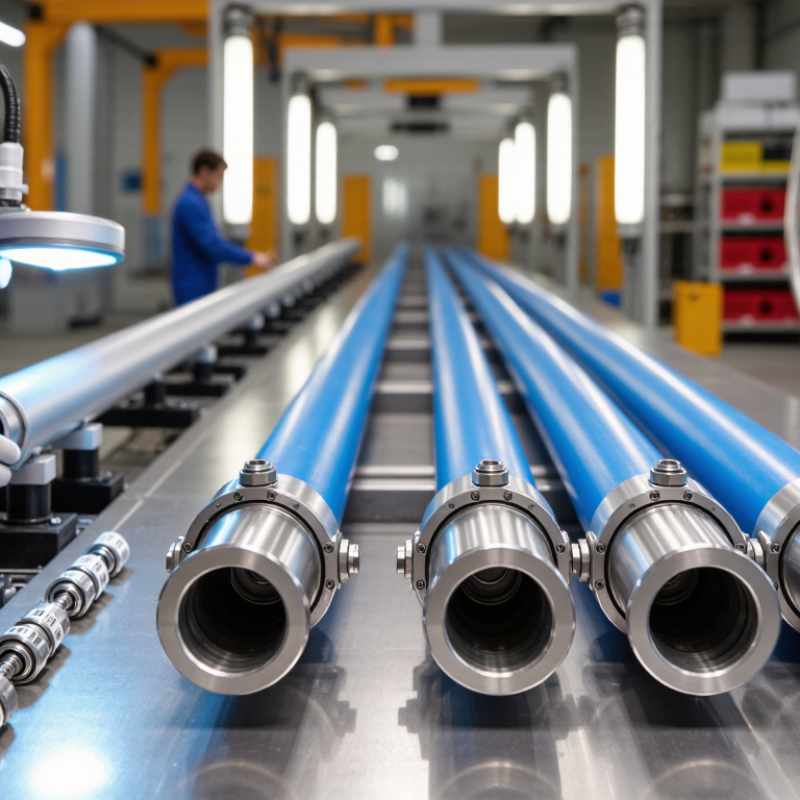
Choosing the best Battery Liquid Cooling Pipe supplier in China requires more than comparing prices or polished catalog photos. The pipe must remove heat evenly, resist vibration, and maintain stable flow inside a demanding battery pack. Small details matter. Tube diameter matters. Wall thickness matters. Connector design matters.
Dr. Ahmad Pesaran, a respected battery thermal-management researcher, has stated, “Thermal management is critical for the safe and reliable operation of lithium-ion batteries.” His observation explains why supplier evaluation should begin with engineering evidence. A capable manufacturer should provide material specifications, dimensional tolerances, pressure-test records, leak-test results, and temperature-cycle data. Look for experience with aluminum, stainless steel, or engineered polymer constructions. Ask how the supplier controls bending, welding, brazing, and surface treatment. Request production samples before approving mass production.
The best supplier is not always the largest factory. It is the one that understands your battery architecture and documents each critical process. Factory audits can reveal testing equipment, worker training, traceability systems, and real quality habits. Yet no supplier is perfect. Some published data may be incomplete, outdated, or difficult to verify. That deserves attention. A low quotation can also hide tooling fees, weak inspection, or inconsistent connectors. The practical choice combines technical capability, transparent communication, responsive service, and verified performance. This guide examines Chinese suppliers through those points, helping buyers select a Battery Liquid Cooling Pipe partner with fewer assumptions and fewer expensive surprises. Performance must be proven. Claims are not proof.
A battery liquid cooling pipe is a sealed channel that carries coolant around battery cells or modules. It removes heat during fast charging, acceleration, and high-load operation. The pipe may sit beneath cells, between modules, or inside a cooling plate. Its shape depends on the battery pack layout.
The system normally uses water-glycol coolant, a pump, sensors, and a heat exchanger. The pipe must transfer heat evenly without creating excessive pressure loss. It also needs strong sealing, vibration resistance, and stable performance across temperature changes. According to the International Energy Agency’s Global EV Outlook 2024, electric vehicle battery demand exceeded 750 GWh in 2023, rising about 40% year over year. More battery capacity means more thermal-management pressure.
Small details matter. A poor bend can restrict flow. A weak joint can create a slow leak. Clean internal surfaces are essential. Testing should include pressure holding, burst resistance, dimensional checks, and thermal cycling. The U.S. Department of Energy identifies battery temperature control as a key factor in safety, durability, and charging performance.
In practice, the perfect pipe does not exist. Engineers must balance cost, weight, corrosion resistance, and manufacturing tolerance. Some designs look efficient on paper but perform unevenly in real packs. Supplier evaluation should include material certificates, traceable inspection records, sample testing, and production experience. A reliable cooling pipe is not merely a metal tube.
China has become a leading supplier of battery liquid cooling pipes through manufacturing depth, engineering experience, and responsive production. Many factories can process aluminum tubes, copper components, and formed cooling channels in the same facility. This reduces handoffs and helps control dimensional accuracy. It matters when a pipe must fit beside battery cells, sensors, and protective plates.
Experienced suppliers usually support bending, welding, brazing, and surface treatment. They also perform pressure, leak, flow, and cleanliness tests. A reliable production team checks tube walls after forming, because small cracks may appear near tight bends. Clear inspection records add practical confidence. So does traceable material documentation. These details help engineers review quality before large-volume delivery.
China’s supply network also provides tooling, packaging, logistics, and technical labor close together. That can shorten development cycles for prototypes and revised designs. During real project reviews, however, communication remains important. A drawing may look complete, yet coolant ports can clash with nearby structures. No supplier gets every design right. Good cooperation includes sample testing, installation feedback, and careful revision. Factory capability is valuable, but process discipline decides whether a cooling pipe performs consistently in a working battery pack.
China Best Battery Liquid Cooling Pipe Supplier?
Key Materials and Manufacturing Processes
Battery liquid cooling pipes need stable heat transfer and dependable sealing. Material selection controls both performance and service life. Aluminum offers low weight and good thermal conductivity. It also supports efficient extrusion and formed channel production. Stainless steel provides stronger corrosion resistance, especially in demanding environments. However, it adds weight and may increase forming costs.
Polyamide and other engineered polymers can reduce weight and simplify complex routing. Their performance depends on temperature, pressure, coolant chemistry, and aging. A pipe should not be judged by material name alone. Wall thickness matters. Welded joints matter even more.
Reliable manufacturing usually begins with controlled tube extrusion or precision forming. Bending equipment must protect the internal passage from collapse. Laser welding or carefully controlled brazing can create consistent connections. Each joint requires visual inspection, dimensional checks, and pressure testing. Helium testing may identify small leaks that water testing misses.
Clean surfaces are essential before assembly. Tiny particles can restrict narrow channels. This detail is sometimes underestimated. Production teams should also record batch data, tooling conditions, and test results. In real projects, perfect prototypes may still fail after repeated thermal cycling. That possibility deserves attention. A stronger supplier combines material knowledge, process discipline, and transparent inspection records, rather than relying on attractive samples alone.
| Evaluation Dimension | Common Material or Process | Relevant Technical Characteristics | Typical Manufacturing and Inspection Requirements | Application Considerations |
|---|---|---|---|---|
| Tube Material | Aluminum alloys, such as 3003 or 6063 | Low density, good thermal conductivity, and good formability. Aluminum is widely used where low mass and efficient heat transfer are priorities. | Tube dimensional control, surface cleanliness, alloy verification, and leak testing should be established for each production lot. | Suitable for lightweight battery packs. Internal corrosion protection and coolant compatibility must be evaluated when the coolant contains water or glycol. |
| Tube Material | Austenitic stainless steel, such as 304L or 316L | High corrosion resistance, good mechanical strength, and good resistance to elevated temperature. Stainless steel generally has lower thermal conductivity than aluminum or copper. | Tube welding, annealing where required, weld-bead inspection, dimensional inspection, and pressure or helium leak testing are commonly used. | Appropriate for demanding corrosion environments or applications requiring higher mechanical robustness. The additional mass and lower thermal conductivity should be considered. |
| Tube Material | Copper, such as C11000 or C12200 | Very high thermal conductivity and good formability. Copper is heavier and can require careful galvanic-corrosion control when joined to aluminum components. | Material certification, tube-wall inspection, brazed-joint quality control, cleanliness testing, and leak testing are important. | Useful where heat transfer is the primary requirement. Isolation coatings or compatible joining methods may be needed in mixed-metal assemblies. |
| Tube Material | Engineering polymers or multilayer polymer tubes | Low weight, electrical insulation, and good chemical resistance can be achieved with suitable polymer systems. Thermal conductivity is usually lower than that of metals. | Material batch control, dimensional stability, burst testing, permeation testing, coolant compatibility testing, and connector retention testing are required. | Suitable for electrically isolated routing and flexible connections. Temperature, pressure, permeation, aging, and flame-performance requirements must be defined. |
| Tube Geometry | Round, flattened, serpentine, or formed tube | Geometry influences coolant velocity, pressure drop, contact area, packaging efficiency, and local heat-transfer performance. | CNC bending, roll forming, hydroforming, or dedicated forming tools may be used. Final parts require checks for bend radius, flattening, twist, and deformation. | A flattened or serpentine tube can improve module contact and packaging efficiency, while a round tube may simplify joining and pressure management. |
| Manufacturing Process | Extrusion and drawing | Extrusion creates the basic aluminum or copper tube profile; drawing can improve dimensional accuracy, wall uniformity, and surface finish. | Process controls normally include die condition, drawing reduction, wall-thickness measurement, straightness, and surface-defect inspection. | Appropriate for repeatable tube profiles and higher-volume production. Tooling design should account for the required cross-section and bendability. |
| Manufacturing Process | Bending and three-dimensional forming | Produces routing paths that match battery-pack geometry and can reduce the number of joints and fittings. | Typical checks include bend angle, centerline radius, end position, ovality, wrinkling, cracking, and blockage of the coolant passage. | Proper tooling and bend-radius selection help prevent wall thinning and flow restriction, especially with thin-wall tubing. |
| Manufacturing Process | Laser welding, TIG welding, brazing, or controlled soldering | The joining method affects joint strength, heat-affected zones, cleanliness, corrosion resistance, and leak performance. | Weld parameters, joint preparation, shielding gas, filler material, and inspection criteria should be documented. Cross-section analysis may be used for process validation. | Laser welding supports precise, automated joints; brazing can join compatible dissimilar components but requires careful flux and residue control. |
| Connection Design | Quick connectors, bead-lock fittings, flared joints, or welded ports | Connections must maintain sealing performance under vibration, thermal cycling, pressure variation, and coolant exposure. | Recommended checks include insertion force, pull-out force, seal compression, dimensional fit, pressure cycling, and leak testing. | Connector material, elastomer selection, and electrical isolation should be compatible with the coolant, operating temperature, and service life. |
| Sealing System | EPDM, FKM, HNBR, or other coolant-compatible elastomers | Seal performance depends on temperature range, glycol concentration, additives, compression set, and exposure time. | Seal validation commonly includes immersion aging, compression-set testing, thermal cycling, pressure cycling, and post-aging leakage inspection. | The elastomer should be selected from coolant compatibility data rather than from temperature rating alone. |
| Surface Treatment | Cleaning, anodizing, conversion coating, or protective coating | Surface treatment can improve corrosion resistance, bonding performance, electrical isolation, or resistance to handling damage. | Cleanliness, coating thickness, adhesion, appearance, chemical resistance, and electrical insulation should be verified where applicable. | Internal surfaces must remain free from loose particles, oil, flux, and coating debris that could contaminate the coolant circuit. |
| Thermal Performance | Coolant flow rate, channel layout, and contact area | Cooling performance is governed by coolant properties, flow distribution, tube-wall resistance, contact resistance, and heat-source temperature. | Thermal testing should measure inlet and outlet temperatures, flow rate, pressure drop, and temperature uniformity under representative heat loads. | A design with high nominal heat-transfer capability may still perform poorly if flow is uneven or contact with the battery module is inconsistent. |
| Hydraulic Performance | Pressure drop and flow distribution | Pressure drop increases with tube length, bends, fittings, roughness, and flow rate. Parallel channels require balanced hydraulic resistance. | Flow-versus-pressure-drop curves should be established using the intended coolant and temperature range. Blockage and partial-flow conditions should also be assessed. | Lower pressure drop reduces pump power, while adequate flow velocity helps maintain heat-transfer performance and temperature uniformity. |
| Leak and Pressure Testing | Air-under-water, pressure decay, or helium leak testing | Leak testing verifies the integrity of tubes, welds, brazed joints, fittings, and seals. Test sensitivity depends on the selected method and equipment. | Test pressure, hold time, allowable leakage, test medium, and acceptance criteria must be defined in the product specification and production control plan. | The test method should represent the actual service risk and should not damage seals or deform thin-wall tubing. |
| Cleanliness Control | Flushing, filtered drying, and sealed packaging | Residual particles, oil, moisture, flux, and metal debris can restrict flow, contaminate coolant, or damage pumps and valves. | Controls may include particulate inspection, gravimetric residue testing, filtered flushing, moisture control, capped ports, and controlled packaging. | Cleanliness requirements should be defined by particle size, particle count, ionic residue, moisture level, and packaging duration where relevant. |
| Durability Validation | Thermal cycling, vibration, pressure cycling, and corrosion testing | Battery cooling pipes experience temperature changes, vibration, assembly loads, coolant exposure, and pressure fluctuations throughout their service life. | Validation plans commonly combine thermal cycling, vibration, pressure cycling, coolant aging, salt or environmental exposure, and post-test leak inspection. | Test limits should be based on the actual vehicle or energy-storage-system environment rather than on material properties alone. |
| Supplier Selection Criteria | Material traceability, process capability, and quality documentation | A capable supplier should demonstrate repeatable dimensions, stable joining processes, documented inspection, and controlled change management. | Important records include material certificates, process-control plans, inspection reports, leak-test records, capability studies, and corrective-action procedures. | The best supplier is not determined by material choice alone; design support, validation capacity, production consistency, and long-term serviceability are equally important. |
Choosing the best Chinese battery liquid cooling pipe supplier requires evidence, not polished sales language. The IEA’s Global EV Outlook 2024 reports that electric car sales exceeded 14 million units in 2023. Battery demand also reached about 750 GWh. This scale makes cooling reliability a production issue, not a minor component detail.
Ask for measurable proof. Review burst-pressure results, helium or air-leak testing, thermal-cycle data, and coolant compatibility records. A serious supplier should provide material certificates, dimensional inspection reports, process-control plans, and full batch traceability. Check whether its testing follows relevant automotive requirements, such as ISO 16750 environmental testing and IATF 16949 quality practices. These certificates help, but they do not replace factory verification.
Look beyond price.
Inspect tube forming, brazing, welding, and sealing operations in person or through an independent auditor. Request samples from regular production, not specially prepared prototypes. Compare wall thickness at bends, connector alignment, surface damage, and internal cleanliness. The IEA’s Global Critical Minerals Outlook 2024 highlights continuing pressure on battery supply chains, so stable material sourcing deserves direct questioning. A supplier with several qualified sources may reduce disruption risk. However, more suppliers can also create inconsistent specifications. That trade-off is easy to miss. I would require a small pilot order, repeat leak testing after vibration and temperature exposure, and a written corrective-action process before approving mass production.
China Best Battery Liquid Cooling Pipe Supplier?
Battery liquid cooling pipes support electric vehicles, energy storage cabinets, charging equipment, and industrial battery systems. They move coolant beside or through heat-producing modules. Stable temperatures help reduce thermal stress and support consistent battery performance.
In practical sourcing, engineers should check material compatibility with the selected coolant. Aluminum alloys, stainless steel, and engineered polymers each suit different temperature and pressure conditions. Pipe geometry also matters. A narrow bend can restrict flow, while a rough internal surface can increase pressure loss. Good suppliers provide dimensional drawings, flow data, and traceable material records.
Quality control should include visual inspection, dimensional measurement, cleanliness testing, and leak testing. Pressure cycling and burst testing reveal weaknesses that normal inspection may miss. Thermal cycling is essential because repeated heating and cooling can loosen joints. Relevant production systems may follow ISO 9001 or automotive quality requirements, depending on the application. Every batch should carry inspection results and production identification.
A perfect specification rarely exists.
Field feedback still matters. During installation trials, I would inspect connector fit, vibration response, and hose movement around the pipe. Small scratches or trapped particles can become serious problems later. This is where supplier reliability becomes practical, not promotional. A stronger process includes sample approval, controlled changes, and honest reporting when results fall short.
Phone: (256) 845-1255 or (256) 845-4493
Fax: (256) 845-1321 or (256) 845-4468
© 2025 Heritage Wire Harness, LLC