
China’s droplet microfluidics sector is gaining attention as laboratories seek smaller samples, faster screening, and better process control. A Droplet Molding Apparatus can shape repeatable microdroplets for diagnostics, biomaterials, cell studies, and pharmaceutical research. Its value depends on more than output speed. Channel geometry, temperature stability, material compatibility, and cleaning access can determine daily performance.
Industry data supports this expanding demand. Grand View Research reported strong growth in the global microfluidics market, driven by clinical diagnostics, drug development, and laboratory automation. MarketsandMarkets also identifies increasing demand for microfluidic technologies in point-of-care testing and research applications. These reports describe market direction, not supplier quality. That distinction matters.
China offers a broad manufacturing base, from precision-machined components to integrated laboratory systems. Experienced manufacturers may provide customized molds, controlled pressure systems, optical inspection, and application testing. Some also operate under ISO 9001 or ISO 13485 quality systems, although certification should always be verified directly. A polished brochure is not enough.
Ask for measurable evidence. Review droplet-size variation, production records, test methods, and after-sales response times. Examine a sample unit closely: tubing connections should feel secure, the chamber should be easy to inspect, and the control panel should show stable readings. Small details become expensive problems later.
This guide examines leading China-based manufacturers through engineering capability, quality assurance, customization, documentation, and international service. Rankings may change as technologies evolve. The strongest choice is not always the cheapest one. It is the supplier that can prove consistent results under your actual operating conditions.
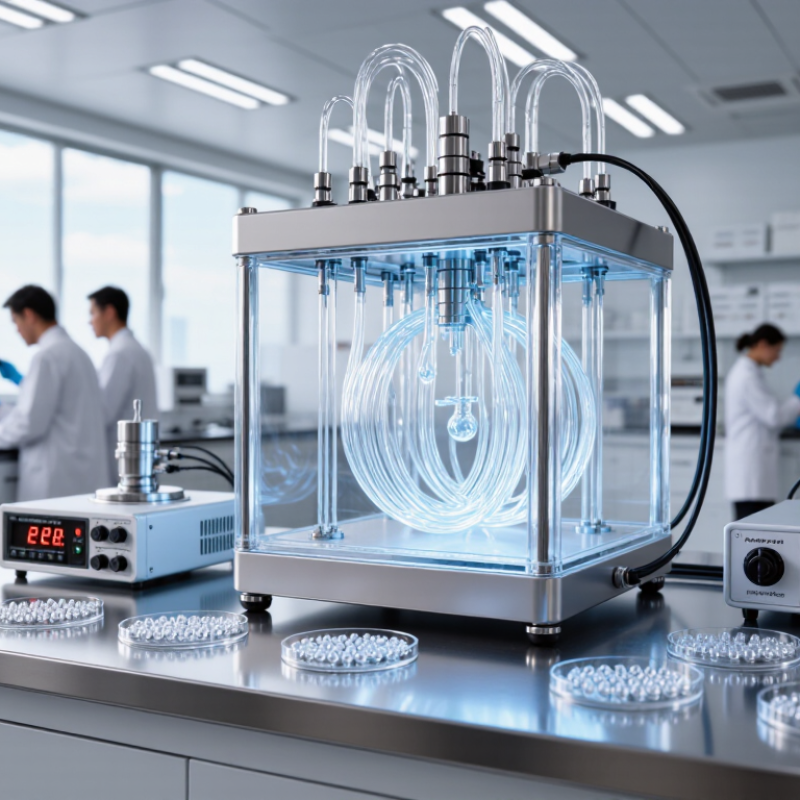
Droplet molding apparatus is laboratory equipment designed to form uniform droplets from liquid materials. It usually combines a precision pump, nozzle, vibration unit, and collection vessel. Depending on the material, droplets may become capsules, beads, or small molded particles. The system is used in microfluidics, pharmaceutical research, food processing, and material development.
Its purpose is controlled size and repeatable shape. Operators adjust flow rate, nozzle diameter, vibration frequency, and curing conditions. Surface tension keeps each droplet intact during formation. A surrounding oil phase or curing bath can prevent droplets from merging. Temperature also matters. A slight change may produce wider size variation or irregular surfaces. Experienced users measure droplet diameter under magnification, rather than trusting the control panel alone.
Manufacturers in China commonly develop apparatus with adjustable parameters and modular parts. Reliable equipment should offer stable pumping, easy nozzle replacement, clear observation, and records for calibration. Stainless steel contact parts can support cleaning and material compatibility. Still, no apparatus removes every source of error. Vibration from a nearby machine may affect droplet spacing. Humidity can influence curing. I would also question overly precise specifications without test data. Real performance depends on liquid viscosity, operator settings, and maintenance quality. Careful trials remain necessary.
China’s droplet molding apparatus manufacturers produce several equipment types for research, food processing, pharmaceuticals, and advanced materials. The best choice depends on droplet size, viscosity, production speed, and contamination control.
Pneumatic pressure systems use compressed air to push liquid through a precision nozzle. They suit stable, repeatable droplets and allow quick adjustment through pressure regulators. Piezoelectric systems create droplets through controlled mechanical pulses. They offer accurate dosing, especially when the fluid has low viscosity. However, vibration settings need careful calibration.
Microfluidic flow-focusing apparatuses form droplets inside narrow channels. They can produce highly uniform droplets, often measured in micrometers. Transparent channels make the process easier to observe. This type works well for emulsions, encapsulation studies, and laboratory-scale testing. Some Chinese manufacturers also supply coaxial nozzle systems for core-shell droplets. These systems need clean fluid paths and steady flow rates.
Rotary and multi-nozzle molding equipment supports higher output. It may serve applications requiring many droplets per minute. Yet, higher speed can reduce uniformity if temperature or pressure changes. A practical inspection should include nozzle alignment, pump stability, droplet imaging, and cleaning access. Ask for test data using your actual material. Water tests are not enough. No single apparatus is ideal. In field evaluations, small maintenance details often matter more than impressive speed claims.
Representative droplet-diameter ranges commonly achieved by major apparatus types used in laboratory and industrial droplet-generation processes. Actual performance depends on fluid properties, nozzle design, pressure, flow rate, and operating conditions.
The ranges shown are engineering reference values rather than market-share or company-specific data.
Chinese droplet molding apparatus manufacturers serve laboratories, pilot plants, and specialized production lines. Their equipment commonly supports controlled droplet formation for polymers, pharmaceuticals, food ingredients, and research materials. Typical systems combine precision pumps, adjustable nozzles, temperature control, and programmable collection units.
Leading manufacturers usually offer modular designs rather than one fixed machine. Engineers may adjust nozzle diameter, flow rate, pressure, and curing temperature for different formulations. Some factories build single-nozzle units for experiments, while others produce multi-nozzle systems for higher throughput. Stainless steel contact parts, transparent observation chambers, and easy-clean structures are practical features. They also provide electrical testing, dimensional checks, and operation trials before shipment.
Technical support is an important measure of reliability. Experienced suppliers can review viscosity data, target droplet size, production volume, and material compatibility before recommending a configuration. They may provide installation guidance, spare parts, training, and remote troubleshooting.
However, not every supplier presents test conditions clearly. Buyers should request sample results, calibration records, maintenance instructions, and acceptance standards.
Ask for evidence.
Customization can improve performance, but it may increase delivery time and validation work. A responsible manufacturer explains these limits instead of promising universal results. Some companies are strong in mechanical fabrication but weaker in process development. That difference matters. Careful buyers should compare engineering experience, inspection methods, documentation quality, and after-sales response before selecting a Chinese manufacturing partner.
China Best Droplet Molding Apparatus Manufacturers
How to Evaluate Droplet Molding Apparatus Manufacturers
Choosing a droplet molding apparatus manufacturer requires more than comparing prices. Check forming accuracy, droplet stability, mold temperature control, and repeatability. These details affect product yield and testing costs. A 2024 MarketsandMarkets report projects the global microfluidics market to reach about USD 63 billion by 2029. That growth increases supplier competition, but it also makes technical verification more important.
Ask for measured data from pilot runs, not only brochure claims. Review droplet-size variation, cycle time, pressure tolerance, and maintenance intervals. A reliable manufacturer should provide calibration records and traceable inspection results. ISO 9001 certification supports process control, while ISO 13485 is more relevant when equipment supports medical-device production. The manufacturer should also explain software security, operator training, spare-part availability, and after-sales response times. I have found that attractive samples can hide unstable production settings. This is easy to miss.
Tips: Request three consecutive test batches using your actual material. Record temperature, pressure, nozzle size, and rejection rate. Compare results under normal and worst-case conditions. Ask whether the quoted output assumes continuous operation. It often does. The 2023 PMMI report on automation trends highlights labor efficiency and data visibility as major purchasing concerns. Therefore, evaluate production records, alarm history, and remote diagnostics—not just molding speed. A factory visit can reveal unfinished validation work, weak documentation, or poor cleanliness. Those observations may matter more than polished presentations.
| Evaluation Dimension | Suggested Weight | Measurable Indicator | Procurement Benchmark | How to Verify | Scoring Guidance |
|---|---|---|---|---|---|
| Droplet Size Control | 20% | Mean droplet diameter, coefficient of variation and size-adjustment range | The supplier should state the validated diameter range in micrometres and provide repeatability data under defined process conditions. | Review particle-size analysis, microscope images or laser-diffraction reports from a witnessed sample run. | Full score when the stated range, tolerance and test method match the application requirement. |
| Flow-Rate Stability | 15% | Liquid and gas flow-rate accuracy, stability and controllable range | Require documented accuracy and repeatability values for the selected pumps, valves or mass-flow controllers; do not accept range-only claims. | Check calibration certificates, controller specifications and results from a continuous production trial. | Score higher when measured flow remains within the buyer's defined tolerance throughout the operating range. |
| Temperature Uniformity | 10% | Set-point accuracy, chamber stability and temperature uniformity | The supplier should specify control accuracy, temperature range and uniformity at the actual working load. | Use calibrated probes at multiple positions and compare the readings with the equipment display. | Award full points only when the test covers start-up, steady state and the intended material. |
| Mold and Nozzle Configuration | 10% | Mold dimensions, nozzle compatibility, changeover time and customization capability | Require engineering drawings, wetted-material information and a documented procedure for mold or nozzle replacement. | Inspect drawings, connection dimensions, spare-part lists and perform a supervised changeover. | Higher scores apply to modular designs that reduce cleaning, alignment and replacement time. |
| Material Compatibility | 10% | Compatibility of wetted parts, seals, tubing and coatings with the process liquid | A complete wetted-material list and chemical-resistance information must be supplied before purchase. | Compare material grades with the liquid manufacturer's compatibility data and conduct a short exposure test when necessary. | Deduct points for undocumented elastomers, adhesives, coatings or tubing materials. |
| Automation and Data Traceability | 10% | Recipe control, alarm records, user permissions, data export and interface availability | The system should record key process values with timestamps and allow controlled recipe management. | Test data export, audit trails, alarm history, backup procedures and communication interfaces during acceptance testing. | Give higher scores to systems that provide non-editable records and clear user access levels. |
| Quality Management | 10% | Documented quality system, inspection records and change-control process | Request valid quality-management certification, incoming-inspection records, final test reports and controlled revision history. | Review certificates with scope and validity dates, quality procedures and a sample equipment dossier. | Certification supports evaluation but does not replace product-specific inspection and acceptance testing. |
| Safety and Regulatory Documentation | 10% | Risk assessment, electrical safety, guarding, emergency stop and operating instructions | Require a documented risk assessment and applicable electrical and machinery-safety test records. | Inspect guards, interlocks, emergency-stop functions, labels, manuals and conformity documentation. | Use ISO 12100 and IEC 60204-1 as reference points where applicable to the machine configuration. |
| Validation and Acceptance Support | 10% | Factory acceptance test, site acceptance test, installation qualification and operator training | The quotation should define test protocols, acceptance limits, responsibilities and training deliverables. | Review a signed FAT/SAT plan and confirm that test instruments have current calibration status. | Full score requires objective pass/fail criteria instead of general performance promises. |
| Service, Spares and Total Cost | 5% | Warranty terms, response time, spare-parts availability, maintenance needs and operating cost | Request a written warranty, recommended spare-parts list, preventive-maintenance schedule and service escalation process. | Compare five-year ownership costs, consumables, utilities, calibration and expected maintenance intervals. | Prioritize documented service capability and predictable lifecycle cost over the lowest purchase price. |
Recommended evaluation method: assign each dimension a score from 0 to 5, multiply the score by the suggested weight, and compare the total only after technical compliance, safety documentation and acceptance-test requirements have been met.
China Best Droplet Molding Apparatus Manufacturers
Applications, Quality Standards, and Purchasing Considerations
Droplet molding apparatus is used for controlled bead formation, encapsulation, laboratory trials, and specialty food processing. It can handle mixtures with different viscosities when the nozzle and pumping system are correctly matched. Droplet size, temperature, flow rate, and curing time directly affect product consistency. Small changes matter.
In practical evaluations, buyers should request test samples made from their actual formulation. A machine that performs well with water may struggle with oils, powders, or heat-sensitive mixtures. Ask for dimensional drawings, material certificates, cleaning instructions, and calibration records. Stainless steel contact parts should suit the process and comply with relevant food, chemical, or laboratory requirements. Quality management certification, such as ISO 9001, is useful, but it does not replace process testing. That distinction is often overlooked.
Purchasing decisions should include throughput, control accuracy, operating temperature, and acceptable droplet variation. Confirm whether the apparatus supports recipe storage, alarm records, and simple parameter adjustment. Safety guarding, emergency stops, electrical documentation, and regional conformity requirements also need review. Ask about factory acceptance testing, installation support, spare nozzles, and response times for technical service. A lower purchase price may hide costly cleaning delays or difficult maintenance. Specifications alone can mislead. The best comparison uses measured results, clear documents, and a realistic production trial. Even experienced teams should leave room for revision, because early assumptions about viscosity and curing behavior are sometimes wrong.
Phone: (256) 845-1255 or (256) 845-4493
Fax: (256) 845-1321 or (256) 845-4468
© 2025 Heritage Wire Harness, LLC