
Choosing China’s top Micron Pleated Filter Cartridge manufacturer requires more than comparing prices or polished factory photos. The right supplier should understand filtration performance, fluid compatibility, pressure loss, and service conditions. Practical experience matters. A reliable manufacturer can explain how polypropylene, polyester, PTFE, or other media perform in different applications. They should also clarify micron ratings, cartridge dimensions, seal materials, and operating temperature limits.
Look for evidence, not slogans. A professional supplier may provide product specifications, batch records, inspection reports, and test methods. Certifications can support credibility, but they do not replace technical verification. Ask whether the Micron Pleated Filter Cartridge is tested under realistic flow conditions. A cartridge rated at five microns may behave differently with viscous liquids, high solids, or fluctuating pressure. Small details matter here. Very much.
The best manufacturer should offer consistent production, responsive engineering support, and sensible customization. Clear communication is essential when discussing samples, housing compatibility, and delivery schedules. No supplier is perfect. Even experienced factories can face material changes, testing gaps, or occasional production variation. That deserves honest discussion. Buyers should review samples before placing large orders and confirm performance with their own process fluids. A careful evaluation can reduce replacement costs, protect equipment, and improve filtration reliability. This guide examines the practical qualities that distinguish a leading Chinese manufacturer from an ordinary cartridge supplier.
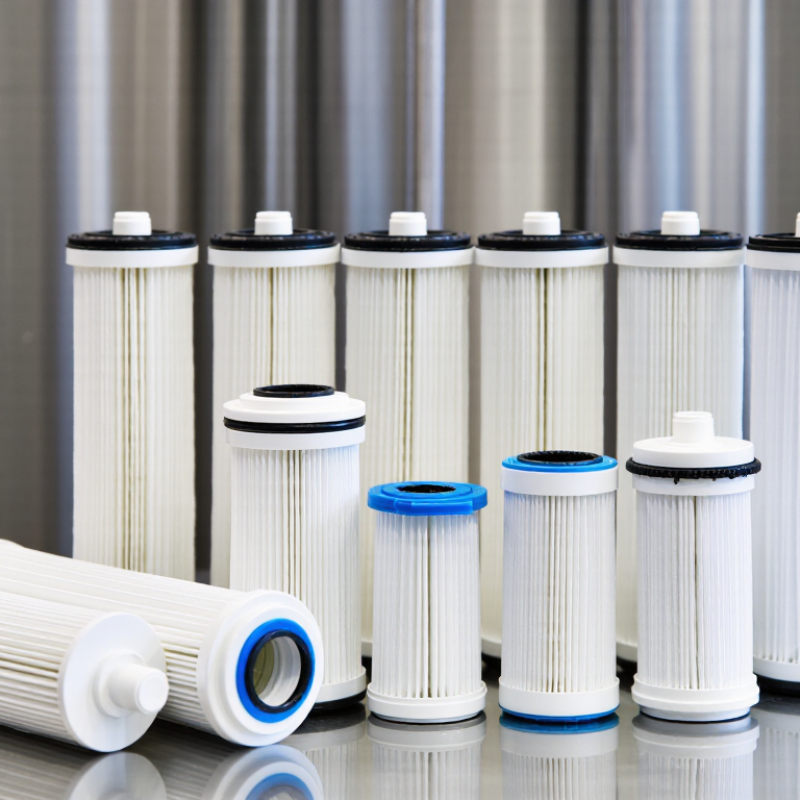
A micron pleated filter cartridge is a replaceable depth or surface filter with folded media inside a cylindrical housing. Its micron rating indicates the approximate particle size it can retain. “Nominal” ratings show general removal performance, while “absolute” ratings suggest tighter control under defined test conditions. The difference matters.
Pleated media creates much more filtration area than a flat sheet. This supports higher flow rates and longer service intervals within a similar cartridge size. Common materials include polypropylene, polyester, and membrane layers.
A five-micron cartridge may remove sand, rust, and suspended solids, but it will not automatically remove dissolved salts or every microorganism. Micron ratings are not magic.
According to the WHO and UNICEF Joint Monitoring Programme’s 2023 report, 2.2 billion people lacked safely managed drinking water in 2022. That pressure increases demand for dependable treatment components.
MarketsandMarkets projected the membrane filtration market to grow from about USD 9.7 billion in 2023 to USD 14.7 billion by 2028. These figures show strong demand, not guaranteed cartridge quality.
Buyers should review ISO 16889 test data, pressure-drop curves, media compatibility, and batch traceability. In practical plant use, an oversized cartridge can waste space and money, while an undersized one may clog quickly. This is often overlooked.
Performance also changes with water temperature, particle shape, and operating pressure. A careful manufacturer should explain those limits clearly, even when the explanation weakens a sales claim.
Micron ratings show the size of particles a pleated filter cartridge can capture. A 5-micron rating does not guarantee complete removal of every 5-micron particle. The result depends on whether the rating is nominal or absolute. Nominal ratings describe approximate reduction under specific test conditions. Absolute ratings indicate a tighter, tested retention level. These terms must be checked before comparing cartridges.
In real operation, flow rate, fluid viscosity, pressure, and particle shape change filtration performance. A cartridge may perform well with clean water but clog quickly in a process containing oil or fine sediment. I have seen specifications look impressive while the operating conditions were missing. That gap deserves attention. Reliable manufacturers should provide test methods, pressure limits, material details, and recommended replacement indicators.
Tips: Match the micron rating with the smallest harmful particle, not the smallest possible number. Check the rated flow at your actual temperature. Monitor differential pressure across the cartridge during use. A sudden pressure increase often signals loading or poor prefiltration. Do not select by micron size alone; pleat area and seal quality also affect service life. When uncertain, test a sample under real process conditions. That step may reveal an inconvenient mistake early.
Pleated cartridges use a folded filter medium to enlarge the filtration area. Polypropylene is common for general liquid service and offers broad chemical compatibility. Hydrophilic PES supports sterile-grade liquid filtration. PTFE suits aggressive solvents and gas applications, while PVDF balances chemical resistance with mechanical strength.
A 2024 industrial filtration report by MarketsandMarkets valued the global market at about USD 42 billion in 2023. It also projects continued growth through 2028. This demand increases attention on material traceability and production consistency.
The medium is only one part of cartridge construction. A polypropylene core, outer cage, end caps, and seals must withstand pressure and temperature changes. Silicone, EPDM, and fluoropolymer seals serve different chemical environments.
The nominal rating may not equal an absolute rating. This detail is often overlooked. I would not approve a 0.2-micron claim without test evidence.
ISO 16889 supports multipass performance testing, while ISO 2942 helps verify element fabrication and bubble-point results. These tests reveal defects that visual inspection can miss.
A practical manufacturer should provide batch records, integrity-test data, and clean assembly controls. Low cost can look attractive. The comparison remains incomplete without pressure-drop, flow-rate, and service-life data. A better selection begins with the process fluid, not the catalog number.
China Top Micron Pleated Filter Cartridge Manufacturer?
How to Evaluate Top Chinese Filter Cartridge Manufacturers
A strong Chinese filter cartridge manufacturer should prove performance, not merely quote a low price. The global water filtration market was valued at about USD 46 billion in 2023, according to Grand View Research. That scale attracts capable factories and weak imitators. Request pore-size validation, membrane material details, and batch-level certificates. For micron pleated cartridges, check bubble-point, bacteria-retention, flow-rate, and pressure-drop data under defined test conditions. Numbers without test methods are incomplete.
Audit the production floor when possible. Look for controlled assembly areas, clean packaging, calibrated instruments, and traceable raw materials. ISO 9001 supports process control, but it does not automatically prove filtration performance. For food, pharmaceutical, or drinking-water use, ask for relevant extractables, migration, and sanitization studies. Independent laboratory testing adds credibility. A manufacturer should also explain how it handles failed lots, complaints, and design changes. Silence here is a warning.
Do not select by price alone. A cheaper cartridge may increase replacement frequency, downtime, or disposal costs. Compare total operating cost over a real service cycle. Ask for samples from different production batches. One perfect sample proves little. I would also challenge unusually high flow claims; they may depend on low-viscosity water and minimal loading. The evaluation can feel slower than expected. That is often useful. Reliability is built through evidence, not polished promises.
China Top Micron Pleated Filter Cartridge Manufacturer?
Micron pleated filters support water treatment, food processing, pharmaceuticals, electronics, and industrial cooling. Grand View Research estimated the global water filtration market at about USD 35.8 billion in 2023. It also projects steady growth through 2030. The demand is real. So is the risk of choosing by price alone.
Start with the contaminant, not the cartridge label. A 1-micron nominal filter may perform differently from a 1-micron absolute filter. Ask for retention data, beta ratios, flow curves, and pressure-drop results. For beverage lines, polypropylene media can suit many applications. For aggressive chemicals, compatibility testing matters more than appearance. A clean housing is not enough.
Check temperature limits, end-cap sealing, extractables, and lot traceability. Manufacturers should provide test methods and certificates, not vague “high-efficiency” claims. The World Health Organization reported that 2.2 billion people lacked safely managed drinking water in 2022, showing why reliable filtration remains important. However, field conditions often differ from laboratory tests. Sediment loads change. Pumps age. Operators sometimes replace cartridges too late. That uncomfortable detail deserves attention. Choose the pore rating, length, surface area, and change-out pressure together. A lower micron rating is not automatically better.
| Application | Typical Micron Rating | Recommended Filter Media | Common Housing Configuration | Primary Contaminants Removed | Key Selection Criteria |
|---|---|---|---|---|---|
| Municipal and industrial water prefiltration | 5–50 µm | Polypropylene or polyester | DOE or 222/flat gasket cartridge | Sand, rust, pipe scale, suspended solids | Required flow rate, dirt-loading capacity, chemical compatibility, and allowable pressure drop |
| Reverse osmosis pretreatment | 1–10 µm | Polypropylene; hydrophilic membrane for fine filtration | Multi-round cartridge housing | Fine sediment, colloids, residual particles | Protect the RO membrane from fouling; select a rating compatible with upstream multimedia or carbon filtration |
| Process water and cooling water | 5–25 µm | Polypropylene or pleated polyester | High-flow or standard cartridge housing | Corrosion particles, biological debris, process solids | Continuous operating temperature, differential-pressure limit, cleanability, and service life |
| Food and beverage clarification | 0.5–10 µm | Food-contact polypropylene or PES membrane | Sanitary 222/fin configuration | Suspended solids, yeast, colloids, and particulate matter | Food-contact compliance, low extractables, sanitary design, and validated retention performance |
| Final filtration of low-viscosity beverages | 0.2–1.0 µm | Hydrophilic PES or PTFE membrane | Sanitary cartridge housing | Fine particles and selected microorganisms | Product compatibility, integrity-test capability, temperature resistance, and validated microbial retention where required |
| Pharmaceutical process liquids | 0.1–0.65 µm | PES, PTFE, or polypropylene membrane | Sanitary 226/fin or 222/fin configuration | Particles, bioburden, and microorganisms | Extractables profile, sterilization method, integrity testing, regulatory documentation, and batch traceability |
| Compressed air and gas filtration | 0.01–5 µm | Hydrophobic PTFE or high-strength polypropylene | Gas-rated cartridge housing | Oil aerosols, water aerosols, dust, and microorganisms | Gas compatibility, pressure and temperature rating, flow velocity, pressure drop, and hydrophobicity |
| Hydraulic and lubricating oil systems | 3–25 µm | Polyester or polypropylene with suitable support layers | High-pressure cartridge housing | Metal wear particles, dust, and system debris | Absolute or nominal rating, collapse strength, fluid viscosity, operating pressure, and beta ratio requirements |
| Solvent and chemical processing | 0.2–20 µm | PTFE, polypropylene, PES, or fluoropolymer-compatible media | Chemical-resistant cartridge housing | Undissolved solids, catalyst particles, and process debris | Fluid compatibility, temperature, concentration, pressure, extractables, and hazardous-area requirements |
| Electronics and ultrapure water | 0.05–1.0 µm | High-purity PES or PTFE membrane | Sanitary or high-purity cartridge housing | Submicron particles, colloids, and microbial contaminants | Low particle shedding, low extractables, high-purity construction, integrity testing, and validated flow performance |
| Paints, coatings, and inks | 1–50 µm | Polypropylene, polyester, or solvent-compatible membrane | Standard or high-flow cartridge housing | Gel particles, pigment agglomerates, rust, and foreign matter | Viscosity, pigment loading, solvent compatibility, desired finish quality, and resistance to blinding |
| Swimming pool and recreational water | 5–20 µm | Pleated polyester or polypropylene | Reusable cartridge filter housing | Hair, dust, algae fragments, and suspended solids | Cleanability, pleat area, flow rate, chlorine compatibility, and replacement cost |
Phone: (256) 845-1255 or (256) 845-4493
Fax: (256) 845-1321 or (256) 845-4468
© 2025 Heritage Wire Harness, LLC