China Top 10 304 Stainless Steel Plate Suppliers
Choosing a reliable China supplier for 304 Stainless Steel Plate requires more than comparing online prices. Buyers need consistent chemistry, accurate thickness, dependable surface finish, and documents that withstand technical review. This guide introduces ten Chinese suppliers selected for manufacturing capability, export experience, product range, and quality-control practices. It considers plates for fabrication, food-processing equipment, architectural work, and industrial maintenance. Real purchasing decisions are rarely perfect.
Each supplier profile examines material standards, available thicknesses, widths, finishes, cutting services, minimum order quantities, and typical delivery arrangements. Attention is given to mill test certificates, heat numbers, PMI testing, dimensional inspection, and traceability from melting to shipment. These details matter when a plate arrives with scratches, uneven edges, or a certificate that lacks useful data. A polished website is not proof. Factory audits, sample orders, and third-party inspections can reveal more. Buyers should verify ASTM, EN, or JIS compliance against their project requirements. Certification names alone do not guarantee performance.
The ranking also reflects practical experience with communication, packaging, container loading, payment terms, and after-sales response. Exporters serving Europe, North America, Southeast Asia, and other markets may follow different documentation and compliance expectations. Prices and lead times change with nickel costs, order size, port conditions, and production schedules. Therefore, this list should support due diligence, not replace it. Request current quotations and recent test records. Check everything carefully. Some suppliers may excel in large-volume orders, while others offer better customization or smaller batches. Supplier capabilities can also change, so readers should treat this overview as a practical starting point rather than a permanent verdict.
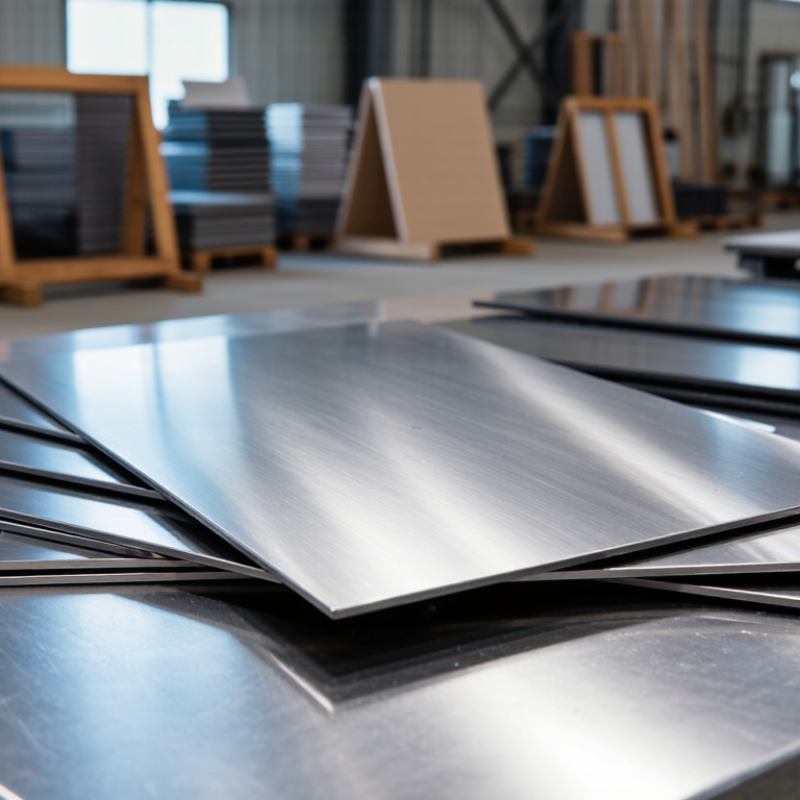
What Defines a Leading 304 Stainless Steel Plate Supplier in China
China’s leading 304 Stainless Steel Plate Suppliers are defined by controlled performance, not catalog size. Buyers should verify chemistry, thickness tolerance, surface finish, and heat-treatment records. These details affect welding, forming, and corrosion resistance on the shop floor.
The International Stainless Steel Forum reported global crude stainless steel production of about 58.4 million tonnes in 2023, down 5.2% from 2022. This pressure makes process control more important. A reliable supplier should provide heat numbers, mill test certificates, and traceable inspection records for every shipment. Plates should align with standards such as ASTM A240 or EN 10088, according to the project requirement. Independent testing adds credibility when applications involve pressure, food processing, or humid coastal environments.
Experience also appears in packaging. Protective film, dry separators, and reinforced edges can prevent scratches before installation. Good suppliers communicate clearly about production schedules, minimum order quantities, and claims handling. Fast replies matter.
Paperwork is not enough.
Even experienced buyers can miss slight warping or inconsistent finishing during a quick inspection. Factory audits, random sampling, and third-party dimensional checks reduce that risk. No supplier is perfect, and delivery delays still occur. The stronger ones disclose limitations early, correct mistakes with evidence, and improve their process instead of hiding behind certificates.
Key Selection Criteria for Evaluating Chinese 304 Plate Manufacturers
Choosing a Chinese 304 stainless steel plate manufacturer starts with evidence, not a polished website. Request the mill certificate for each heat number. It should show chemical composition, tensile results, thickness, and applicable standards. Compare the reported chromium and nickel ranges with the purchase specification. Do not accept a generic certificate. Traceability matters more. Reliable producers can link plates to furnace records, inspection reports, and packing labels. Ask whether testing is performed in-house or by an accredited independent laboratory. That distinction affects confidence when a shipment reaches a demanding site.
Evaluate manufacturing control on the shop floor. A serious audit should examine slab sourcing, rolling schedules, heat treatment, pickling, and surface inspection. For 2B, BA, or No. 4 finishes, request sample panels under normal lighting. Small scratches can disappear in photographs. They rarely disappear after installation. Look closely. Measure thickness at several points, not only at the plate edge. Check flatness, cut tolerance, burrs, and protective film adhesion. These details reveal process discipline better than sales claims.
Commercial reliability deserves equal attention. Confirm minimum order quantities, production lead time, export packing, and replacement procedures before signing. Ask for references from projects using similar thicknesses and surface finishes. A supplier may be excellent with thin sheets but inconsistent with heavy plate. Price comparisons should include testing, freight protection, and rejected-material risk. I would record every promise in the purchase order. Verbal assurances are easy to remember incorrectly. Even careful buyers miss details. That is why a pre-shipment inspection remains worthwhile.
China’s Top 10 304 Stainless Steel Plate Suppliers
China’s Top 10 304 Stainless Steel Plate Suppliers are best assessed through measurable production and quality indicators, not marketing claims. The International Stainless Steel Forum reported global stainless steel crude production of about 58.4 million tonnes in 2023, with China remaining the largest producing region. This scale supports broad plate availability, competitive processing, and stable access to 304 coils and sheets. However, volume alone does not prove supplier reliability.
A professional review should examine ASTM A240 or EN 10088-2 compliance, heat-number traceability, mill test certificates, and surface consistency. Practical checks include thickness tolerance, plate flatness, edge condition, and positive material identification. The World Steel Association recorded China’s crude steel output at approximately 1.005 billion tonnes in 2024, showing strong industrial capacity, but stainless performance still depends on individual mill controls. Small differences in nickel content or annealing quality can affect corrosion resistance and forming behavior.
The strongest candidates among China’s Top 10 304 Stainless Steel Plate Suppliers usually provide sample testing, inspection records, export experience, and clear delivery terms. Yet rankings remain imperfect. Public data often combines stainless and carbon steel production, making direct comparisons difficult. Buyers should verify recent certificates independently and test critical batches before large orders. Reliable sourcing is less about a polished website and more about repeatable results under real fabrication conditions.
Product Grades, Standards, Sizes, and Customization Options
China’s leading 304 stainless steel plate suppliers usually offer 304 and 304L grades, with 304L preferred for welded structures because of its lower carbon content. Some mills also provide 304H for elevated-temperature service, but buyers should confirm the actual chemical range. The World Stainless Association reported approximately 58.4 million tonnes of global crude stainless steel production in 2023, showing the scale of this competitive market.
Reliable suppliers should state whether plates meet ASTM A240, EN 10088-2, or JIS G4304 requirements. These standards address chemistry, mechanical performance, surface condition, and dimensional tolerances. Common thicknesses range from 0.5 to 150 millimetres, while widths may reach 2,000 millimetres. Lengths can be fixed or cut to project drawings. Larger plates need careful flatness control.
Surface options include 2B, BA, No.1, brushed, and polished finishes. Custom services may include laser cutting, waterjet cutting, edge preparation, drilling, and protective film application. Ask for a mill test certificate, heat number, and positive material identification report. A catalogue dimension is not production evidence. It is easy to overlook flatness after cutting, especially on thick plate. I would also verify corrosion conditions, welding plans, and packaging details before comparing prices. Data from the International Stainless Steel Forum supports the importance of grade selection, yet site exposure can still change the practical result.
China 304 Stainless Steel Plate Supply: Grade Chemistry Comparison
Chromium and nickel composition limits for common 304-family plate grades under ASTM A240/A240M, expressed as weight percentages.
Grade 304 is the general-purpose option, 304L provides a lower carbon limit for improved weldability, and 304H is designed for higher-temperature service. ASTM A240/A240M covers chromium-nickel stainless steel plate, sheet, and strip. ASTM A480/A480M provides general dimensional and flatness requirements. Plate thickness commonly starts at 3/16 inch (4.76 mm), while width, length, surface finish, edge condition, and cut-to-size dimensions can be customized according to mill capability and purchase specifications.
Quality Control, Certifications, Pricing, and Export Capabilities
China Top 10 304 Stainless Steel Plate Suppliers
Comparing China’s top ten 304 stainless steel plate suppliers requires more than checking price lists. Experienced buyers inspect heat numbers, mill certificates, and production records. A reliable supplier should offer traceability from raw coil to finished plate. Request EN 10204 3.1 certificates and verify chemical results for chromium, nickel, and carbon. ISO 9001 certification supports process control, but it cannot replace independent inspection. That distinction matters.
Quality checks should cover plate thickness, flatness, surface condition, and edge finishing. Practical inspections may include PMI testing, tensile testing, and ultrasonic examination when required. Ask for samples showing 2B, BA, or No. 4 finishes. A clean surface should not hide pits, scratches, or uneven polishing. Small defects become expensive during fabrication.
Pricing comparisons should include cutting, packing, inland transport, inspection, and export documentation. The cheapest quotation may exclude wooden cases or seaworthy protection. Check minimum order quantities, payment terms, production lead times, and available shipping ports. Export-ready suppliers should manage commercial invoices, packing lists, certificates of origin, and customs data accurately. Their teams should understand destination standards and container loading limits. No supplier is perfect. Communication delays still happen, and certificates may contain errors. A careful buyer should review every document before shipment, not after the cargo arrives.