China Top Truck Start BMS Solutions for Global Buyers?
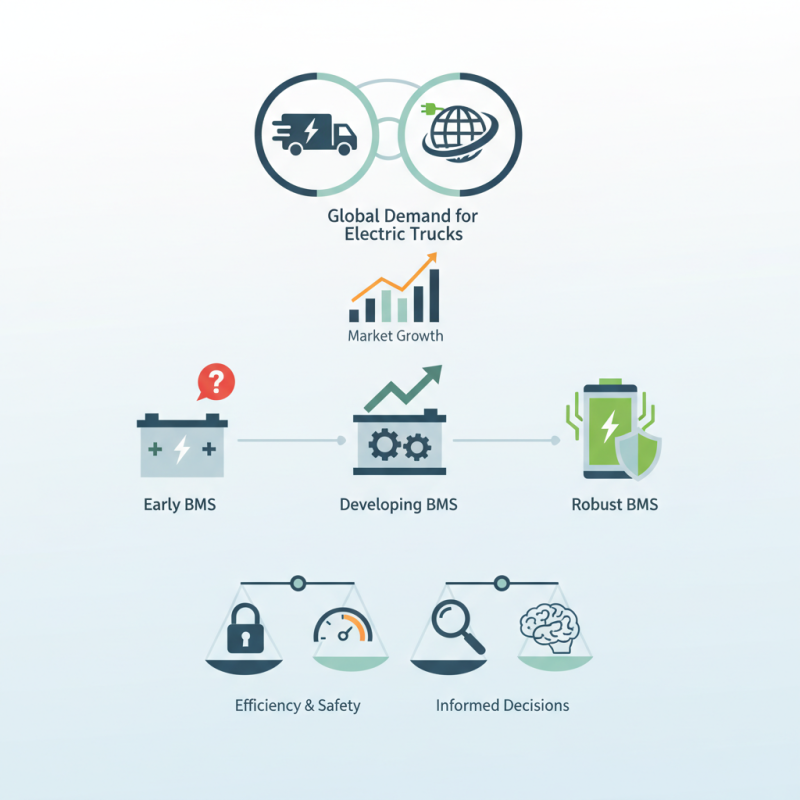
As the global demand for electric trucks increases, the significance of Truck Start BMS (Battery Management Systems) becomes more pronounced. According to industry expert John Smith, "A robust Truck Start BMS is vital for enhancing efficiency and ensuring safety in electric trucking." His insight highlights the critical role of these systems in managing battery performance and longevity.
The market is evolving, with numerous companies developing innovative Truck Start BMS solutions. However, some products lack comprehensive testing, raising concerns about reliability. Buyers need to ensure that they are choosing systems with a proven track record.
Navigating this landscape can be challenging. Not all suppliers showcase their expertise adequately. It is essential for buyers to scrutinize the technology behind Truck Start BMS offerings. As the industry progresses, making informed decisions will become increasingly important. The evolution of Truck Start BMS is not just about technology; it’s about enhancing the future of transportation.
China's Leading Truck Start BMS Solutions Overview
China's truck start BMS (Battery Management System) solutions have gained international attention. They are known for their reliability and advanced technology. Companies are focusing on efficiency, making them attractive for global buyers.
The features of these BMS solutions include high-performance algorithms and real-time monitoring. Safety is a priority, ensuring battery longevity. Yet, there's a constant need for improvement in user interface design. Some clients find them complex. This feedback drives innovation and adaptation to customer needs.
Moreover, China's investment in research and development is significant. This fosters an environment of continuous improvement. However, the industry faces challenges with global competition. Addressing these issues can enhance product quality and user satisfaction. Balancing innovation with practicality is crucial for broader market acceptance.
China's Leading Truck Start BMS Solutions Overview
| Parameter | Value | Description |
| Battery Type | Li-ion | Lithium-ion batteries known for their energy density. |
| Operating Voltage | 24V - 800V | Wide range suitable for various truck models. |
| Max Charge Current | 500A | Ensures rapid charging capabilities. |
| Rated Capacity | 100 Ah | Standard capacity for heavy-duty trucks. |
| Temperature Range | -20°C to 60°C | Suitable for various climates and conditions. |
| Communication Protocol | CAN Bus | Standard protocol for vehicle communication. |
| Cycle Life | 2000 Cycles | Longevity of the battery under normal usage. |
Key Features of Chinese Truck BMS Technology
Chinese truck battery management system (BMS) technology is emerging as a viable option for global buyers. This sector has seen significant advancements. According to a recent market analysis, the global BMS market is projected to reach over $10 billion by 2026. Increased investment in electric vehicle (EV) infrastructure drives this growth, and China plays a vital role.
Key features of Chinese truck BMS include high efficiency and robust performance. Many BMS products come with advanced thermal management capabilities, which are crucial to extending the lifespan of batteries. They also offer real-time data monitoring, enhancing safety and reliability. Reports indicate that systems with real-time monitoring reduce failures by 30%.
However, there are challenges to consider. Some technology may lack integration with existing systems in other markets. Compatibility issues can arise, making global expansion difficult. Additionally, varying regulatory standards may pose hurdles. Companies need to navigate these complexities to gain traction internationally.
Competitive Advantages for Global Buyers in BMS Systems
As global demand for electric vehicles increases, many companies seek advanced Battery Management Systems (BMS). China has emerged as a leader in this technology. Accessing cutting-edge BMS solutions can greatly benefit global buyers. These systems ensure safety, enhance performance, and extend battery life.
One advantage of Chinese BMS solutions is their adaptability. These systems can be customized to meet various industry needs. They also feature robust monitoring capabilities. By analyzing battery data in real-time, manufacturers can optimize performance and reduce costs. However, some may find the customization process complex. It could lead to longer development times, which companies must anticipate.
Moreover, competitive pricing remains a highlight. Chinese manufacturers often offer better rates than their international counterparts. This opens doors for smaller companies with tight budgets. Nonetheless, buyers should consider potential challenges in quality assurance and support services. Variation in standards could affect the overall reliability of the BMS. Therefore, evaluating partner capabilities is crucial in ensuring a successful procurement process.
Market Trends Impacting China’s Truck BMS Exports
The global market for truck battery management systems (BMS) is evolving rapidly. China is at the forefront of this trend, showcasing advanced technological capabilities. With increasing demand for electric vehicles, the need for efficient BMS solutions has surged. Manufacturers in China are adapting to these needs, but challenges remain.
Pricing pressures and changing regulations significantly impact exports. Competition has intensified, driving companies to innovate continuously. Chinese firms must balance quality and cost. Some companies struggle with this, risking their reputation in the process.
Trade policies can also influence export dynamics. Tariffs and trade agreements might create uncertainties. Some manufacturers are not fully prepared to navigate these complexities. Adapting to global standards is crucial for sustaining growth. Business leaders must remain vigilant and proactive in exploring new markets. Understanding consumer preferences and technological advancements will shape future strategies.
Future Prospects for Chinese Truck BMS Solutions in Global Markets
The future prospects for Chinese Truck Battery Management Systems (BMS) solutions in global markets look promising. Innovations in technology are driving the demand for efficient energy management in heavy-duty vehicles. As worldwide environmental regulations become stricter, manufacturers are seeking advanced BMS solutions to enhance vehicle performance and reduce emissions.
Chinese firms excel in developing cost-effective BMS that meet international standards. However, they must address complexities in global supply chains and diversify their offerings. Insights from local experts reveal that understanding regional market needs is crucial. Establishing partnerships abroad can also enhance credibility and market penetration.
Tip: Focus on quality and reliability when exploring BMS options to ensure alignment with global standards. Collaborate with local stakeholders to mitigate risks and enhance acceptance. Continuous investment in R&D will be essential to stay competitive and innovate further. The journey may have challenges, but progress can be achieved through adaptability and strategic planning.