How to Choose the Best RV Fridge Freezer for Your Needs?
Choosing the right Rv Fridge Freezer is essential for comfort on the road. Expert Bob Johnson, a leading voice in the RV industry, states, “Your fridge can make or break your RVing experience.” Understanding your needs will guide you in making the best choice.
An RV fridge freezer comes in various sizes and styles. The options may seem overwhelming. You might find yourself overwhelmed by features, brands, and price points. When selecting, consider storage capacity, cooling efficiency, and power source.
Reflect on how often you travel and the types of food you usually carry. Each RV fridge freezer has strengths and weaknesses. A well-suited model can enhance your trips, while a poor choice may lead to frustration. Consider what truly matters for your lifestyle and choose wisely.
Understanding the Different Types of RV Fridge Freezers Available
When selecting an RV fridge freezer, it's crucial to understand the types available. Common options include absorption fridges, compressor fridges, and thermoelectric coolers. Absorption models use heat for cooling and are often quieter. However, they can be less efficient and may struggle in high temperatures. In contrast, compressor fridges are more effective in extreme conditions, as they use a refrigeration cycle. They are popular for their superior efficiency and temperature control. Lastly, thermoelectric coolers are lightweight and portable but tend to provide minimal cooling, mainly suited for drinks and snacks.
Tips for choosing the right fridge freezer: consider your energy source. If you have limited battery power, absorption models might be better. Studies indicate over 30% of RV travelers prefer electrical options, suggesting a shift toward practical efficiency. Space is also a vital factor. Ensure your chosen model fits well in your RV without obstructing circulation.
Functionality matters. Look for features like adjustable shelving and temperature zones. Research shows that 25% of users prioritize ease of access and cleaning. Maintaining your fridge is essential for longevity. Regular checks on seals and cleanliness can prevent costly repairs. Remember, making an informed decision can save money and enhance your trips significantly.
Factors to Consider When Choosing an RV Fridge Freezer
When selecting an RV fridge freezer, key factors directly impact convenience and functionality. Size and capacity are paramount. Most RVs have limited space. A compact model that fits well can prevent wasted space while ensuring sufficient storage for food. Research indicates that a fridge with a capacity of 6 to 9 cubic feet is often ideal for families on the go.
Power source is another pivotal consideration. Many RVs can run on either propane or electricity. Propane models typically provide better efficiency while off-grid. However, electric units are favored for their ease of use and consistent temperature control. According to industry reports, nearly 70% of RV enthusiasts prefer electric models for regular trips, citing less maintenance and reliability.
Temperature control is a factor not to be overlooked. Variability in outdoor temperatures can challenge your fridge’s performance. Choosing a model with adjustable settings can ensure food safety in fluctuating conditions. Additionally, insulation quality plays a vital role in maintaining efficiency. Many users report issues with regards to cooling effectiveness during extreme weather. This highlights the need for careful reflection on personal usage patterns before final decisions.
Evaluating the Size and Capacity of Your RV Fridge Freezer
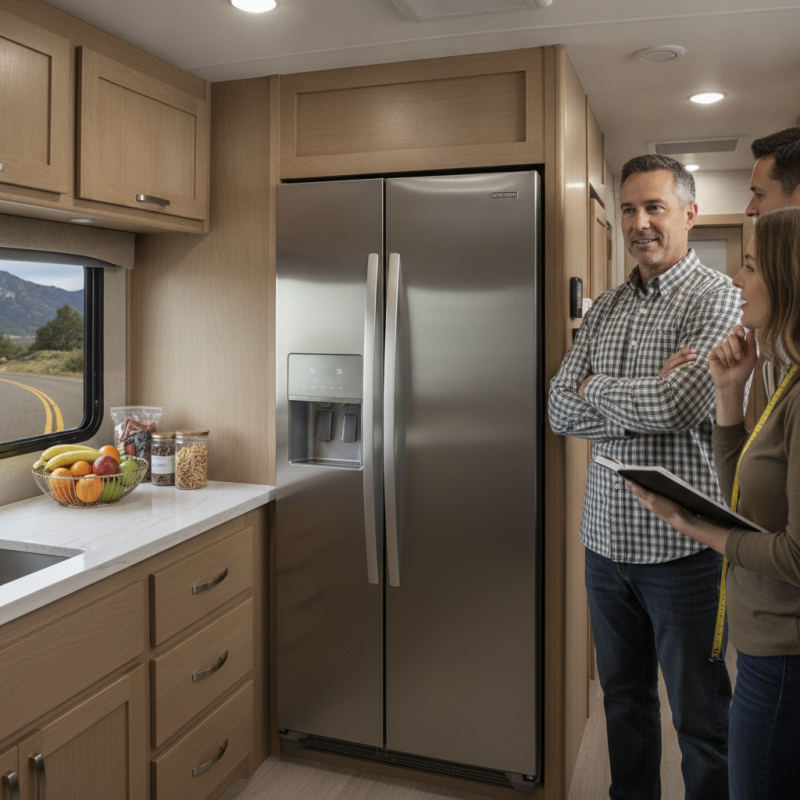
When choosing an RV fridge freezer, size and capacity are crucial factors. The available space in your RV will dictate the dimensions of the unit you can purchase. Measure the designated area before shopping. This ensures a proper fit and avoids installation headaches. Also, consider the layout of your RV. An awkwardly placed fridge can obstruct movement.
Capacity goes beyond a simple number. Think about how you plan to use the fridge. Family trips might mean more storage needs. If you enjoy cooking, look for a larger model. On the other hand, solo travelers might only need a compact unit. Reflect on your storage habits. Do you prefer to stock up on fresh produce, or do you rely on quick snacks? Understanding your needs will streamline your decision.
Some users overlook the power source. The fridge's energy consumption affects capacity. If a unit consumes too much power, you may need a larger battery or solar system. It's essential to balance capacity with efficiency. Additionally, watch the weight. A larger fridge may be heavier, impacting your RV's overall balance and gas mileage. Consider all these factors carefully before making your purchase.
How to Choose the Best RV Fridge Freezer for Your Needs?
This chart evaluates the size and capacity of different types of RV fridge freezers based on storage capacity in cubic feet. Understanding these dimensions can help you select the best fridge freezer for your RV lifestyle.
Energy Efficiency and Power Sources for RV Fridge Freezers
When selecting an RV fridge freezer, energy efficiency is critical. Many models use either absorption or compressor technology. According to the U.S. Department of Energy, compressor fridges tend to use less energy than absorption models. They can be up to 50% more efficient, which is significant during long trips where power sources may be limited.
Speaking of power sources, most RV fridge freezers can run on AC, DC, or propane. While AC power is widely available, DC power is crucial when you're boondocking or lack direct access. Propane is a reliable backup during extended off-grid journeys. Research shows that about 30% of RV owners prefer using propane as their primary power source. However, managing propane levels can be a challenge. Relying solely on one power source may lead to unexpected outages or spoilage.
Another aspect to consider is the size and model compatibility. Larger fridges can be tempting, but they also consume more energy. The Energy Star program suggests that consumers select models based on their specific needs and usage patterns. Understanding your consumption habits can help avoid unexpected energy costs. This highlights the ongoing challenge of balancing capacity with efficiency.
Budgeting: Cost Considerations for Your RV Fridge Freezer Purchase
When selecting an RV fridge freezer, budgeting is a critical factor. On average, RV fridge freezers can range from $500 to $2,500. This wide price gap often relates to performance and size. Research shows that investing in a higher-quality unit can save money in the long run. A reliable fridge can lead to less energy consumption, potentially saving $100 or more annually on energy costs.
It’s essential to assess your specific needs. If you travel frequently, you may opt for a unit with more features. This choice could increase your initial spending but enhance your overall experience. Consider a unit with better insulation. Enhanced insulation can improve performance and reduce operating costs. According to industry data, fridges with high-efficiency ratings can use 30% less energy than their standard counterparts.
Tips: Start by outlining your budget. Determine what features are absolute necessities versus nice-to-haves. This clarity helps in focusing options. Keep an eye on sales and promotions. Seasonal discounts can yield significant savings, as prices often drop during off-peak times. Remember, spending wisely today can mean enjoying cooler, fresher food on your adventures tomorrow.