
Choosing a Meditation Drum is less about finding the loudest instrument and more about finding a sound you can return to comfortably. A deep, steady tone may suit slow breathing, while a brighter ring can help mark transitions between meditation sessions. Size, weight, playing technique, and sound decay matter, too. A drum that looks beautiful but feels awkward in your lap may not become part of your routine. Small details count.
Interest in meditation has grown. The U.S. National Center for Health Statistics reported that 14.2% of adults practiced meditation in 2017, up from 4.1% in 2012. This finding tracks meditation use, not demand for meditation drums, so it should not be treated as proof of a drum-market trend. Still, it points to a wider audience exploring contemplative practices. The right instrument can make a session feel more grounded, but no drum guarantees focus or calm.
Meditation teacher Jon Kabat-Zinn offers a useful reminder: “You can’t stop the waves, but you can learn to surf.” His words are not a drum-buying rule, and that distinction matters. A drum is a tool, not a shortcut. Before choosing one, consider where you will play, how much volume the space can handle, and whether you prefer a soft, warm pulse or a crisp, lingering note. Try one in person if possible. Listen closely. Does the sound invite you to stay—or make you want to stop?
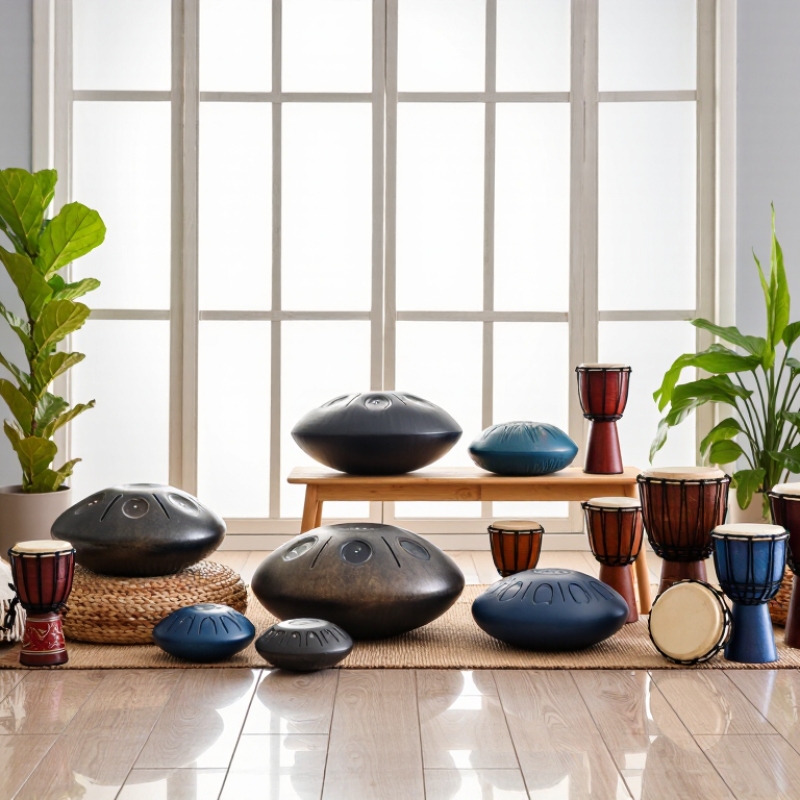
Meditation drums create a steady sound that can help mark the beginning or end of a quiet practice. Their tones may give attention something simple to follow, especially when thoughts keep wandering. Some people use a soft frame drum with slow, spaced beats; others prefer a tongue drum with clear, lingering notes. The sound is personal. Try listening in a quiet room before choosing, and notice whether the tone feels calming or distracting.
A drum’s size, material, and playing method affect its sound and feel. A small hand drum is easier to store, while a larger one may produce deeper tones but require more space. If you plan to play gently, check that the instrument responds without hard strikes. Sit comfortably and test a few slow patterns. Keep the volume low enough to hear your breathing. Less can be enough.
Meditation drums can support breath awareness, group sessions, or a brief pause between daily tasks. They do not guarantee focus or relaxation, and some people find rhythmic sound unsettling. That matters. Consider where you will use the drum, how easily you can carry it, and whether its tone remains pleasant after several minutes. I have found that a sound that seems beautiful at first can feel tiring with repetition; a short trial may reveal more than a quick demonstration.
How to use this chart: These standard note frequencies provide a reference when comparing a meditation drum’s pitch. A drum’s actual pitch depends on its design and tuning, so listen to the instrument and choose a sound that feels comfortable for your intended use.
Before choosing a meditation drum, name the outcome you want. A steady pulse can help anchor attention; slower, softer strikes may suit breath awareness or winding down. If you hope to ease stress, treat the drum as a cue, not a cure. A 2014 JAMA meta-analysis reviewed 47 mindfulness trials involving 3,515 participants and found moderate evidence for reduced anxiety and depression. It did not test drums specifically. That distinction matters.
Sound preference is personal, so listen before buying when possible. Notice whether a low, rounded tone feels grounding or a bright, lingering ring distracts you. In a 2017 study of 62 adults, researchers reported reduced tension and negative mood after a sound meditation with singing bowls. The study was small and did not establish that drums produce the same effects. Try a few gentle taps in a quiet room. Hear the decay. Too sharp? Maybe. Consider volume, sustain, and how comfortably you can hold or play the instrument. A beautiful sound can still feel wrong during daily practice. Your preference may change, too. That is worth noticing.
| Drum type | Typical sound | Potential meditation goal | Playing approach | Things to consider |
|---|---|---|---|---|
| Frame drum | A broad range of tones, from soft, low thumps to brighter taps, depending on the drum and playing technique. | Steady rhythmic breathing, grounding, or gentle movement meditation. | Play with the hands or a suitable beater; begin with a slow, even pulse and comfortable volume. | Head material, diameter, tension, and room acoustics affect the tone. Some models are more portable than others. |
| Tongue drum | Clear, sustained notes produced by striking cut tongues in the metal shell; available notes depend on the instrument's tuning. | Relaxed listening, simple melodic focus, or a beginner-friendly sound practice. | Use fingers or mallets to play individual notes slowly, leaving space for each note to decay. | Check the note layout, scale, and pitch range. A fixed tuning limits which notes are available but can make exploratory playing straightforward. |
| Ocean drum | A soft, rolling sound created by small beads moving inside the instrument when it is tilted. | Imagery-based relaxation, sound-focused breathing, or gentle transitions between meditation activities. | Tilt or rotate it gradually to control the movement and volume of the beads. | The sound is more like a textured effect than a precisely pitched tone. Try it in person if you are sensitive to rustling sounds. |
| Shallow hand drum | A direct, percussive tone whose warmth and resonance vary with the drumhead, shell, and playing technique. | Simple pulse-based practice, group rhythm, or focused listening to changes in tempo and dynamics. | Use light hand strikes and a slow pulse; pause between patterns to keep the practice spacious. | Louder strikes may feel intense in a small room. Consider volume control, hand comfort, and the drum's maintenance requirements. |
| Small frame drum with a soft beater | A muted, rounded beat when played gently; tone varies by head material and beater. | Quiet personal practice or marking a slow breathing rhythm. | Test soft, controlled strokes and adjust the distance and force to find a comfortable level. | “Quiet” is relative: the room, drumhead, and strike strength all affect perceived volume. Check that the instrument feels comfortable to hold. |
Selection tip: choose a sound you find comfortable at a gentle volume, then consider portability, playing style, and whether you prefer rhythm, pitched notes, or sound effects. Instrument tone and volume vary by model, technique, and room.
A meditation drum should fit the sound and setting you actually want, not just look appealing on a shelf. Frame drums are lightweight and easy to hold, with a soft, steady tone when tapped near the center. Tongue drums produce clear, tuned notes that can suit gentle melodies, even if you have no musical training. Larger hand drums often have deeper voices, but they may feel cumbersome in a small room.
Materials shape both sound and upkeep. Wooden frames can feel warm in the hands and often produce a mellow tone. Metal tongue drums tend to ring longer, so notes may overlap in a quiet space. Synthetic drumheads handle changes in humidity more consistently than some natural skins, while natural skins can vary in tension and tone. That variation can be lovely. It can also be frustrating.
Try a few playing styles before deciding. Fingertip taps create light, distinct beats; a soft mallet can make notes rounder and less sharp. Listen from a few feet away, not only while holding the drum. Does the sound settle comfortably, or pull your attention toward every lingering note? Keep the rhythm simple. A slow pulse may work well for breathing practice, while a loose pattern can feel more expressive. I once expected the biggest drum to feel grounding; in a small room, it simply felt too loud.
A meditation drum should fit the room and the way you practice. Smaller drums are easier to carry and store, while larger ones may produce a fuller, more lingering sound. If possible, try one where you plan to use it. A tone that feels warm in a shop can seem too loud in a quiet bedroom. Listen closely. Strike the drum softly, then a little harder, and notice whether the sound stays clear or becomes harsh.
Tone is personal, but consistency matters. Check whether each strike sounds reasonably even, and listen for rattles or buzzing that continue after the note fades. Inspect the rim, surface, and any included beater for rough edges or loose parts. Handcrafted instruments can vary slightly; that may be part of their character, though it can also make comparison harder.
I once assumed a deeper tone would help me settle, but its long resonance distracted me during shorter sessions. Not always.
Set a budget before comparing options, and include useful accessories or a protective case in the total. A higher price does not guarantee a better fit. Ask what materials are used, how the instrument is made, and whether the seller offers clear care guidance. If you cannot test it in person, look for recordings made at different striking strengths and check the return terms. Small details matter. A drum that feels comfortable to hold and sounds pleasant at low volume is often more useful than one chosen for appearance alone.
Testing a meditation drum is more useful than choosing by appearance alone. Try several sizes in a quiet room, and listen from a few steps away. A clear, steady tone may feel calming; a sharp or wavering one can distract you. Notice how long each sound lingers. That matters.
Hold the drum comfortably and test gentle taps, not just firm strikes. Some drums respond easily, while others need more force than expected. Check whether the mallet feels balanced and whether the instrument fits your hands and storage space. If possible, borrow or test one during a short practice session. Five minutes can reveal more than a product description.
Think about where you will use it. A compact drum may suit a small room, while a deeper tone can carry better in a larger space. Your preference may change after repeated listening, and that is normal. I once favored the loudest option, then found its lingering resonance distracting during quiet breathing.
There is no perfect sound for everyone.
Choose the drum whose tone, feel, and volume support your actual routine.
Phone: (256) 845-1255 or (256) 845-4493
Fax: (256) 845-1321 or (256) 845-4468
© 2025 Heritage Wire Harness, LLC