How to Choose the Best Ground Rod Copper for Your Needs?
Choosing the right Ground Rod Copper for your project is vital. Experts recommend careful consideration of your specific needs. John Smith, an electrical engineering expert, once said, "The quality of your grounding system can make or break your electrical setup."
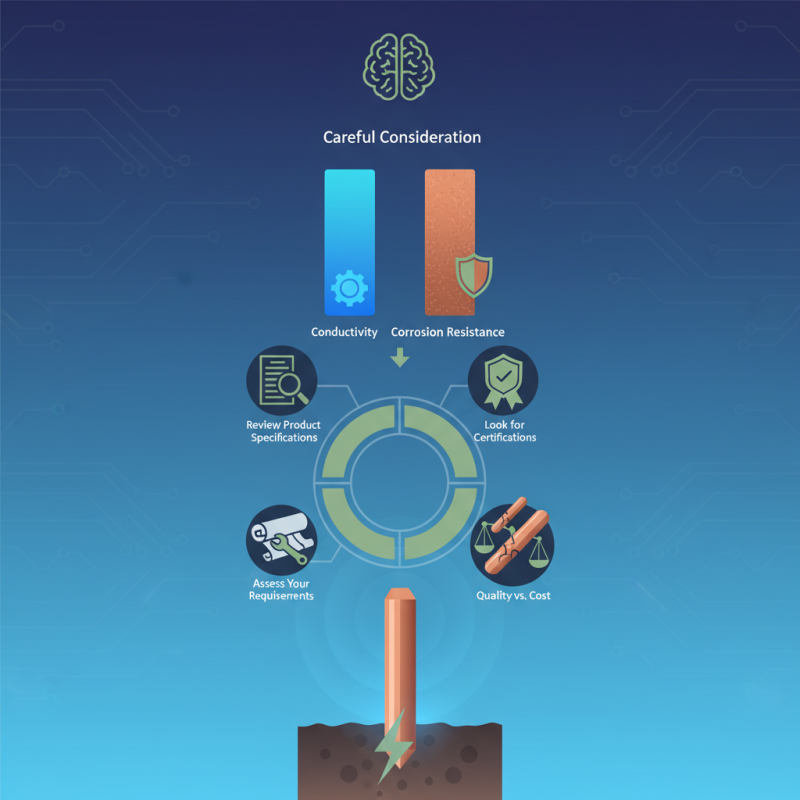
When selecting Ground Rod Copper, consider its conductivity and resistance to corrosion. These factors significantly impact the performance of your electrical systems. It's essential to review product specifications before making a choice. Look for certifications that ensure reliability and safety.
Not all Ground Rod Copper is created equal. While some options may appear cheaper, they often compromise quality. This could lead to issues in the long run. Taking the time to evaluate each option will ultimately save you headaches later on. Assess your requirements carefully to find the best solution for your needs.
Factors to Consider When Selecting a Copper Ground Rod
Selecting the right copper ground rod involves several important factors. The length of the rod is crucial. Typically, ground rods should be at least 8 feet long. This length ensures proper grounding and can enhance safety by reducing impedance. Industry standards suggest that longer rods often provide lower resistance, improving effectiveness.
Material purity plays a significant role. High-purity copper is less likely to corrode. Copper ground rods with a purity of 99.9% are ideal for longevity and performance. A study from the Electromagnetic Compatibility Society reported that copper rods with minimal impurities offer greater reliability in grounding systems.
Tip: Always check local codes and regulations. They can dictate specific requirements for ground rod installation, including size and resistance levels.
Consider environmental factors too. The soil type affects the effectiveness of ground rods. Rocky or dry soil may require deeper installation or multiple rods for optimal results. The National Electrical Code (NEC) outlines guidelines for various applications, stressing the importance of adapting to local conditions.
Tip: Regularly inspect your copper ground rods. Corrosion can happen over time, especially in harsh environments. Maintenance can prevent costly failures down the line.
How to Choose the Best Ground Rod Copper for Your Needs?
| Attribute | Description | Importance | Recommended Value |
| Material | Copper is the preferred choice for grounding due to its high conductivity. | High | Copper |
| Diameter | Typically ranges from 5/8 inch to 1 inch for effective grounding. | Medium | 5/8 inch to 3/4 inch |
| Length | Common lengths vary: 8, 10, and 12 feet; longer rods provide better grounding. | High | 8 feet |
| Corrosion Resistance | Coefficient of resistance to corrosion, important for longevity. | High | Electro-plated or treated |
| Certification | Look for compliance with safety standards and quality certifications. | High | UL listed, IEEE standards |
Understanding the Different Types of Copper Ground Rods Available
Choosing the right copper ground rod is essential for electrical safety. Various types of copper ground rods exist, each designed to meet specific needs. The most common types include Solid Copper Rods and copper-bonded rods. Solid copper rods are highly conductive and resistant to corrosion. They perform well in a wide range of soil conditions. Copper-bonded rods, on the other hand, offer cost efficiency and durability.
In a recent industry report, it was noted that solid copper rods have a conductivity rating of about 97% IACS (International Annealed Copper Standard). This high rating ensures effective grounding. However, their installation can be more challenging due to their heft and rigidity. Copper-bonded rods, with a typical conductivity around 30% IACS, are easier to handle and install. They provide a reliable option for many residential and commercial applications.
Beyond performance, consider installation factors. Environmental conditions impact the choice significantly. For instance, areas with high moisture content may favor solid rods. Meanwhile, drier regions might find copper-bonded rods more suitable. Balancing cost with performance can lead to imperfect choices, but each type of copper ground rod has its advantages and limitations based on specific requirements.
Evaluating the Diameter and Length for Optimal Grounding
When choosing a ground rod, diameter and length are crucial factors. The diameter impacts the rod's surface area and conductivity. A thicker rod tends to have better electrical performance. However, it can be more challenging to install. A standard diameter is often between 5/8 inches to 3/4 inches. Each size has unique benefits. Choosing one involves considering the specific grounding needs of your application.
Length is equally important for effective grounding. A shorter rod might be easier to install, but it may not provide adequate grounding in all soil conditions. A typical length is 8 to 10 feet. However, in areas with rocky or dry soil, longer rods are necessary. It’s essential to evaluate your local soil conditions before making a decision. Conductivity varies, and sometimes a longer rod is the only solution to achieve optimal grounding.
Selecting the right diameter and length requires careful consideration. You must think about installation ease versus performance needs. Be mindful of how environmental factors influence your choice. Grounding is vital for safety and functionality, so don’t rush this decision. Assess your specific situation and weigh the pros and cons thoughtfully.
Ground Rod Copper: Diameter and Length Comparison
This chart illustrates the various diameter sizes of ground rods and their corresponding lengths. Selecting the optimal size for your grounding needs is crucial for effective electrical performance.
Assessing Corrosion Resistance and Durability in Ground Rods
Choosing the right copper ground rod means focusing on corrosion resistance and durability. Copper’s natural ability to resist corrosion varies depending on its purity and coatings. Lower purity copper may degrade faster in moist or acidic soils. Sometimes, a copper-clad steel rod offers improved strength but risks corrosion where the coating wears off. Understanding your soil’s chemical makeup can guide better material choices.
Durability also depends on physical stress tolerance. Ground rods face constant exposure to moisture, temperature changes, and mechanical impacts from installations. A rod that looks solid might still fail prematurely if not tested against real-world conditions. Many assume longer rods are always better, but soil composition and installation depth can matter more. This complexity means assuming one type fits all needs can lead to costly replacements.
Reflecting on common practices, it’s clear more field testing is necessary. Professionals should verify rods’ performance beyond lab results. While copper’s reputation is strong, subtle variations in manufacturing quality and environmental factors can change outcomes. Anticipating these challenges helps in choosing a ground rod that balances corrosion resistance and durability effectively.
Cost Analysis: Budgeting for Your Ground Rod Purchase
When budgeting for your copper ground rod purchase, consider your specific needs. Ground rods vary in size and quality, impacting durability and effectiveness. A thicker rod might cost more but may offer better conductivity. Understanding the current standards and regulations can help you make informed decisions.
Evaluate the installation costs as well. Professional installation can add to your total expenses. If you’re skilled, DIY options exist. However, ensure you have the right tools. A misstep in installation can lead to further costs later. It's essential to weigh your options carefully.
Don’t forget about maintenance. Some rods require periodic checks to ensure they perform optimally. Over time, corrosion can become an issue, affecting your investment. Budgeting for replacement or maintenance can save you headaches down the road. Always keep your long-term goals in mind when making your choice.