How to Choose Double Eccentric Butterfly Valves in 2026?
Choosing double eccentric butterfly valves in 2026 requires more than comparing prices and catalog photographs. The correct valve must match the medium, pressure, temperature, pipeline size, and operating frequency. A water treatment line may need corrosion-resistant materials, while a chemical process demands stronger sealing and carefully verified compatibility. Small differences matter.
This guide examines how Double Eccentic butterfly valves perform in practical service. It considers disc design, seat materials, shaft construction, pressure ratings, actuation, maintenance access, and certification requirements. Engineers should review factory drawings, test reports, and traceability documents before approving a purchase. A polished product page is not enough evidence. Ask for measurable details.
Field experience often reveals what specifications miss. A valve that operates smoothly during testing may become difficult after months of sediment exposure. Incorrect actuator sizing can cause slow movement, excessive wear, or incomplete closure. Installation alignment also matters. Even a reliable valve can leak when the flange faces are uneven or the bolts are tightened carelessly. This point is easy to underestimate.
The article also compares manual, pneumatic, and electric actuation for different control conditions. It explains how lifecycle cost may exceed the initial purchase price. Spare seals, shutdown time, inspection labor, and energy use deserve attention. Standards and supplier claims should be checked against the project’s location and industry requirements. No selection method is perfect. However, a disciplined review can reduce avoidable failures and support safer, more dependable pipeline operation in 2026.
What Defines a Double Eccentric Butterfly Valve?
How to Choose Double Eccentric Butterfly Valves in 2026?
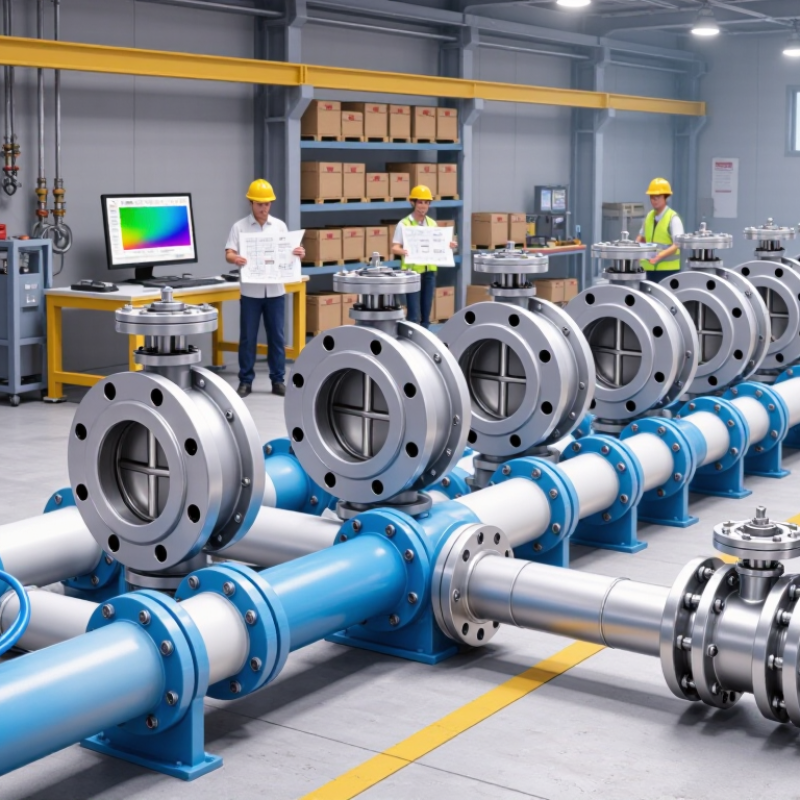
A double eccentric butterfly valve has two deliberate shaft offsets. The stem sits behind the disc centerline and away from the pipe centerline. This geometry changes the disc’s movement during opening. It pulls the disc away from the seat sooner, reducing rubbing, wear, and operating torque. That matters in large water, HVAC, and industrial pipelines. A 2024 Grand View Research assessment valued the global butterfly valve market above USD 9 billion in 2023. Demand is expanding, but market size alone should not decide your specification.
In practical selection, check pressure class, temperature, media compatibility, seat material, and actuator torque. A soft seat can provide tight shutoff for clean water. Metal seating may suit hotter or more abrasive service, though leakage expectations differ. The U.S. Environmental Protection Agency’s 7th Drinking Water Infrastructure Needs Survey estimates USD 625 billion in needs over twenty years. Many replacement projects will involve aging valves, buried chambers, and limited maintenance access. Choose corrosion-resistant body materials and confirm the valve’s tested leakage standard. Do not trust a catalogue torque value blindly. Pipeline friction, deposits, flow direction, and long storage can change real performance. Double eccentric designs reduce seat contact, but they are not maintenance-free. That is the uncomfortable part. A smaller valve may look economical, yet poor sizing can create excessive velocity and unstable control. Review the duty cycle with an experienced valve engineer before ordering.
Which Operating Conditions Should Guide Your Valve Selection?
Choosing a double eccentric butterfly valve starts with the operating envelope, not the pipe diameter. Record normal, minimum, and maximum pressure, temperature, flow velocity, and cycling frequency. A valve that works at design flow may struggle during startup or emergency isolation. Write those cases down.
The medium also controls material selection. Clean water, seawater, chemicals, steam, and abrasive slurry create different sealing demands. Check corrosion data, particle size, concentration, and expected leakage limits. For high-temperature service, confirm seat and disc materials across the full temperature range. Soft seats may provide tight shutoff, but they can wear quickly with abrasive particles. Metal seats may tolerate heat better, yet they require careful machining and alignment.
Pressure drop deserves close attention. Excessive velocity can cause noise, vibration, and cavitation near partially open positions. Ask how often the valve will throttle, not only isolate. Frequent cycling may require stronger shafts, suitable bearings, and a properly sized actuator. Calculate breakaway and running torque under the worst pressure difference. Do not size the actuator from normal conditions alone. Field experience shows installation errors can defeat good design; pipe strain and poor disc clearance remain common problems. Selection is rarely perfect on the first review. Recheck the assumptions against actual startup data, maintenance access, and the pipeline’s future operating changes.
How to Match Valve Materials with Media and Temperature
How to Choose Double Eccentric Butterfly Valves in 2026?
Matching valve materials with the medium and temperature is more important than selecting by size alone. NACE’s IMPACT study estimated global corrosion costs at about US$2.5 trillion annually, or 3.4% of global GDP. Material mistakes remain expensive. They can also appear months after installation.
For clean water, ductile iron bodies with EPDM seats are often practical. EPDM suits many water services, but it performs poorly with petroleum oils. NBR may handle oils better, while PTFE offers stronger chemical resistance. However, PTFE can require careful design because thermal expansion affects sealing. Seawater and chloride-rich media demand extra caution. Stainless steel or duplex components may reduce pitting risk, depending on concentration and temperature.
Temperature changes the decision again. Elastomer limits vary by compound, pressure, and cycling frequency. For hot steam or abrasive slurry, a metal-seated design may be more suitable than a soft seat. ASME B16.34 and API 609 provide important guidance for pressure, materials, and butterfly valve construction. ISO 5208 leakage testing is also useful during acceptance checks. Do not trust a catalog temperature alone. I have seen specifications fail because the medium temperature was averaged, not measured at peak conditions.
Tips: Record maximum temperature, pressure, concentration, and flow velocity. Check the body, disc, shaft, seat, and fasteners separately. Ask for compatibility charts and test evidence. A small trial section may expose an overlooked chemical reaction before full installation.
How to Verify Standards, Lifecycle Costs, and Supplier Reliability
Choosing double eccentric butterfly valves in 2026 starts with evidence, not a glossy catalogue.
Ask for applicable design standards. API 609 and EN 593 cover important butterfly-valve design requirements. ISO 5208 defines pressure-testing methods and leakage acceptance. Confirm the pressure class, temperature range, seat material, shaft design, and test pressure. A certificate is not proof by itself. Match heat numbers, drawings, inspection records, and serial numbers. Small gaps matter.
Lifecycle cost deserves more attention than purchase price. The U.S. Department of Energy’s pumping-system guidance shows that system efficiency can create significant energy savings, especially where throttling is frequent. Calculate pressure loss, actuator electricity, maintenance labor, spare parts, and outage exposure. Use ISO 15686-5 principles, then test assumptions against site data. McKinsey’s predictive-maintenance research reports potential maintenance-cost reductions of 10–40% in suitable industrial settings. That range is not a promise. Valve torque can rise with sediment, corrosion, or poor alignment. I would price one failed shutdown honestly.
Supplier reliability needs auditable behavior. Request recent factory acceptance records, calibration certificates, material traceability, and nonconformance data. Check commissioning support, spare-part availability, and documented lead-time performance. Three completed orders reveal more than one quotation. In site reviews, I have seen technically correct valves delayed by missing documents. That weakness is easy to overlook. It should not be.