Top 5 Tips on Choosing Hardware BMS for Your Business?
Choosing the right Hardware BMS (Battery Management System) is crucial for business success. Industry expert Jane Smith, a leading authority in energy storage solutions, emphasizes this by stating, "A reliable Hardware BMS can make or break your battery reliability." Her insights remind us that the decision process must be thorough and informed.
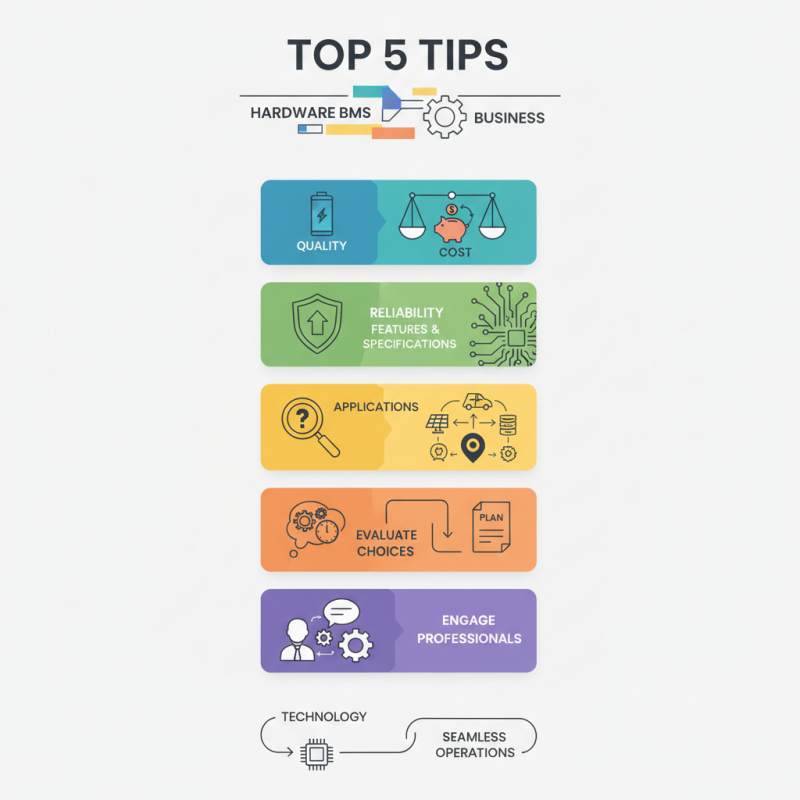
Investing in Hardware BMS involves balancing quality with cost. Many businesses overlook this critical factor. They might select cheaper options, only to face performance issues later. Reliability should never be compromised. A detailed understanding of features and specifications is essential. Practical knowledge greatly reduces risks associated with poor choices.
Understanding your specific needs is equally important. Different applications require tailored solutions. Some hardware options may not suit your operational goals. Take time to evaluate all available choices. Engaging with experienced professionals during your decision-making process is vital. Their perspectives can reveal potential pitfalls that may go unnoticed. Selecting a Hardware BMS is not just about technology; it is about ensuring seamless business operations.
Understanding the Importance of Hardware BMS for Business Efficiency
In today’s fast-paced business world, efficiency is crucial. A well-chosen Hardware Battery Management System (BMS) can significantly enhance operational performance. Businesses depend on reliable hardware to manage battery life and energy flow. This makes the selection of the right BMS a vital task that should not be overlooked.
Choosing the correct BMS involves understanding both current needs and future growth. Many systems are available, but not all are designed for varying business demands. Assessing your specific requirements is needed. Look into features like monitoring capabilities and scalability, which are often not well communicated by vendors. This lack of clarity can lead to misinformed decisions later on.
Additionally, consider the installation and ease of integration with existing systems. Complex setups can cause disruptions. In some cases, businesses may even choose a system that appears advanced but lacks user-friendly characteristics. Balancing technical specifications with ease of use is essential. Addressing these factors thoughtfully can foster efficiency and drive success in your business operations.
Top 5 Tips on Choosing Hardware BMS for Your Business
Evaluating Compatibility with Existing Systems and Infrastructure
When selecting hardware Battery Management Systems (BMS) for your business, compatibility with existing systems is vital. Evaluate your current setup. Do you utilize specific communication protocols? Check if the new BMS aligns with these protocols. Systems operating on different standards can lead to integration headaches. This may cause data loss or inefficient operation, leading to costly downtime.
Consider the physical infrastructure as well. Inspect the available space for new hardware. Can it fit into your current layout? A large, incompatible system may disrupt operational flow. Assess the electrical requirements too. Ensure existing power supplies can support the new units. Overestimating this can result in unexpected expenses and delays.
Real-world testing is essential. Sometimes, manufacturers provide demonstration units. Take advantage of this opportunity. Monitor how well the new BMS integrates with your existing systems. Are there glitches? Analyze these scenarios to avoid future issues. Reflecting on these experiences shapes better decision-making in hardware selection.
Identifying Key Features and Functionalities for Your Needs
When choosing hardware for your Battery Management System (BMS), understanding key functionalities is crucial. The global BMS market is projected to reach $11.87 billion by 2026, according to industry reports. This growth underscores the importance of selecting a system that meets specific operational needs. A capable BMS should offer real-time monitoring, which allows for immediate detection of battery issues. Efficient energy management can enhance battery life, thus lowering overall operational costs.
Additionally, pay attention to compatibility with existing hardware. Some systems may not support older technologies. According to a study from IDTechEx, about 30% of BMS users report integration issues with outdated components. It's important for businesses to perform compatibility checks. Security features are also a must-have. Data breaches can compromise system integrity, leading to operational hazards. Reports indicate that businesses face up to a 25% increase in operational risk due to insufficient cybersecurity measures in their BMS.
Lastly, scalability is vital. The ability to expand your system as your business grows can save money in the long run. A rigid system could lead to future headaches. Reflect on your long-term goals and ensure the BMS aligns with them. Balancing immediate needs and future requirements is key to making a wise investment.
Assessing Vendor Support and Maintenance Services
When selecting a hardware Battery Management System (BMS) for your business, vendor support is crucial. According to a report by MarketsandMarkets, 40% of businesses cite inadequate vendor support as a reason for BMS failure. This statistic highlights the importance of assessing maintenance services when choosing a supplier.
A reliable vendor should provide 24/7 support, ensuring minimal downtime. Look for vendors who offer on-site assistance and remote troubleshooting. Effective communication channels can make a significant difference during critical moments. Additionally, inquire about their track record. A company with over five years of experience is likely to encounter various challenges and find solutions.
Maintenance services also play a vital role in your BMS's efficiency and longevity. Regular software updates reduce vulnerabilities and enhance performance, as reported by the International Energy Agency. However, not all vendors are proactive. Businesses often discover maintenance services lacking only after issues arise. Ensure that your chosen vendor commits to regular check-ups and service contracts that include emergency response times. Balancing cost with reliable support is necessary for success.
Top 5 Tips on Choosing Hardware BMS for Your Business - Assessing Vendor Support and Maintenance Services
| Dimension | Criteria | Example Evaluation |
| Support Availability | 24/7 Support | Yes/No |
| Response Time | Average Response Time | ≤ 1 hour |
| Maintenance Frequency | Scheduled Maintenance | Monthly |
| Training Services | Training Availability | Yes |
| Documentation Quality | User Manuals/Guides | Comprehensive |
Comparing Costs and Budget Considerations for Implementation
When evaluating hardware Battery Management Systems (BMS), budget considerations are crucial. Industry reports indicate that businesses often underestimate costs related to BMS implementation. According to a recent study, up to 30% of companies faced budget overruns due to unforeseen expenses like additional training and integration. Understanding these requirements can safeguard against financial strain.
Total cost of ownership (TCO) is another vital factor. Research highlights that while initial hardware costs are significant, ongoing maintenance and operational costs can accumulate quickly. Approximately 58% of companies report that operational costs exceed initial estimates. This could be due to insufficient planning or a lack of understanding of projected resource needs over time. Owners should prepare for these potential pitfalls to ensure smoother transitions.
While certain features may appear attractive, they can incur hidden costs. Investing in advanced capabilities might seem beneficial, but businesses should analyze their specific needs closely. Gathering data through pilot programs can unveil actual costs associated with these features. Discrepancies between expected and real performance sometimes lead to regret. Thoughtful budgeting and planning are essential to avoid such scenarios.