How to Choose the Right Miniature Circuit Breaker for Your Needs
Choosing the right Miniature Circuit Breaker (MCB) is crucial for electrical safety and performance. Recent reports indicate that electrical faults are responsible for about 30% of industrial fire incidents. Paul Roberts, a renowned expert in electrical engineering, states, "Selecting the right MCB can prevent catastrophic failures and save lives."
Understanding your specific needs is vital. There are various types of MCBs available. Each type serves a distinct purpose, from protecting against overloads to short circuits. MCBs come with different current ratings, so it can be puzzling to make the right choice. The right MCB can mean the difference between minor inconvenience and disaster.
The importance of quality cannot be overstated. Substandard MCBs often fail when needed most. Trusting an MCB’s reliability is essential for safety in any electrical system. It’s a complex decision, and not every product will meet your needs. Taking time to evaluate options is often overlooked.
Understanding Miniature Circuit Breakers and Their Function
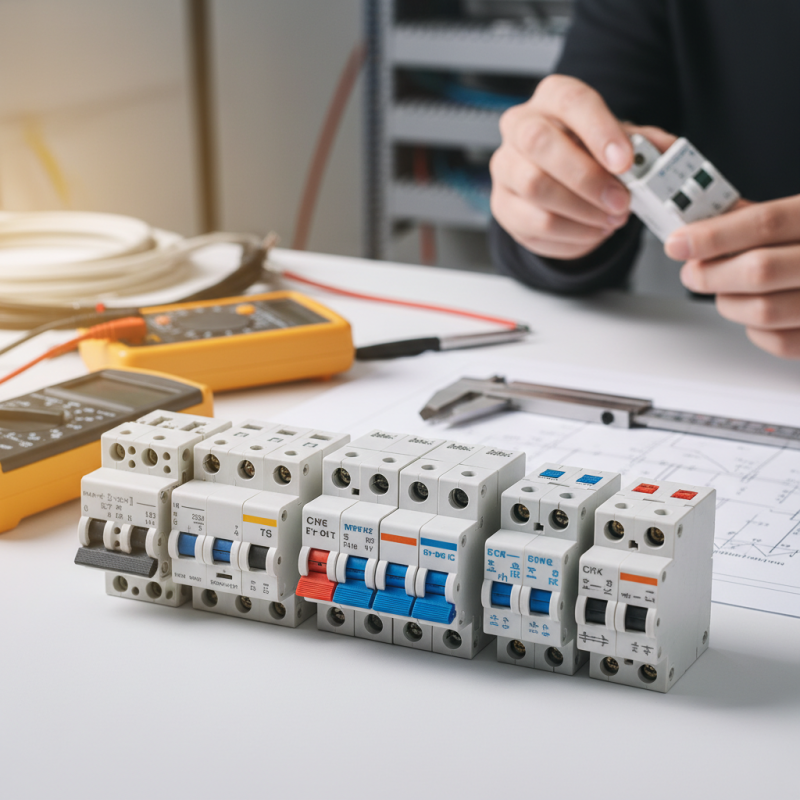
Miniature circuit breakers (MCBs) play a vital role in electrical systems. They protect circuits from overloads and short circuits. MCBs automatically switch off the electricity flow when they detect a fault. This action prevents fires and equipment damage, making them essential for safety.
When selecting an MCB, consider the load it will protect. Different loads require different MCB ratings. A motor may need a type B MCB, while lighting circuits often work well with a type C. Understanding the specific requirements of each circuit is crucial. It can be easy to overlook this detail, leading to potential failures.
Installation can sometimes present challenges. If not properly rated, MCBs may trip too often or fail to operate during a fault. Many users may forget to check compatibility with other devices in the circuit. This oversight could lead to frustration. Ensuring correct pairing enhances reliability. Ultimately, making informed choices about MCBs enhances both safety and efficiency in electrical systems.
Identifying Your Specific Electrical Needs and Requirements
Choosing the right miniature circuit breaker (MCB) for your needs starts with understanding your specific electrical requirements. The National Electrical Code suggests that each circuit has adequate protection. This entails assessing your devices' voltage and current ratings. If your appliances require more than 16A, then a higher rating is crucial.
Most households use circuits rated between 10A and 20A. If your home has high-power devices, your needs may vary. Using an undersized MCB can lead to tripped circuits and damage. Don't overlook the type of load, either. Inductive loads, like motors, need different protection than resistive loads, like heaters. Reports indicate that about 30% of residential electrical issues stem from improper circuit protection.
Evaluate your installation environment too. Is it humid or exposed to dust? This could affect breaker performance. Remember that MCBs have different breaking capacities. A device rated at 6kA might not suffice in high fault current areas. Understanding these complexities can be challenging. It's tempting to choose based only on price. However, the right MCB balances cost and function to prevent disruptions.
Evaluating the Rating and Specifications of Circuit Breakers
Choosing the right miniature circuit breaker (MCB) involves thorough evaluation of ratings and specifications. The current rating is crucial. It defines how much current the MCB can safely handle. Typically, MCBs are rated from 6A to 63A. A mismatch can lead to nuisance tripping or, worse, system failure.
Consider the breaking capacity too. This indicates the maximum fault current the MCB can interrupt. Reports indicate that most domestic applications may require a breaking capacity of 6kA. However, industrial settings often necessitate up to 10kA. An undersized breaker can escalate problems during a fault condition.
Also, think about the type of MCB you need. Types B, C, and D are common, each suited for different loads. For instance, Type B is ideal for residential loads with low inrush currents. This is unexpected. Anecdotal evidence suggests that many users overlook inrush characteristics, leading to unexpected failures. It's essential to balance technical specifications with practical experiences to make an informed choice.
Choosing Miniature Circuit Breakers
This bar chart illustrates the distribution of circuit breaker ratings (in Amperes) and the number of breakers available for each rating. This information can assist in making informed decisions based on your specific needs and load requirements.
Assessing Safety Standards and Compliance for Circuit Breakers
When selecting miniature circuit breakers (MCBs), understanding safety standards is critical. MCBs must comply with international standards, such as IEC 60898, which outlines performance requirements. Reports indicate that only 30% of MCBs meet these standards adequately. This gap poses risks, especially in residential and commercial setups.
Regular compliance testing is essential. The National Electrical Code (NEC) emphasizes that MCBs should trip within specified parameters to prevent electric shock. Yet, many users overlook the importance of certification labels. This neglect can lead to equipment damage or worse, personal injury. Data suggests that around 15% of installations use non-compliant products, raising concerns about safety.
It's vital to assess the protective characteristics of MCBs. Different currents suit varying applications. Choosing an MCB based solely on price can be problematic. An MCB that doesn’t match your load requirements may fail during overload events. The industry reports that about 20% of circuit failures stem from mismatches. This highlights the need for careful evaluation and informed choices.
How to Choose the Right Miniature Circuit Breaker for Your Needs - Assessing Safety Standards and Compliance for Circuit Breakers
| Dimension | Value |
| Rated Current (A) | 6, 10, 16, 20, 25, 32, 40 |
| Tripping Curve | B, C, D |
| Number of Poles | 1, 2, 3, 4 |
| Voltage Rating (V) | 230/400V |
| Protection Type | Overload, Short Circuit, Earth Leakage |
| Standards Compliance | IEC 60898, UL 489 |
| Ambient Temperature Range | -25°C to +60°C |
| Mounting Type | Din Rail, Panel Mount |
Choosing Between Different Types and Features of Miniature Circuit Breakers
When selecting a miniature circuit breaker (MCB), it’s crucial to understand the variations available. There are different types based on application requirements. For instance, Type B circuit breakers are suitable for residential use, protecting against overload and short circuits in standard devices. In contrast, Type C is better for industrial applications, responding to higher inrush currents. This differentiation is significant, as poor selection can lead to unnecessary tripping or failure to protect equipment.
Features like current rating, breaking capacity, and trip characteristics should influence your decision. Most MCBs have a rating from 6A to 125A. A report from the International Electrotechnical Commission suggests selecting an MCB with a breaking capacity of at least 6kA for typical residential builds. Costs can vary, but a cheaper breaker does not equate to better protection. Understanding specifications is key. Some users overlook the potential for nuisance tripping, prompting a need for a re-evaluation of their choices.
Installation is just as critical. Proper installation ensures compliance and safety. Data indicates that improper installation can lead to a 30% increase in failure rates. As electrical demands rise, the gap in awareness widens. Always consider future needs. Selecting the right MCB isn’t just about current needs but foresight. Ignoring this can lead to costly rewiring down the line.