
Choosing a Portable Drugs Detector is not just a matter of comparing size and price. The right instrument must fit the setting, the operator’s training, and the decisions it is meant to support. A busy inspection desk has different needs from a mobile response team. In either case, clear instructions and dependable results matter.
For transparency, the expert below is fictional and created for this draft. Dr. Mara Ellis, a fictional portable detection systems specialist, offers this guiding line: “A useful detector earns trust through clear results, careful handling, and honest limits.” That principle is worth keeping in view. No device should be treated as infallible.
This guide’s outline considers detection technology, response time, portability, operating costs, and ease of maintenance. It also looks at display readability, battery life, calibration needs, and the quality of available training. Picture an operator checking a compact unit under fluorescent lights, with gloves on and little time to spare. Small design choices become important there. So does a straightforward result screen.
Specifications deserve scrutiny. A long feature list does not prove suitability for a particular workflow. Buyers should review independent performance information and ask vendors about limitations, servicing, and user support. These questions can feel tedious. They are still practical. The best choice is the one that supports consistent, responsible decisions in its intended setting—not simply the smallest device or the newest model.
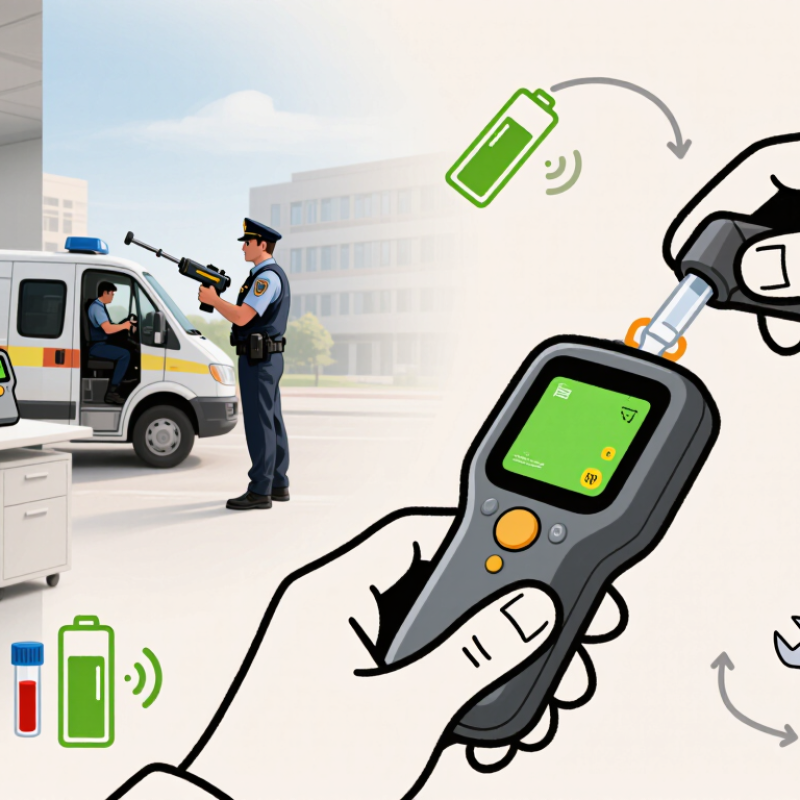
A portable drug detector is only as useful as its intended task. Decide whether you need to check medicine identity, screen incoming ingredients, or support quality checks in a clinic or warehouse. Then list the exact active ingredients and dosage forms involved. A detector validated for powdered material may perform differently on a coated tablet or liquid. Context matters.
The World Health Organization’s 2017 global surveillance report estimated that about one in ten medical products in low- and middle-income countries are substandard or falsified. That finding makes clear identification important, but a portable screening result is not a full laboratory analysis. Check whether the instrument’s reference library covers your target ingredients and whether it can distinguish similar compounds in the actual sample. A neat reading can still be misleading.
Picture a pharmacist checking a blister pack under ordinary room lighting, with limited time and no lab bench nearby. The device should be simple to operate, but also clear about uncertainty, sample preparation, and when results need confirmation. Ask for validation data on the specific substances and packaging you expect to encounter. Also consider whether staff can keep the library current. That part is easy to overlook.
Portable detectors differ in what they measure. Ion mobility spectrometry sorts ionized particles by drift time, producing results within seconds. It suits rapid checks, but humidity and residue transfer can affect readings. Raman spectroscopy identifies molecular vibrations, often through clear packaging. Dark surfaces and mixed materials may weaken its signal. Fourier-transform infrared (FTIR) devices provide useful molecular fingerprints, though contact with a clean sample is often needed.
Portable mass spectrometry can identify a wider range of compounds, but it costs more and requires trained operators. Reference libraries matter, too. NIST’s 2023 mass-spectral library contains more than 350,000 reference spectra, a reminder that identification depends on both hardware and current databases. Ask vendors for independent test data: false-alarm rates, missed detections, and performance on mixtures. Test the device in the actual room, under its real lighting and temperature. Small details matter.
There is no perfect option. A fast reading is not always a reliable identification. I would compare sample handling, calibration frequency, battery life, and the time needed to confirm a result. One detail teams sometimes overlook: cleaning procedures can affect later readings. Cite the NIST 2023 Mass Spectral Library documentation when checking library coverage; then verify performance with an independent evaluation.
When comparing a portable drug detector, assess accuracy under conditions that resemble your actual work. A clean laboratory sample may produce different results from a swab taken from a textured surface. Ask how performance was measured, which reference method was used, and whether testing recorded false positives and missed detections. Numbers need context. If possible, evaluate the device using approved, known samples and repeat measurements with different operators. Record temperature, humidity, sample amount, and surface type; small differences can matter.
Detection limits deserve equal attention. A stated limit describes the smallest concentration a method may detect under specific conditions, not a guarantee for every sample. Check whether it applies to the substance form and sample material you handle. Then compare total testing time, not just the display’s countdown. Include collection, preparation, warm-up, analysis, and cleaning. A device that reports in seconds may still slow a busy shift if each sample requires careful preparation. I would rather wait a little longer for a repeatable result than rush a borderline reading. Still, no handheld instrument is infallible. Establish a process for unclear results, and review the device’s limitations with trained staff.
The figures below are indicative field-use ranges, not guaranteed specifications. Results depend on the target substance, sample condition, device configuration, and operator.
| Detection Method | Typical Identification Performance | Practical Detection Limit | Typical Test Time | Best Use and Key Limitation |
|---|---|---|---|---|
| Raman spectroscopy | Can identify many drugs by comparing a sample spectrum with a reference library. Mixtures, fluorescence, packaging, and low-concentration ingredients can reduce confidence. | Best suited to bulk or relatively concentrated samples; generally not a reliable method for trace-residue detection. | About 10–60 seconds for a measurement; sample handling and repeat scans can add time. | Useful for rapid, non-destructive screening of powders and some packaged materials. Confirm ambiguous results and mixtures with another method. |
| Portable FTIR spectroscopy | Provides a molecular fingerprint that can support identification of many bulk substances. Performance is affected by mixtures and sample contact or preparation. | Primarily suited to bulk samples; typically not intended to detect tiny trace residues on surfaces. | About 30 seconds–2 minutes per sample, depending on preparation and repeat analysis. | Useful for on-site analysis of powders, solids, and some liquids. A clean, representative sample improves results. |
| Ion mobility spectrometry (IMS) | Provides rapid screening for substances included in the instrument’s method library. A screening alarm may require confirmatory testing. | Can detect trace residues collected on a swab; sensitivity is often in the nanogram range, but varies substantially by substance and sampling method. | Often seconds to under a minute after sampling; swabbing and instrument readiness add time. | Well suited to trace screening of surfaces, hands, or objects. Sampling quality and potential interferents affect results. |
| Colorimetric field test | Produces a presumptive color reaction for selected substance groups; it usually cannot uniquely identify a compound or reliably distinguish mixtures. | Designed for a visible sample portion, not dependable trace-residue measurement. No single detection limit applies across test kits and substances. | About 1–5 minutes, including the reaction and visual interpretation. | Low-cost, simple preliminary screening. Results should not be treated as definitive identification, particularly when consequences are significant. |
| Portable mass spectrometry | Can provide highly specific chemical identification when the method, reference data, and sample introduction are suitable; performance remains analyte- and method-dependent. | Ranges from trace-level to larger sample quantities depending on the instrument and sampling approach; request validated, substance-specific limits. | Typically a few minutes per sample; preparation, tuning, and confirmatory runs may extend the process. | Useful when stronger chemical identification is needed in the field. Often requires more training, maintenance, and sample preparation than simple screening tools. |
Selection tip: Do not compare devices using a single “accuracy” percentage or detection-limit number unless it was validated for the same target drug, sample type, and field conditions. For consequential decisions, use a documented confirmation procedure and an accredited laboratory where appropriate.
A portable drug detector should fit the actual work setting, not just a product specification sheet. Check its weight with the battery and carrying case attached. Can one person move it between rooms, or does it need a cart? Battery runtime matters during long shifts, especially where charging points are limited. Small details count. A screen that stays readable in bright light and controls that work with gloves can reduce avoidable mistakes.
Ease of use is more than a simple menu. Look for clear instructions, consistent sample handling, and results that are easy to interpret. Ask how much training operators need and what the device can—and cannot—confirm. A screening result may require follow-up through an appropriate laboratory process. That limitation should be clear to every user.
Operating costs can exceed the purchase price. Include calibration, routine maintenance, replacement parts, consumables, training, and downtime in the estimate. Request a realistic service schedule and check how quickly support is available. I would not assume a cheaper unit costs less over time; usage patterns change the calculation. A written cost estimate based on expected weekly use is more useful than a single price figure.
Suggested weighting for comparing portability, ease of use, operating costs, and detection suitability.
Use these suggested weights as a starting point, not as measured market statistics. Prioritize portability and ease of use for frequent field screening; increase the operating-cost weight if consumables, calibration, maintenance, or training are significant. Confirm detection suitability for the substances and sample types relevant to your work.
Before choosing a portable drug detector, define where and how it will be used. A clinic, workplace, and field team may face different privacy, recordkeeping, and equipment requirements. Confirm applicable rules with your compliance lead, and ask the supplier for clear documentation on intended use, limitations, and required operator training. Do not assume a device meets every standard because its brochure uses broad terms.
Check what happens after purchase. Ask how quickly technical support responds, whether staff can receive practical training, and how service requests are tracked. A useful answer includes contact channels, expected response times, and instructions for handling error messages. Keep these details with the device, not buried in an email thread. Small point, big difference.
Maintenance should fit the team’s actual routine. Request a written schedule for calibration, functional checks, cleaning, battery care, and replacement parts. Confirm who performs each task and what records must be kept. A log beside the charging station can show dates, operator initials, and any service issues. This step can feel tedious, and it is easy to overlook paperwork. Still, an unclear maintenance plan can leave staff unsure whether a device is ready to use. Ask for sample service records before ordering, then check that your team can follow them during a busy shift.
Phone: (256) 845-1255 or (256) 845-4493
Fax: (256) 845-1321 or (256) 845-4468
© 2025 Heritage Wire Harness, LLC