
Blog

How to Choose the Right HSS Heat Shrink Sleeve in 2026

Choosing an Hss Heat Shrink Sleeve in 2026 is not just a matter of matching a diameter. The right sleeve must fit the cable or component, shrink evenly, and withstand its actual working environment. Grand View Research’s Heat Shrink Tubing Market report estimates the global market at about US$2.1 billion in 2023, with growth projected at roughly 6% annually through 2030. That is a broad market forecast, not proof that every product suits every application.

The practical details matter. Measure the part’s largest diameter before shrinking and its smallest diameter afterward. Then compare those dimensions with the sleeve’s expanded size and shrink ratio. Check wall thickness, recovery temperature, continuous operating temperature, and resistance to abrasion, oils, or moisture. These figures should come from the manufacturer’s current technical data sheet, not a sales headline. Small gaps count.

For electrical applications, review applicable product certifications and installation requirements for the intended equipment and market. A sleeve that fits neatly may still fail if the heat source damages nearby insulation or the material cannot tolerate service conditions. UL and IEC publications can help engineers identify relevant safety and testing frameworks, but they do not replace product-specific verification. Honestly, specifications can be confusing. This guide will compare sleeve materials, sizing, performance claims, and installation checks, then show how to weigh them against real operating conditions. A small trial on the actual assembly is often wiser than trusting a perfect-looking catalogue chart.
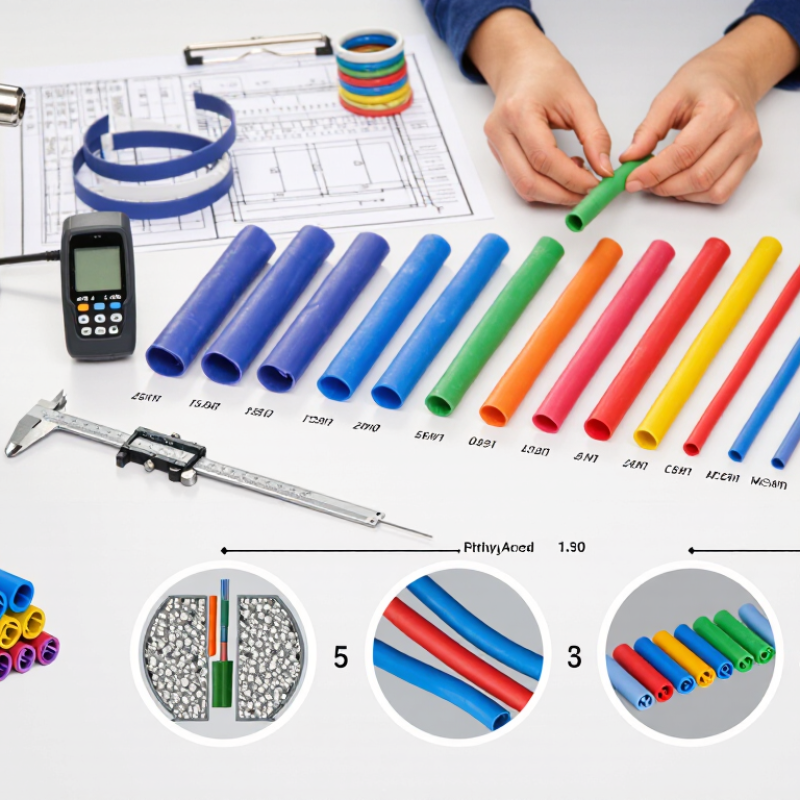
How to Choose the Right HSS Heat Shrink Sleeve in 2026

Define the Application and Operating Environment

Define the application before comparing sleeve dimensions. Is the sleeve providing electrical insulation, abrasion protection, strain relief, or moisture resistance? Each duty changes the required wall thickness, recovery ratio, and material. Record the substrate diameter, sharp edges, nearby chemicals, and installation clearance. Then map the real operating range: normal temperature, brief heat spikes, cold starts, vibration, oil exposure, and sunlight. NOAA’s 2023 Annual Global Climate Report put global average temperature 1.18°C above the twentieth-century average. That figure is not a local design temperature; it is a reminder to use site-specific extremes, not assumptions. IEC 60068-2-14 describes temperature-change testing, useful when thermal cycling is part of service. Small details matter.

Tips: Separate installation temperature from continuous service temperature. Check both against the sleeve’s documented limits, along with recovery temperature and compatibility with the underlying material. For outdoor use, assess UV exposure; for machinery, inspect the actual fluid and cleaning agents. A sleeve that fits cold may loosen after heating—or become too tight after recovery. Measure twice.

Capture the assembly, not just the sleeve. Note whether it covers a connector, a cable splice, or a moving joint, and leave room for installation tools. Define pass/fail checks, such as no exposed conductor, no lifted edge, and no movement after cooling. This feels fussy, but it prevents a “close enough” selection from becoming a field problem.

Compare HSS Materials and Their Properties

Polyolefin is often the practical baseline for HSS heat shrink sleeves. It is flexible, provides reliable electrical insulation, and resists everyday abrasion. Cross-linked versions generally hold their shape better when warm. Check the stated shrink ratio and recovered-wall thickness; a sleeve that looks right before heating may not grip a cable bundle evenly. Fit matters more.

PVC can suit cost-sensitive, indoor applications, but its flexibility may change in cold conditions. Some formulations offer flame-retardant properties, though this should never be assumed without product data. Fluoropolymer sleeves, such as FEP types, handle many chemicals and higher temperatures, but usually cost more and need careful processing. They can also feel less forgiving around tight bends.

Elastomer sleeves are useful where repeated flexing or a snug seal matters. Their performance varies by formulation, so compare temperature range, fluid compatibility, and abrasion resistance rather than relying on the material name alone.

For a practical check, measure the cable bundle, shrink a short sample, then inspect the fit near connectors and bends. A tidy fit is not proof of long-term durability. Review test data for the actual operating conditions.

Match Sleeve Dimensions to the Cable or Component

When choosing an HSS heat shrink sleeve, measure the cable or component at its widest point, not by its nominal size. Include insulation, connectors, joints, and raised features the sleeve must pass over. That widest measurement helps determine the minimum expanded inside diameter needed for installation. Allow a little clearance; a sleeve that barely slides on can snag or stretch unevenly. Small detail. Big difference.

Next, check the recovered inside diameter against the narrowest section that needs coverage. The sleeve should fit closely without excessive slack, folds, or gaps. Compare the stated shrink ratio with both measurements. A higher ratio may suit irregular shapes, but the recovered material can feel thicker than expected. Wall thickness matters too: thicker sleeves add bulk and may crowd tight assemblies. Measurements are not always perfect, so test a sample when fit is uncertain.

Length deserves the same care. Measure the area to cover and allow enough overlap beyond each edge for consistent coverage. For a connector, include the body and cable transition, not just the cable jacket. After shrinking, check the ends and bends for retreating edges or wrinkles. Real assemblies are rarely perfect cylinders; note both the narrowest and widest points instead of trusting one quick reading.

Check Shrink Ratio, Temperature, and Performance Ratings

Choose the shrink ratio from the sleeve’s installed diameter, not its flat width. A 2:1 sleeve with a 12 mm recovered diameter has a nominal expanded diameter of 24 mm. That leaves room for a 12 mm cable bundle, but measure the largest connector or splice too. The ratio is only a starting point; wall thickness and recovery tolerance affect the fit.

Temperature ratings need the same care. If a joint may reach 150°C, a sleeve rated for 125°C continuous use is not a safe match, even if brief heat shrinking works. Check the product’s continuous operating temperature, shrink temperature, and any stated peak exposure limit. IEC 60684-2 specifies test methods for flexible insulating sleeving; compare product test data against your actual service conditions. Small detail.

Performance ratings should match the environment. Review voltage, flame behavior, abrasion resistance, and exposure to oils or moisture where relevant. ASTM D2671 covers test methods for heat-shrinkable tubing used electrically, so ask for test results tied to the exact sleeve construction. Do not assume two sleeves with the same ratio perform alike. I would still verify the recovered wall thickness on a sample; published tables can hide fit problems around uneven joints.

Verify Standards and Installation Requirements

Before selecting an HSS heat shrink sleeve, check the specification for the actual application, not just the product category. Confirm the required electrical rating, temperature range, shrink ratio, recovered wall thickness, and resistance to moisture, chemicals, or abrasion. A sleeve that fits loosely before heating may still recover too little for the cable or joint beneath it. Small detail. Check the stated minimum and maximum dimensions.

Verify which standard or project requirement applies, such as a relevant IEC or UL specification, where required. Then match the documentation to the exact sleeve material, size, and construction. A certificate for a similar product is not enough. Check its revision, test conditions, and any limits on use. Requirements vary by equipment and location, so confirm them with the responsible engineer or installation documents. This step can feel tedious, but assumptions here are easy to miss.

Installation requirements matter just as much. Review the specified heating method, recovery temperature, overlap, and surface-preparation instructions before work begins. Use controlled heating equipment and keep it moving; concentrated heat can scorch the sleeve or damage insulation. Allow the assembly to cool, then inspect for gaps, wrinkles, or lifted edges. In real installations, access is sometimes awkward. That can make even heating harder, so a trial fit on a sample assembly may reveal problems before the final installation.

How to Choose the Right HSS Heat Shrink Sleeve in 2026: Verify Standards and Installation Requirements

Compare nominal shrink ratios to estimate how much a sleeve can recover around a joint. These percentages are calculated from the stated ratios; verify actual dimensions, recovery temperature, and installation limits in the product datasheet.

Before installation: Check that the applicable standard covers your use—ISO 21809-3 for pipeline field-joint coatings or ASTM D2671 as a test-method reference for electrical heat-shrinkable tubing. Follow the sleeve manufacturer’s specified surface preparation, preheat, heating method, and application temperature; these requirements vary by product.

Go to Top