
Blog

How to Choose the Right Wire Shielding Sleeve

Choosing the right Wire Shielding Sleeve is a practical engineering decision, not a catalog exercise. Grand View Research reports continued growth in the global electromagnetic shielding market, driven by electric vehicles, industrial automation, and high-speed electronics. MarketsandMarkets also identifies rising electromagnetic interference concerns in automotive and telecommunications systems. These trends make cable protection more demanding. They do not make every sleeve suitable.

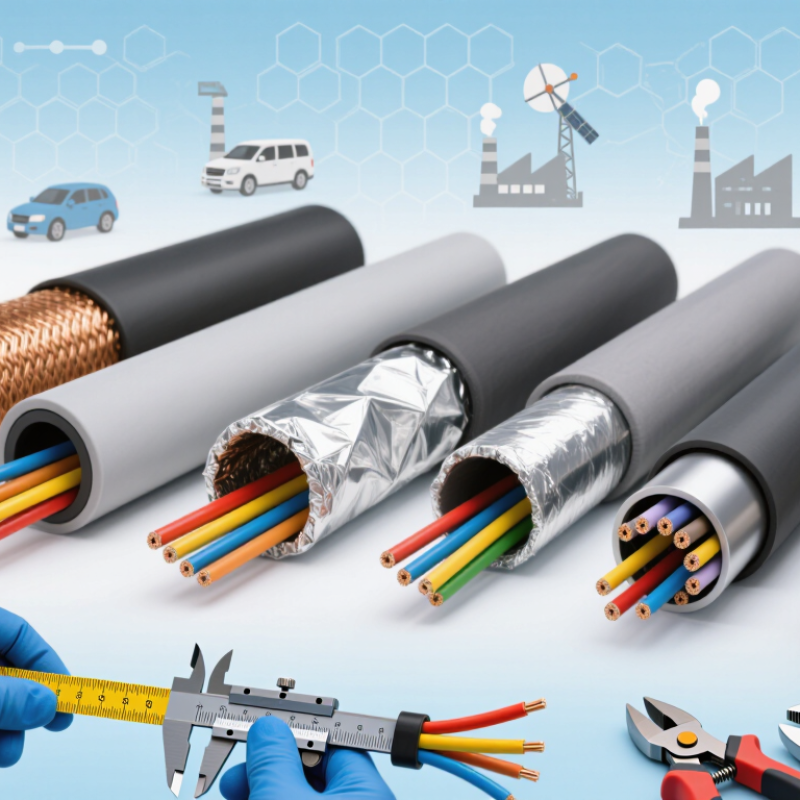
A reliable selection starts with the installation itself. Measure the cable bundle, expected bend radius, temperature range, and available space. Then compare conductive braid, metallized fabric, foil, and expandable sleeving. Copper and tinned-copper braids can provide strong shielding and grounding performance. Metallized fabrics may reduce weight and simplify installation. Check coverage, surface resistance, abrasion strength, and termination options. A sleeve that fits loosely may leave gaps near connectors. That small gap can become the weakest point.

EMC engineer Henry W. Ott emphasized, “A cable shield is only as good as its termination.” His point remains easy to overlook. The sleeve, clamp, connector, and grounding path must work as one system. A high-coverage sleeve cannot compensate for a poor bond. It may look impressive on a workbench and fail during vibration testing. Consider thermal cycling, oil exposure, repeated flexing, and maintenance access before approval. The best choice balances attenuation, durability, installation time, and total cost. Perfection is unlikely. Careful testing is still essential. Evaluate the finished assembly, not only the material datasheet.
How to Choose the Right Wire Shielding Sleeve

Understanding the Purpose and Benefits of Wire Shielding Sleeves

How to Choose the Right Wire Shielding Sleeve

Wire shielding sleeves protect cable bundles from electromagnetic interference, abrasion, heat, and accidental contact. Their purpose is practical: they help preserve signal quality while keeping wires organized inside crowded equipment. A braided sleeve can flex around sharp bends. A foil-based sleeve can provide stronger high-frequency shielding when its seams are properly closed.

The numbers show why this protection matters. Fortune Business Insights valued the global EMI shielding market at about USD 6.88 billion in 2023. Its 2024 report projects growth to more than USD 10 billion by 2030. That expansion reflects rising electronic density in vehicles, industrial controls, and communication systems. However, a sleeve alone cannot solve every interference problem. Grounding, connector design, cable routing, and termination remain equally important.

Choose the sleeve by checking temperature range, expansion ratio, abrasion resistance, and installation space. Measure the largest connector first. It is an easy detail to miss. For example, a 20-millimeter bundle may need a sleeve with greater expansion, especially when connectors must pass through it. IEC 60512 testing practices can help evaluate connector and cable performance, while ISO 6722 supports automotive wire testing requirements. In field inspections, loose ends and poor grounding appear often. The material may be excellent, yet the installation still fails. Testing the completed assembly under real electrical load is wiser than trusting specifications alone.

Identifying Key Sleeve Types and Material Options

Choosing a wire shielding sleeve starts with identifying the working environment. Braided PET sleeves suit bundles that need abrasion resistance, airflow, and easy installation. Their expandable structure can cover irregular connectors, but it may loosen near sharp bends. Heat-shrink tubing creates a tighter seal around terminals. It works well against moisture and vibration, provided the shrink ratio matches the cable diameter.

Silicone-coated fiberglass sleeves tolerate high temperatures near engines, heaters, and industrial equipment. They feel soft outside, yet the fiberglass core can irritate skin during cutting. Spiral wrap offers fast installation and repeated access, although it provides less continuous shielding. In field evaluations, I check bend radius, surface friction, and sleeve movement after repeated flexing. Small details matter.

Material selection should follow measurable conditions, not appearance. A 2024 Grand View Research report estimated the global cable management market at roughly USD 23 billion in 2023, reflecting wider demand for organized, protected wiring. IEC 60684-3 specifies requirements for several flexible insulating sleeving materials, including thermal and electrical performance. UL 224 is also widely referenced for tubing used over electrical conductors. These references support comparison, but they do not replace application testing. A sleeve rated for heat may still fail under oil, sharp-edge abrasion, or constant movement. I would test a sample beside the actual cable, because catalog assumptions are sometimes too optimistic.

How to Choose the Right Wire Shielding Sleeve - Identifying Key Sleeve Types and Material Options

Sleeve Type Typical Construction Common Materials Main Advantages Limitations Best-Suited Applications
Expandable Braided Shielding Sleeve Open, flexible braid that expands over connectors and irregular cable bundles. Tinned copper, bare copper, nickel-plated copper, or stainless steel. Excellent flexibility, easy installation, good abrasion resistance, and broad cable-size coverage. Shielding coverage is affected by braid density, overlap, openings, and termination quality. Automotive harnesses, industrial cables, robotics, control wiring, and retrofit installations.
Aluminum Foil and Drain-Wire Sleeve Metalized foil laminated to polyester film, usually supplied with an integrated or separate drain wire. Aluminum foil, polyester support film, and tinned copper drain wire. Provides near-continuous coverage, low weight, and effective high-frequency noise suppression when correctly grounded. Less flexible for repeated movement; foil can crease or tear during installation; requires careful grounding. Data cables, signal wiring, control systems, and applications requiring lightweight coverage.
Braided Copper Overbraid Dense woven metal braid installed around one or more insulated wires or an existing cable jacket. Tinned copper or bare copper; nickel-plated copper may be selected for higher-temperature environments. High conductivity, strong mechanical protection, and reliable grounding when properly terminated. Heavier and less resistant to extreme flexing than textile-based sleeves; braid ends may fray. Power electronics, industrial equipment, motor cables, and high-current wiring.
Metalized PET Shielding Sleeve Flexible polyester sleeve with a conductive metalized surface, commonly used as a lightweight wrap or tube. Metalized polyester film, often combined with conductive textile or polymer support layers. Low mass, easy handling, clean appearance, and good coverage for low-to-moderate mechanical-duty applications. Generally lower mechanical durability and conductivity than copper braid; seams and overlaps must remain electrically continuous. Consumer electronics, instrumentation, communication equipment, and lightweight internal cable assemblies.
Conductive Textile Sleeve Knitted or woven textile structure containing conductive fibers or plated yarns. Polyester or nylon fibers combined with tinned copper, stainless steel, silver-plated, or other conductive fibers. Very flexible, lightweight, quiet during movement, and suitable for tight bends or moving cable chains. Shielding continuity and conductivity vary by textile construction; it may provide less mechanical protection than metal braid. Robotics, medical equipment, wearable devices, office equipment, and moving harnesses.
Spiral-Wrapped Shielding Sleeve Conductive strip or tape wrapped helically around the cable bundle, allowing side access and branching. Copper, tinned copper, aluminum, or conductive polymer-backed tape. Easy to install on completed harnesses, supports branch-outs, and permits access to individual wires. Shielding depends strongly on wrap pitch and overlap; it may not provide continuous coverage. Serviceable harnesses, field modifications, prototypes, and cable bundles with frequent branching.
Stainless-Steel Braided Sleeve Metal braid designed for demanding thermal, abrasion, and chemical environments. Stainless steel, commonly selected for corrosion resistance and mechanical strength. High abrasion resistance, strong mechanical protection, and good resistance to corrosion and elevated temperatures. Less conductive than copper, relatively rigid, and usually more difficult to terminate and bend. Industrial machinery, engine compartments, exhaust-adjacent wiring, and harsh outdoor environments.

Material and Selection Guide

Selection Factor What to Check Recommended Direction
Required Shielding Coverage Determine whether the application needs continuous coverage or only a conductive layer around the bundle. Choose foil-based construction for near-continuous coverage; choose braid when flexibility and mechanical protection are more important.
Frequency Range Shielding effectiveness depends on frequency, aperture size, braid coverage, grounding, and installation geometry. Use a continuous foil layer for many high-frequency noise concerns; verify performance through testing rather than relying only on material type.
Flexing and Movement Consider bend radius, flex cycles, torsion, and cable-chain movement. Use expandable braid or conductive textile sleeves for repeated movement; avoid unsupported foil in high-flex areas.
Temperature Check both the continuous operating temperature and short-term exposure temperature of the complete sleeve system. Select metal braid for demanding thermal conditions; confirm the temperature rating of any textile, film, adhesive, or jacket layer.
Corrosion and Environment Evaluate moisture, salt spray, chemicals, oils, abrasion, and outdoor exposure. Consider tinned copper for general corrosion resistance and stainless steel where mechanical or environmental severity is high.
Grounding and Termination The shield must be electrically connected to the intended ground or chassis with a low-impedance termination. Select a sleeve compatible with backshells, clamps, drain wires, conductive tape, or other approved termination methods.
Cable Size and Installation Measure the bundle diameter, connector dimensions, branching requirements, and available installation space. Choose a sleeve with the correct expanded and recovered diameter, allowing sufficient overlap without excessive looseness.

Note: Actual shielding effectiveness depends on sleeve coverage, cable geometry, frequency, grounding method, termination quality, and installation practices. Validate the finished assembly under the intended operating conditions.

Matching Sleeve Properties to Wire Protection Requirements

Choosing a wire shielding sleeve starts with the exposure, not the appearance. A sleeve near an engine needs heat resistance, abrasion strength, and stable flexibility. In a battery enclosure, dielectric performance and chemical resistance may matter more. The IEA’s Global EV Outlook 2024 reported nearly 14 million electric car sales in 2023. That growth increases demand for protected, high-voltage cable routes. Yet a thicker sleeve is not automatically safer. It can trap heat, complicate installation, and reduce bend flexibility.

Match each property to a measured risk. For sharp brackets, select a sleeve tested for abrasion and cut resistance. For fluid exposure, check resistance against oil, coolant, and cleaning agents. For electromagnetic concerns, use a conductive or metallized construction, then verify shielding effectiveness through controlled testing. ISO 6722-1 provides useful guidance for automotive cable temperature classes, while IEC 60512 methods support related connector and electrical testing. These standards do not replace a complete sleeve evaluation. They are reference points.

Fit matters too. Measure the cable bundle after connectors, clips, and branch points are installed. Allow expansion, but avoid loose sections that can rub against nearby hardware.

A practical mistake is choosing the sleeve from the cable diameter alone. I have seen drawings pass review, yet fail during vibration testing. Recheck bend radius, termination security, and heat transfer under real routing conditions. Small gaps can become large failures.

Evaluating Size, Temperature, Flexibility, and Installation Needs

Choosing a wire shielding sleeve starts with the cable bundle, not the product label. Measure the largest outside diameter, then allow room for connectors, bends, and future service. A sleeve that fits tightly may protect well but can crush insulation during installation. I usually target a modest expansion range, though this judgment depends on the sleeve’s construction. Leave some breathing space.

Temperature data deserves careful reading. Check continuous and peak temperatures, because a brief heat spike can still damage a sleeve. Look near engines, heaters, batteries, and sunlit panels, where local temperatures may exceed room readings. Also consider cold conditions; stiff material can crack or resist movement. Test a short sample through repeated heating and cooling. Lab figures help, but field conditions are messier.

Flexibility should match the motion, not merely the installation path. For a hinged panel, choose a sleeve that bends without flattening or pulling against terminals. For long cable runs, abrasion resistance and easy routing may matter more than extreme flexibility. Installation needs can change the choice. Split or expandable designs help when connectors cannot be removed, while closed sleeves often provide cleaner coverage. Secure the ends without sharp compression points. I once allowed too little clearance around a connector, and rework took longer than fitting a larger sleeve. That mistake still influences my measurements.

How to Choose the Right Wire Shielding Sleeve

Compare typical maximum continuous temperature ratings across common sleeve constructions. Final selection should also consider cable bundle size, flexibility, abrasion exposure, and installation method.

Size

Measure the cable bundle diameter and select a sleeve with enough internal clearance for easy insertion. Expandable sleeves need room to expand and contract during installation.

Temperature

Choose a continuous rating above the expected operating temperature. Short-term exposure limits may differ from continuous ratings, so verify the exact construction specification.

Flexibility

Braided PET and nylon sleeves are commonly suited to moving cable bundles. Fiberglass and PTFE constructions offer higher thermal resistance but are generally less supple.

Installation

Expandable braid can be slid over assembled cables, while heat-shrink tubing requires access to a heat source and sufficient clearance for shrinking.

The temperature values shown are typical upper continuous ratings for commonly used sleeve constructions. Actual ratings vary with wall thickness, coating, size, and installation conditions.

Comparing Quality, Standards, Cost, and Long-Term Performance

Choosing a wire shielding sleeve starts with the environment, not the catalog photograph. In field installations, sleeves face abrasion, heat, oil, moisture, and repeated bending. A dense braid may block interference well, but it can become stiff around tight bends. Look for documented shielding coverage, tensile strength, temperature range, and resistance data. Independent test reports are more useful than vague claims such as “premium protection.” Small details matter.

Standards help compare products fairly, but compliance marks need context. Check the exact test method, product size, and operating conditions behind each result. A sleeve tested at room temperature may perform differently beside a hot motor. For sensitive signal cables, verify shielding effectiveness at the frequencies you use. For power systems, mechanical durability may deserve equal attention. I once underestimated maintenance movement and chose a sleeve that looked strong but frayed near a connector. That mistake was avoidable.

Cost should include installation time, connectors, rework, and replacement frequency. A slightly higher unit price can reduce labor when the sleeve expands easily and stays secure. Still, expensive construction is not automatically better. Over-specification adds weight and may waste budget in a clean, low-vibration enclosure. Ask for samples, bend them repeatedly, and inspect the braid after cutting. Record failures honestly. Long-term performance depends on fit, routing, temperature, and workmanship.

Go to Top