
Top 10 Electric Block Machine Suppliers for Global Buyers
Choosing an Electric Block Machine supplier is not just a price comparison. It affects block consistency, production uptime, labor needs, and the cost of every rejected unit. Buyers should examine machine capacity, mold-change time, curing arrangements, spare-parts access, and the supplier’s commissioning support. A polished brochure helps. A real factory visit helps more.
The wider materials sector makes these choices increasingly important. The International Energy Agency’s 2023 cement analysis estimates that cement production causes about 7% of global CO₂ emissions. The United Nations Environment Programme’s 2023 Global Status Report for Buildings and Construction also highlights the sector’s substantial climate impact. These reports do not measure block-machine performance directly. That distinction matters. Equipment claims still need verification through trials, technical documents, and comparable customer references.
Professor Karen Scrivener, a leading cement researcher, has emphasized reducing clinker as a route to lower cement emissions. That is a useful industry perspective, not a machine-buying guarantee. Buyers must still check whether a supplier’s equipment can reliably handle the materials and mix designs planned for their plant. Details matter: a jammed feed hopper, uneven vibration, or delayed replacement part can erase projected gains. Sometimes, the simplest machine is the better fit.
This guide compares ten suppliers for global buyers. It considers practical capabilities alongside published claims, while recognizing that performance depends on site conditions and operator skill. No ranking can replace due diligence. And supplier information can change.
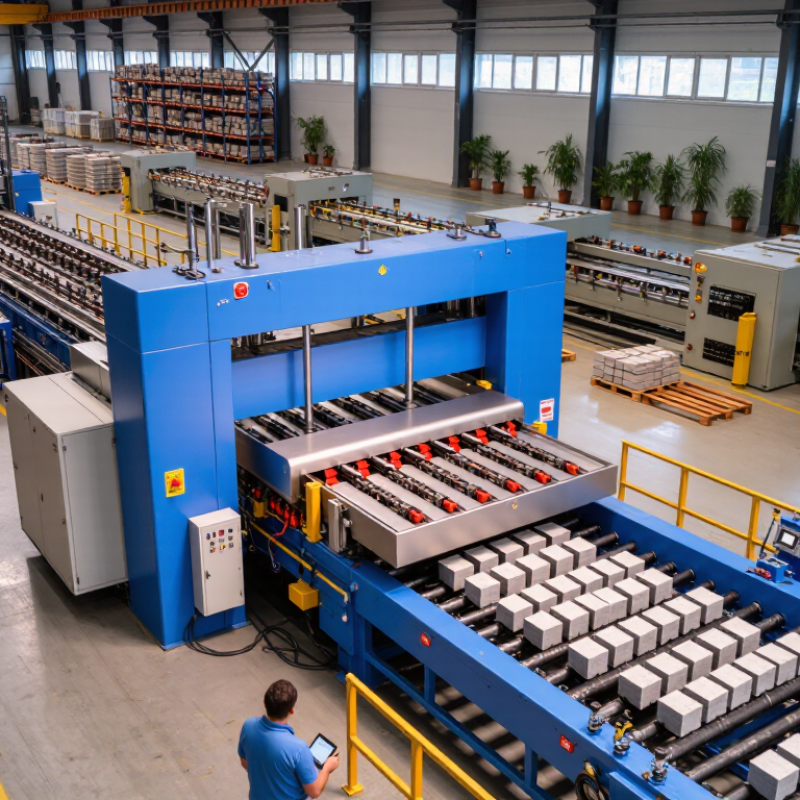
Define Electric Block Machines by Block Type, Automation, and Output
Electric block machines are easier to compare when buyers define block type, automation, and realistic output. Hollow blocks need accurate core dimensions and steady vibration. Solid blocks place different demands on moulds and material flow. Pavers often require tighter control of thickness and surface finish. Ask suppliers for sample dimensions, cycle details, and finished-product photos. That matters.
Automation ranges from manually loaded machines to integrated lines with automatic batching, feeding, stacking, and controls. Semi-automatic equipment may suit smaller sites, but it still needs trained operators and consistent material handling. A fully automatic line can reduce repetitive work, though it also requires space, maintenance, and reliable utilities. Output figures deserve careful checking. A quoted hourly capacity may assume ideal material, continuous operation, and no mould changes. Ask how many acceptable blocks the machine produces during a normal shift, not just its fastest cycle. Compare that figure with curing space, labour, and local power supply. Supplier claims are useful, but a production plan should leave room for stoppages and imperfect batches.
Top 10 Electric Block Machine Suppliers for Global Buyers - Define Electric Block Machines by Block Type, Automation, and Output
| Supplier Profile | Typical Machine Type | Block Types Supported | Automation Level | Indicative Output per 8-Hour Shift | Suitable Buyer | Key Procurement Check |
|---|---|---|---|---|---|---|
| 1. Entry-level electric machine supplier | Compact stationary vibration machine | Solid blocks, small hollow blocks, basic paving blocks | Manual feeding and demolding; electrically driven vibration | Approximately 500–1,500 standard block equivalents | Small producers and new market entrants | Confirm mold availability, spare-part supply, and the labor needed for material handling. |
| 2. Mobile machine supplier | Mobile, egg-laying block machine | Hollow and solid concrete blocks; selected paving products | Operator-controlled travel and production; limited automation | Approximately 1,000–3,000 standard block equivalents | Buyers producing directly on prepared concrete floors | Check floor flatness, curing-space requirements, and whether the machine can make the required block dimensions. |
| 3. Small stationary-line supplier | Stationary vibration press with basic conveyor or mixer integration | Hollow blocks, solid blocks, and common masonry units | Semi-automatic; operator-assisted batching, feeding, and handling | Approximately 1,500–3,500 standard block equivalents | Local producers seeking more consistent daily output | Request a complete equipment list, including mixer, conveyor, pallets, and control equipment. |
| 4. Hydraulic press supplier | Stationary hydraulic vibration-press machine | Hollow blocks, solid blocks, interlocking pavers, and kerbstones with suitable molds | Semi-automatic to automatic, depending on feeding and handling equipment | Approximately 2,000–5,000 standard block equivalents | Buyers needing a broader product range and repeatable compaction | Verify hydraulic service support, mold-change time, and product-specific cycle rates. |
| 5. Palletized semi-automatic line supplier | Vibration press with pallet feeder and collection system | Hollow blocks, solid blocks, and selected paving products | Semi-automatic; machine cycles are controlled, with some manual transfers | Approximately 2,500–5,500 standard block equivalents | Growing plants with reliable operators and moderate floor space | Confirm pallet dimensions, pallet quantity, and compatibility with curing and stacking arrangements. |
| 6. Automatic block-line supplier | Stationary press integrated with batching, conveying, and pallet handling | Hollow and solid blocks; paving products with compatible molds and settings | Automatic production cycle with operator supervision | Approximately 4,000–8,000 standard block equivalents | Established producers targeting regular commercial production | Ask for a guaranteed capacity by exact product, mold layout, and operating schedule—not a headline maximum. |
| 7. High-output palletized-line supplier | Automatic multi-station production line | High-volume masonry blocks and selected paving products | Automatic pressing and material transfer; separate curing and packing systems may be needed | Approximately 6,000–10,000 standard block equivalents | Regional producers serving large construction-material markets | Assess line balance, curing capacity, power supply, installation needs, and planned maintenance downtime. |
| 8. Paving-product specialist supplier | Vibration press configured for paving molds and surface-layer options | Concrete pavers, permeable pavers, and compatible curb products | Semi-automatic or automatic, depending on line configuration | Product-specific; compare by square metres or mold cycles as well as piece count | Buyers focused on landscaping, roadworks, or architectural paving | Check achievable thickness, edge quality, color-layer equipment, and the output basis used in quotations. |
| 9. Heavy-duty industrial-line supplier | Robust stationary press with automated feeding and pallet circulation | Large-format hollow blocks, solid units, and selected special shapes | Automatic line with centralized controls and operator oversight | Approximately 5,000–10,000 standard block equivalents; lower for larger products | Industrial plants prioritizing uptime and continuous production | Review frame construction, vibration-system maintenance, service response, and critical spare-parts lead times. |
| 10. Turnkey plant supplier | Integrated electric production plant, from aggregate handling through block stacking | Multiple block and paving products when supplied with the appropriate molds and line equipment | Configured from semi-automatic to fully integrated automatic operation | Project-specific; request a product-by-product capacity schedule | Global buyers building a new plant or expanding an existing facility | Require a defined scope covering layout, commissioning, operator training, utilities, and after-sales support. |
Capacity note: These are indicative equipment-category ranges, not verified ratings for individual suppliers. “Standard block equivalent” is a comparison basis, not a guaranteed output; actual production depends on block dimensions, mold cavities, mix design, cycle time, handling, operator practice, and planned downtime. Ask suppliers to substantiate capacity using the exact product and configuration being quoted.