10 Tips for Buying Mens Watches Wholesale?
Buying Mens Watches wholesale is not simply a search for the lowest unit price. It is a commercial decision involving demand, product quality, supplier reliability, and customer trust. A watch may look attractive in a product photo, yet its case finishing, movement accuracy, packaging, and warranty support can determine whether it sells.
The Federation of the Swiss Watch Industry reported Swiss watch exports of about CHF 26 billion in 2024, despite a year-on-year decline. This signals a large but pressured market. Grand View Research estimates that the global watch market will continue growing through 2030, supported by premium products, online retail, and changing consumer preferences. These reports offer useful direction, but they do not replace direct supplier checks. Market forecasts can miss sudden shifts in fashion, exchange rates, or regional demand.
Wholesale buyers should examine more than catalog prices. Minimum order quantities, landed costs, sample approval, movement specifications, water-resistance testing, packaging, and after-sales policies all affect real profit. Small details matter. A loose crown can create returns. A weak clasp can damage reviews. An unclear warranty can create unnecessary disputes.
These ten tips provide a practical framework for sourcing Mens Watches with greater confidence. They focus on evidence, not promises, while recognizing an uncomfortable truth: no supplier is risk-free. Even experienced buyers can overlook hidden costs or inconsistent quality. Careful sampling, written specifications, and transparent communication remain essential. The best purchase is not always the cheapest one. It is the one that protects margin, reputation, and customer satisfaction over time.
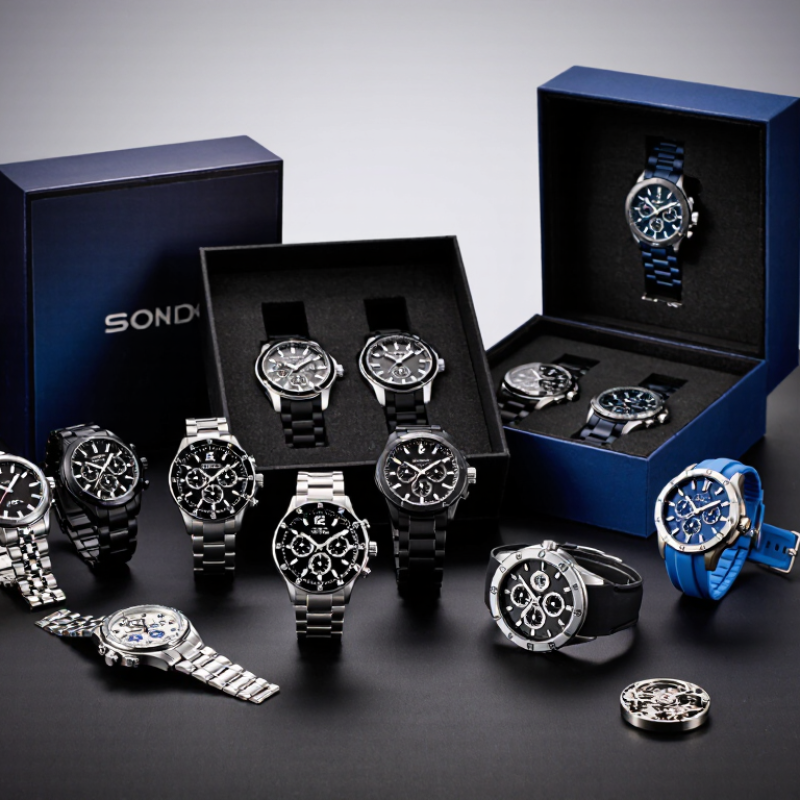
Define Your Market Using FH’s CHF 26.7B Swiss Export Data for 2023
10 Tips for Buying Mens Watches Wholesale
Define Your Market Using FH’s CHF 26.7B Swiss Export Data for 2023
The Federation of the Swiss Watch Industry reported Swiss watch exports worth CHF 26.7 billion in 2023. This figure shows strong international demand, but it does not define your exact customer. A wholesale buyer should study destination markets, price levels, case sizes, and movement preferences before placing an order. Big export value can hide small opportunities.
Start with one clear customer group. Consider professionals seeking understated watches, younger buyers wanting larger cases, or retailers serving gift shoppers. Compare local search behavior with import statistics and store feedback. A 38–40mm case may suit office customers, while sport-inspired designs may attract younger buyers. Keep notes on returned products. They often reveal more than sales reports.
Set a realistic buying budget. Include shipping, duties, packaging, testing, and possible currency changes. Ask suppliers for movement details, water-resistance evidence, material specifications, warranty terms, and production timelines. Request samples before accepting a large minimum order. One sample is useful, but three may expose inconsistent finishing. I once underestimated packaging costs, and the mistake reduced the expected margin. It was avoidable.
Use the CHF 26.7 billion figure as market context, not a sales promise. Review quarterly demand, compare competing price bands, and test a small collection first. Leave room for slow-moving colors and unexpected customer preferences. Wholesale success depends on evidence gathered at product level.
Compare MOQ, Landed Cost, and Margins with Wholesale Pricing Benchmarks
10 Tips for Buying Mens Watches Wholesale?
Wholesale watch buying becomes clearer when MOQ, landed cost, and margin are measured together. Grand View Research valued the global wristwatch market at about $101.6 billion in 2023. Demand is broad, but that does not guarantee fast stock turnover. Ask suppliers for MOQ by model, color, and movement type. A 500-unit MOQ may look attractive until $2,000 remains unsold for months. Smaller test orders often protect cash flow, even when unit prices rise.
Calculate landed cost, not just the factory quote. Include product price, packaging, freight, insurance, duties, payment fees, inspection, and local delivery. For example, a $12 watch can reach $18 landed after logistics. Selling at $36 creates a 50% gross margin before operating costs. That sounds healthy. It may not be. The 2024 NRF and Appriss Retail report estimated that 16.9% of U.S. retail sales were returned. Returns, defects, and discounting can quickly reduce the real margin. Plan a reserve before approving the order.
Use wholesale pricing benchmarks as a check, not a promise. Many distributors target roughly 40% to 60% gross margin, depending on positioning and service. Compare three supplier quotes using the same delivery terms. Request samples and test clasp strength, timekeeping, water-resistance claims, and packaging quality. I have seen low-MOQ offers hide higher freight charges. That mistake is easy to repeat. Recalculate margins at full price, promotional price, and clearance price before committing.
10 Tips for Buying Men's Watches Wholesale: MOQ, Landed Cost, and Margins
This benchmark scenario compares estimated wholesale unit pricing at different minimum order quantities. Landed cost assumes an 8% allowance for freight, duty, and handling. Gross margin is calculated against a target resale price of $99 per watch: (resale price − landed cost) ÷ resale price. Larger orders generally reduce unit cost but require more working capital and inventory planning.
Verify Suppliers Through Trade Records, Certifications, and Audit Standards
10 Tips for Buying Mens Watches Wholesale?
Tip 1: Verify the supplier’s registered business name and operating address. Trade records should show consistent activity. Tip 2: Request export history, commercial invoices, and recent shipping references. Check whether dates and quantities make sense. Tip 3: Ask for certification copies, not screenshots. Confirm the issuing body, certificate number, scope, and expiry date. Tip 4: Match the certificate details with the factory’s legal name. Small differences can reveal weak documentation.
Tip 5: Review quality audit reports based on recognized standards. Look for inspection dates, corrective actions, and unresolved findings. Tip 6: Request a recent production audit. A clean report from last year may not describe today’s workshop. Tip 7: Ask who performed the audit and whether factory access was complete. Some reports cover only selected areas. Tip 8: Compare sample watches with bulk-production specifications. Check case weight, movement accuracy, dial printing, packaging, and water-resistance claims. Small defects become expensive at scale.
Tip 9: Use a written purchase agreement with inspection terms, tolerances, delivery dates, and payment stages. Keep every promise in email. Tip 10: Order a modest trial batch before committing to a larger shipment. It may slow the process, but it exposes weak packaging, inconsistent finishing, or missing documents.
A polished catalog proves very little. In practical sourcing, records, certificates, audits, and physical samples must support the same story. I would still leave room for doubt. Documents can be genuine yet incomplete, and audits can miss problems between visits. Ask clear questions, verify independently, and record every answer.
Check Watch Quality Against ISO 22810 Water-Resistance Requirements
When buying men’s watches wholesale, water resistance deserves more attention than a dial marking. ISO 22810 evaluates a watch under defined laboratory conditions, including pressure, temperature, and water exposure. It does not make every watch suitable for swimming or diving. A watch marked 30 metres may only resist splashes in real use.
Ask the supplier for test records linked to the actual model and production batch. Do not rely on a generic certificate. Check whether the report identifies the case, crown, crystal, gasket, and testing method. During sample inspection, examine the crown action and case-back seal. A loose crown or uneven gasket can create a serious weakness. Small details matter.
Request random samples, then test them through an independent watch technician when possible. ISO testing is controlled, while wholesale handling is not. Watches may face heat, cold delivery trucks, dust, or impact before reaching customers. Water resistance also decreases as seals age.
I once trusted a printed rating too quickly; that was a poor purchasing decision. The case looked excellent, but the crown felt rough and needed replacement. Suppliers should explain their maintenance guidance clearly. Avoid claims such as “fully waterproof,” because that wording can mislead buyers.
Keep records of inspection dates, failed samples, and corrective actions. A careful buyer may pay slightly more for reliable testing, but rejected stock costs far more.
Confirm EU GPSR Compliance, Effective 13 December 2024, Before Importing
10 Tips for Buying Men’s Watches Wholesale
Before importing men’s watches, verify whether the EU General Product Safety Regulation applies. It has applied since 13 December 2024. Tip 1: Request a written GPSR compliance statement from the supplier. Tip 2: Identify the EU-based responsible economic operator. Tip 3: Check the importer’s name and contact details on the watch, packaging, or documents. Tip 4: Ask for product identification, batch details, and traceability records. Do not accept vague paperwork.
Tip 5: Request a documented risk assessment for the case, strap, clasp, glass, and small components. Tip 6: Confirm that materials are suitable for normal skin contact. Tip 7: Review warnings in the language required for each destination country. Tip 8: Keep technical documentation, test reports, invoices, and supplier communications together. GPSR records may need retention for ten years. A missing file can become an expensive delay.
Tip 9: Inspect a sample before placing a large wholesale order. Check sharp edges, loose pins, broken clasps, and unclear instructions. Tip 10: Review the online product listing before publication. It should show product identification, safety information, and the responsible person’s details where required. Smart watches may involve additional EU rules, so do not treat every model identically. I would also photograph cartons and labels during inspection. That small step is often overlooked. Recheck the file when the design, supplier, or packaging changes.