5 Essential Tips for Choosing the Best Photovoltaic Bracket?
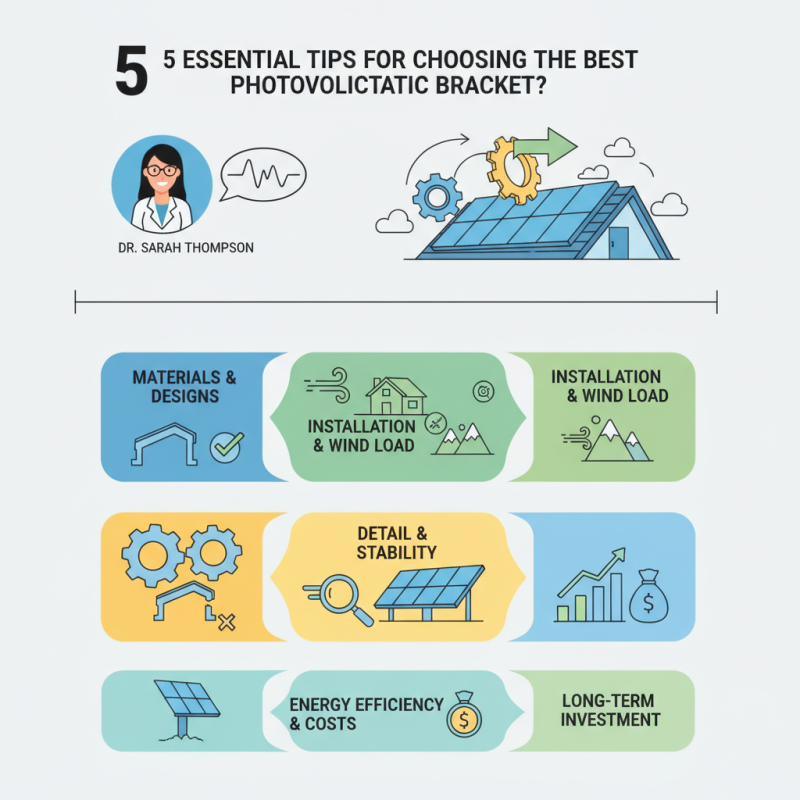
In the world of solar energy, selecting the right Photovoltaic Bracket is crucial for system performance. Industry expert Dr. Sarah Thompson emphasizes, "The foundation of any solar project begins with the right mounting system." With this in mind, homeowners and installers need to consider various factors when choosing these essential components.
Photovoltaic Brackets come in different materials and designs. Each type offers unique advantages. However, quality should not be compromised. Many professionals overlook how the wrong bracket can lead to future instability. This choice impacts everything from energy efficiency to maintenance costs.
A good understanding of your installation site is vital. Factors such as wind load and terrain can affect bracket effectiveness. Sometimes, a seemingly minor detail can have significant consequences. Take the time to assess your needs before making a decision. Ultimately, investing in the correct Photovoltaic Bracket pays off in the long run.
Factors to Consider When Choosing Photovoltaic Brackets
When selecting photovoltaic brackets, several critical factors demand attention. Material durability is paramount. According to a recent industry report, brackets made from aluminum alloys can withstand harsh weather conditions better than standard steel. Corrosion resistance is vital for longevity. Salt-laden air in coastal areas can degrade unsuitable materials. A durable bracket ensures that your solar investment lasts.
Another consideration is installation flexibility. Some brackets offer adjustable angles for optimal sunlight exposure. This adaptability can boost energy efficiency by up to 20%, as noted in a study by the Solar Energy Industries Association. However, not all brackets provide this feature. Rigid designs may force installations that compromise performance.
Load capacity is another crucial aspect. Analyze the specifications of the brackets under potential environmental stressors. The wrong choice could lead to structural failures. Surprisingly, many buyers overlook this. Research suggests 30% of installations had to be redone due to inadequate load ratings. Such oversights not only waste resources but also delay energy production. Each detail makes a difference in the long term.
Types of Photovoltaic Brackets Available in the Market
When considering photovoltaic brackets, understanding the types available is crucial. There are various designs tailored to different needs. Fixed brackets are common for rooftops. They offer simplicity and stability. Adjustable brackets allow for angle changes. This flexibility can maximize solar exposure. Their installation can be trickier, though.
Ground-mounted brackets are another option. They suit larger installations. These brackets often need a solid foundation. It’s vital to assess soil conditions beforehand. Ballasted brackets use weights to secure panels. They work well on flat roofs. However, wind resistance must be considered.
Tracking brackets represent advanced technology. They follow the sun’s path. This maximizes energy capture. However, their complexity can lead to maintenance challenges. Each type has advantages and drawbacks. Assessing needs before choosing is essential. Rushing into a decision can lead to costly mistakes.
Importance of Material Durability and Weather Resistance
When selecting photovoltaic brackets, material durability and weather resistance are crucial. Weak brackets can lead to costly repairs and reduced efficiency. Corrosion can weaken brackets over time. Opt for materials like aluminum or stainless steel. They resist rust and maintain strength in harsh conditions.
Consider local climate conditions. Extreme temperatures may affect bracket performance. For example, excessive heat can warp materials. Snow load needs sturdy supports. If your area faces heavy rainfall, choose waterproof options.
Tip: Verify if brackets pass quality tests. Look for certifications indicating durability against extreme weather. Check if brackets have warranties. A solid warranty indicates the manufacturer's confidence in their product. Pay attention to installation methods, too. Poor installation can compromise durability. Take time in this phase.
Optimal Sizing and Compatibility with Solar Panels
When choosing photovoltaic brackets, sizing and compatibility with solar panels are crucial. A well-sized bracket ensures optimal performance. Research indicates that misalignment can reduce energy output by up to 20%. This highlights the importance of accurate measurements when selecting brackets.
Selecting brackets also means considering the panel type. Not all brackets fit every panel. Incompatibility often leads to damage. Reports show that over 15% of installations face issues due to mismatched components. It is vital to check specifications before purchase.
Attention to detail goes a long way. A minor oversight can impact energy efficiency. An under-sized bracket may not support the panel adequately. Conversely, an oversized bracket can result in unnecessary costs. Always measure and verify compatibility for the best results.
Cost-Effectiveness and Budget Planning for Solar Installations
When planning a solar installation, cost-effectiveness is crucial. Reports indicate that installation costs have dropped by around 70% since 2010. This trend can guide your budgeting for photovoltaic brackets. Exploring local installation options can further optimize costs, as regional pricing varies widely.
A common mistake is underestimating long-term expenses. Maintenance, insurance, and potential upgrades can add significant amounts over time. Industry data shows that owners should anticipate 15-20% of initial costs for maintenance over the equipment's lifespan. This figure should factor directly into your budget planning.
Many users overlook the importance of selecting durable materials. Cheaper brackets may save money upfront, but they often lead to higher replacement costs. In contrast, investing in quality options can enhance longevity and stability. Reports suggest that the long-term savings from durable materials can outweigh initial expenditures by up to 30%. Always weigh the trade-offs and choose wisely.
5 Essential Tips for Choosing the Best Photovoltaic Bracket
| Tip | Description | Cost-Effectiveness | Budget Planning |
| 1. Evaluate Material Quality | Choose brackets made from durable materials like aluminum to ensure longevity. | High-quality materials may have higher upfront costs but save money in the long run. | Set aside a higher budget for quality brackets to avoid replacement costs. |
| 2. Consider Weight Capacity | Ensure the brackets can support the weight of your photovoltaic panels. | Proper weight capacity prevents damage and costs from accidents. | Allocate budget for brackets that meet or exceed panel weight ratings. |
| 3. Check for Compatibility | Ensure that the brackets are compatible with your specific solar panel model. | Compatibility can reduce installation costs if no additional modifications are needed. | Budget for potential customization if brackets are not compatible out-of-the-box. |
| 4. Review Installation Requirements | Understand the installation process and any additional parts needed. | Easy installation can help reduce labor costs. | Factor installation costs into your overall budget planning. |
| 5. Warranty and Support | Look for brackets that come with a good warranty and customer support. | A good warranty can save costs on replacements or repairs. | Include potential costs for service contracts in your budget. |