
High Silicon Steel is an iron-based alloy designed to perform well in alternating magnetic fields. Silicon raises electrical resistivity, which helps limit energy lost as heat from eddy currents. It can also reduce magnetostriction, the small dimensional change that contributes to humming in electrical equipment. The exact composition varies by product and application, so “high silicon” does not always indicate one fixed grade. That distinction matters.
Its best-known role is in electrical steel cores. Transformer laminations use thin, insulated sheets to guide magnetic flux while restricting circulating currents. Motors and generators also rely on electrical steel to improve magnetic performance during repeated operation. In some designs, higher silicon content can support lower core losses or quieter running. The trade-off is real. Silicon can make steel harder and more brittle, complicating rolling, cutting, and forming. Very high-silicon material may therefore be supplied as thin strip or made using specialized processes.
Choosing High Silicon Steel involves more than comparing silicon percentages. Engineers consider frequency, magnetic flux, core geometry, temperature, manufacturing limits, and the desired balance between efficiency and cost. A transformer operating at mains frequency has different demands from a compact motor switching rapidly. Even insulation thickness and lamination quality affect performance. These details are easy to overlook. This guide explains what high-silicon steel is, how its properties influence design, and where it is used. It also considers its practical limitations, because a material that performs well in a laboratory may not be the simplest choice on a production line.
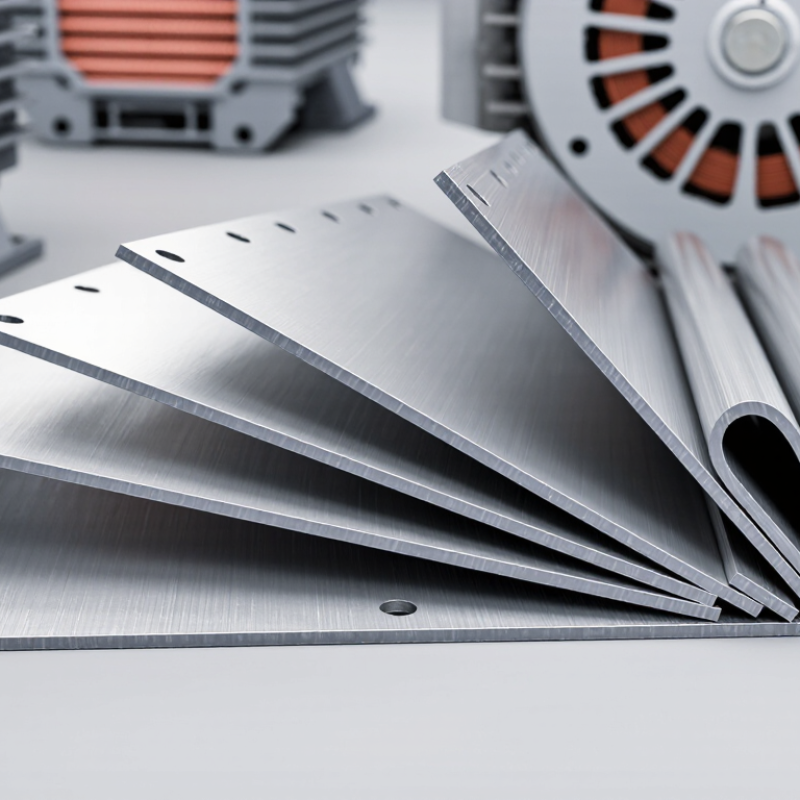
High-silicon steel is an iron-silicon electrical steel, commonly containing about 3–6.5% silicon by weight. The exact cutoff for “high silicon” can vary between technical sources and product descriptions. That distinction matters. Adding silicon increases electrical resistivity, helping reduce eddy-current losses when the steel is used in alternating magnetic fields. It can also reduce magnetostriction, the small dimensional change that contributes to transformer hum. The trade-off is brittleness: higher-silicon material can be harder to roll, cut, and form without cracking.
Its magnetic properties make it useful in transformer cores, motor laminations, and other magnetic components. In practice, grade selection depends on frequency, core shape, operating conditions, and manufacturing limits—not silicon content alone. The International Energy Agency’s 2023 report, Electricity Grids and Secure Energy Transitions, says annual grid investment needs to exceed USD 600 billion by 2030. That is broader grid context, not a forecast for high-silicon steel, but it underscores the importance of efficient electrical equipment.
Tips: Check the steel’s grade data for core loss, magnetic induction, and thickness. Ask how the material behaves after cutting and assembly; laboratory values do not tell the whole story. A little caution helps.
High-silicon steel is made by adding silicon to iron, then shaping and heat-treating the alloy into thin electrical-steel sheet. Ordinary electrical steel often contains about 3% silicon; high-silicon grades can reach roughly 6.5%. A 2021 review in Metals identifies this composition as valuable for magnetic performance, while noting the material’s brittleness. The trade-off starts early.
During conventional melting, silicon is added to molten iron and carefully controlled alongside carbon and other impurities. The alloy is cast, reheated, hot-rolled, and cold-rolled into thin strip. At high silicon levels, however, the sheet can crack during rolling. One production route therefore deposits silicon onto a lower-silicon sheet and uses heat treatment to diffuse it inward. It takes control.
The final annealing step reduces internal stress and develops the magnetic structure. Producers then cut samples and measure magnetic properties using methods covered by the International Electrotechnical Commission’s IEC 60404 standards. Grain direction, thickness, and surface condition all matter; a small defect can affect test results. In practice, the process is less tidy than a flow chart suggests. Even a well-controlled heat cycle may leave uneven silicon distribution, so inspection remains essential.
High-silicon steel is distinguished by its unusually high electrical resistivity. Representative room-temperature data place 3% silicon electrical steel near 48 μΩ·cm, compared with about 80 μΩ·cm at 6.5% silicon. These figures are consistent with property data in ASM Handbook, Volume 1. Higher resistivity restricts eddy currents, which helps reduce core losses in transformers and rotating electrical machines. The gain is measurable. It is not free.
Silicon also reduces magnetostriction, the small dimensional change that occurs as steel is magnetized. Near 6.5% silicon, magnetostriction can approach zero, helping limit vibration and audible hum. This matters in a transformer core: quieter operation can depend on both the steel and how its laminations are assembled. A property alone does not guarantee a quiet machine.
The trade-off is brittleness. High-silicon material is harder to roll and form than conventional electrical steel, so processing becomes a major engineering constraint. Silicon also lowers magnetic saturation, which can limit flux capacity in a compact design. Engineers must balance lower core loss and noise against manufacturing difficulty and magnetic performance.
That balance is easy to underestimate. As ASM Handbook data indicate, composition figures describe the material, not the finished component; thickness, processing, and operating frequency also affect performance.
High-silicon steel is used where magnetic efficiency matters. In power transformers, grain-oriented grades form thin core sheets that guide magnetic flux between windings. Their elevated electrical resistance helps limit eddy-current heating. Large utility transformers use stacked laminations, while smaller units appear in buildings and industrial equipment. The steel does not eliminate energy loss, but it can reduce one important source.
Non-oriented grades are common in motors and generators, where magnetic fields change direction as rotors turn. You may find them in pumps, fans, compressors, and vehicle drive motors. They also serve in inductors and reactors that manage current in electrical systems. The right grade depends on operating frequency, core shape, and design targets. Higher silicon content can improve magnetic performance, yet it can make sheets brittle and harder to stamp. That trade-off is easy to overlook.
Tips: Match the steel grade to the equipment’s magnetic direction and frequency. Check lamination thickness, insulation coating, and supplier data before specifying a core. For a motor, compare efficiency under realistic loads, not just ideal test conditions. Details matter. The boundary between “high-silicon” and other electrical steels is not always tidy, so verify the material specification rather than relying on a general label.
| Dimension | Typical Information | Why It Matters |
|---|---|---|
| Definition | Electrical steel containing more silicon than conventional grades; high-silicon material commonly refers to steel with about 6.5% silicon by weight. | Silicon increases electrical resistivity and can reduce magnetic losses and magnetostriction. |
| Comparison with conventional electrical steel | Many conventional electrical-steel grades contain roughly 2%–3.5% silicon; high-silicon grades contain more, with approximately 6.5% being a well-known composition. | Higher silicon can improve performance in alternating magnetic fields, but it also makes the material more brittle and harder to process. |
| Transformers and inductors | Laminated or otherwise suitably processed cores in selected transformers, inductors, and reactors. | Higher resistivity helps limit eddy-current losses; the benefit depends on frequency, core design, and material processing. |
| Electric motors and magnetic components | Specialized motor cores and other magnetic circuits where reduced core loss or magnetostriction is useful. | Material selection must balance magnetic performance with strength, manufacturability, and the operating conditions of the device. |
| Magnetic noise-sensitive equipment | Cores and magnetic assemblies used in equipment where vibration or magnetically induced noise is a concern. | Lower magnetostriction can help reduce core vibration, although the finished design and assembly also affect noise. |
| Manufacturing considerations | Higher-silicon grades can be difficult to roll and stamp using conventional methods because they are relatively brittle. | Specialized processing or forming routes may be needed, which can affect component geometry and cost. |
| Key selection factors | Frequency, magnetic flux density, core-loss requirements, mechanical design, fabrication method, and operating temperature. | High-silicon steel is a specialized option; it is not automatically the best choice for every electrical or magnetic application. |
Note: Silicon percentages are approximate and refer to mass fraction; exact composition and performance vary by grade and product form.
High silicon steel contains more silicon than ordinary carbon steel, often around 3% in electrical grades. The added silicon raises electrical resistivity, which helps reduce eddy-current losses in alternating magnetic fields. That makes suitable grades useful in transformer cores, motors, and other magnetic components. Performance still depends on grade, thickness, and processing.
Tips: Check the product’s loss data at the intended frequency and flux density. A thin sheet may help, but it is not a universal fix.
The trade-off is workability. Higher silicon content can make the steel brittle, so cutting, forming, and handling may require care. Edges can chip, and tight bends may crack. These limits matter when parts need complex shapes or frequent mechanical stress. High silicon steel can also cost more than standard grades, while fabrication may add expense. It is a strong choice when lower core loss matters more than easy forming, but not every design benefits. In practice, I would compare finished-part performance, not just silicon content; that distinction is easy to overlook.
High-silicon steel typically contains about 6.5% silicon, compared with roughly 3.2% in conventional electrical steel. More silicon increases electrical resistivity, helping reduce eddy-current losses in magnetic cores. However, it also makes the steel brittle and difficult to roll or form.
Phone: (256) 845-1255 or (256) 845-4493
Fax: (256) 845-1321 or (256) 845-4468
© 2025 Heritage Wire Harness, LLC