
Choosing an Acrylic Topcoat is not simply a color decision. The right product must suit the substrate, existing coating, exposure, and intended finish. A satin sample may look smooth under showroom lights, then reveal roller marks beside a bright window. Small details matter.
Coatings author Charles R. Martens is known for practical, formulation-focused writing. The following is an editorial paraphrase of that approach, not a verbatim quotation: “Match the coating to the surface and service conditions, not appearance alone.” That principle offers a useful starting point. Check the product’s technical data sheet for substrate compatibility, preparation requirements, application temperature, recoat time, and expected performance. Claims on a label are helpful, but they do not replace a small adhesion test on the actual surface.
This guide will help compare water-based and solvent-based options, sheen, durability, and application needs. It will also explain when a clear topcoat makes sense and when it may change the underlying color. Test before committing. One easy-to-miss detail is cure time: a surface can feel dry while remaining vulnerable to scratches or cleaners. Results depend on preparation and conditions, so no single Acrylic Topcoat suits every project. Even careful selection leaves room for surprises. A trial patch is often the most useful evidence.
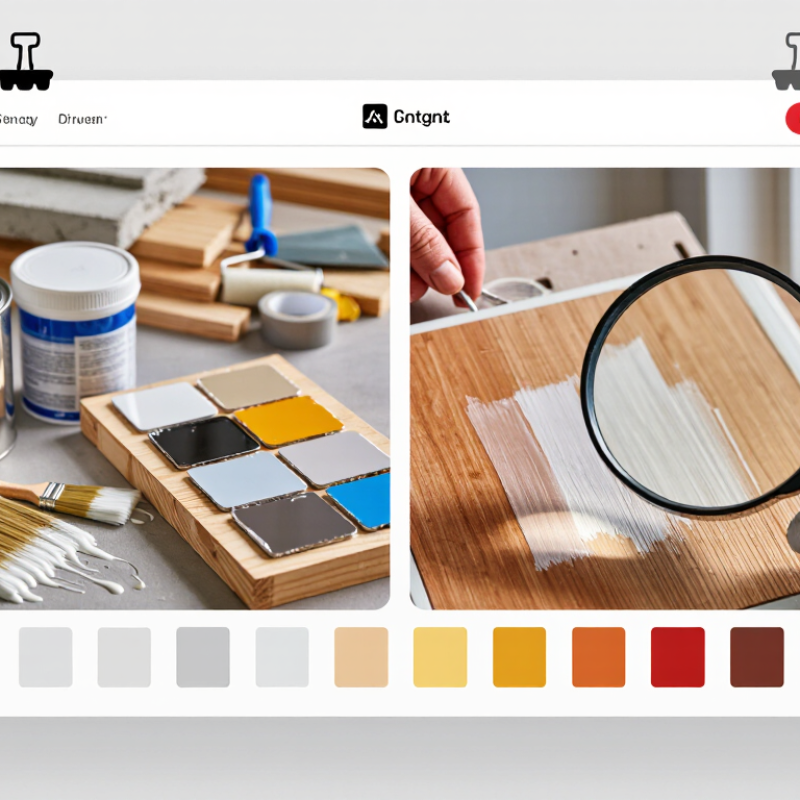
Before choosing an acrylic topcoat, identify the surface: bare wood, masonry, metal, or a previously painted finish. Each needs different preparation. Look for rust, peeling edges, powdery chalk, and glossy patches. These clues matter. A topcoat may adhere poorly if the old layer is loose, contaminated, or chemically incompatible. The NACE IMPACT study estimated corrosion costs at US$2.5 trillion per year, or 3.4% of global GDP. That figure covers many industries, but it underlines why rust should be addressed before coating.
Check the existing coating in a discreet area. Clean it, let it dry, and inspect for softening or lifting after a small compatibility test. For adhesion, ASTM D3359 provides a standardized tape-test method; results still depend on the coating and surface. A visual inspection alone can miss trouble. I have seen sound-looking paint conceal a weak layer beneath it, so allow time for a test patch to dry fully.
Tips: Photograph the surface, note its material, and record any peeling or chalking. Remove loose coating and contaminants before testing. Follow the topcoat maker’s preparation guidance; if the old coating is unknown, do not assume compatibility. A small test patch can save a larger repair.
Define the conditions the topcoat must withstand before comparing products. Will the surface stay indoors, sit in direct sunlight, or face rain and temperature swings? A coating on a garden chair has different demands from one on a shelf. Note likely contact with water, cleaners, skin oils, and abrasion. A tabletop may look dry but still meet hot cups, damp cloths, and daily friction.
Check the substrate and preparation, too. Acrylic topcoats can behave differently on bare wood, painted surfaces, or previously sealed finishes. Read the product’s technical data for suitable surfaces, application temperature, drying time, and recommended film thickness. Test a small, hidden area first; appearance and adhesion can change after curing. For outdoor use, confirm the stated weathering and UV resistance. A label alone cannot predict every exposure, and the toughest coating is not always the best fit.
Tips: Write down the surface, location, and three most likely hazards before shopping. Keep a small test panel beside the project. If the conditions are uncertain, allow time for another test; guessing is faster, but it can be costly.
Acrylic topcoats vary in carrier, curing method, and intended use, so “acrylic” alone does not predict performance. Waterborne acrylics usually have lower odor and clean up with water before curing. They can suit indoor furniture, trim, and projects where a clear finish is preferred. Drying may slow in cool, humid rooms, and the surface can feel dry before it is ready for handling.
Solvent-borne acrylics often level smoothly and may tolerate damp conditions better during application, but ventilation and longer odor control can be important. Acrylic-urethane blends typically offer stronger resistance to scuffs and household chemicals than basic acrylic finishes. That matters on tabletops or frequently touched cabinets. They may cost more, and some systems require careful mixing or a narrow recoat window. Not always worth it.
Compare the product’s technical data, not just its label. Check recommended substrates, recoat time, full-cure time, gloss level, and resistance claims. A topcoat that looks clear in the can may slightly warm pale wood or deepen its color. Apply it to a small test panel, then inspect it under the room’s actual lighting. I would also test a gentle water ring after the stated cure period; rushing this check can mislead. The best choice depends on the surface, exposure, and finish you can maintain.
| Comparison Factor | Waterborne 1K Acrylic | Solventborne 1K Acrylic | 2K Acrylic Polyurethane |
|---|---|---|---|
| How It Cures | Water evaporates and the resin particles coalesce into a film. Full properties develop as the coating dries and cures. | Solvent evaporates, leaving a thermoplastic acrylic film. The film does not chemically crosslink in the usual 1K system. | Acrylic resin reacts with a separate hardener, commonly an isocyanate, to form a crosslinked film. |
| Typical Strengths | Lower solvent emissions than conventional solventborne systems, easy cleanup with water before drying, and good color and gloss retention in suitable formulations. | Fast drying, good clarity, and useful adhesion and appearance on compatible, properly prepared surfaces. | Strong overall resistance to abrasion, chemicals, moisture, and weathering when correctly mixed and applied. |
| Typical Limitations | Drying and film formation can be affected by low temperature, high humidity, airflow, and the surface being coated. Early water exposure may damage an incompletely cured film. | Contains organic solvents; ventilation and safe handling are important. Thermoplastic films can soften or be affected by some solvents. | Requires accurate mixing and has a limited pot life after mixing. Application and cleanup are more demanding than for a 1K coating. |
| Weathering and UV | Often performs well outdoors when the product is formulated for exterior use; check the technical data for the intended exposure. | Can offer good gloss and color retention, but exterior durability depends on the specific resin and formulation. | Generally offers very good exterior gloss and color retention; confirm suitability for the substrate and exposure conditions. |
| Chemical and Abrasion Resistance | Ranges from moderate to good after full cure; resistance varies substantially by formulation. | Generally moderate; a thermoplastic film may be more vulnerable to strong solvents and heat than a crosslinked coating. | Generally the strongest choice of these three for abrasion and chemical exposure after full cure. |
| Application Considerations | Use suitable temperature and humidity conditions, apply the specified film thickness, and allow adequate drying between coats. | Ensure effective ventilation and follow the specified thinner, recoat window, and surface-preparation instructions. | Follow the specified mix ratio, induction time if required, pot life, film thickness, and curing conditions. |
| Best Suited To | Projects prioritizing reduced solvent use, convenient cleanup, and a waterborne finish, such as suitable interior trim or general-purpose coatings. | Applications needing a fast-drying acrylic finish where solvent use is acceptable and the substrate is compatible. | High-performance applications needing greater durability, such as vehicle refinishing, equipment, or demanding industrial finishes. |
| Key Safety Point | Follow the product safety data sheet; waterborne does not mean hazard-free. | Control solvent vapors and ignition sources, and use the protective equipment specified by the safety data sheet. | Many hardeners contain isocyanates, which can cause serious respiratory and skin sensitization. Use only with appropriate controls and protective equipment specified by the safety data sheet. |
| Selection Summary | Choose when water cleanup and lower solvent emissions are priorities, and the service conditions suit the product. | Choose when a solventborne, fast-drying acrylic finish is appropriate for the job and the work area can be safely ventilated. | Choose when higher chemical and abrasion resistance justify more complex mixing, application, and safety requirements. |
Note: Performance depends on the specific formulation, substrate preparation, application conditions, film thickness, and cure. Check the product technical data sheet and safety data sheet before selection and use.
Acrylic topcoat compatibility starts with the existing surface, not the can. Check whether the primer and topcoat share a compatible binder and whether the primer has fully cured. A small test patch can reveal lifting, wrinkling, or poor adhesion before the whole panel is coated. One thing is easy to miss: a surface may feel dry while still holding moisture or contamination. Clean it, let it dry, then lightly abrade glossy areas as the product instructions allow.
Application method affects the finish and drying time. A brush can leave ridges on a broad panel; spraying may create a more even film, but only with suitable equipment and ventilation. Keep the coat thin and consistent. ASTM D3359 rates tape-test adhesion from 0B to 5B; 5B indicates no coating removal. This gives a practical way to assess a test area, though it does not predict every real-world condition. Drying also shifts with temperature, humidity, airflow, and film thickness. ASTM D1640/D1640M standardizes evaluation of coating drying stages, but it does not provide one universal wait time for every acrylic topcoat. Follow the technical data sheet’s touch-dry and recoat guidance, and record room conditions. I still check twice. A rushed second coat can trap softness underneath.
How to Choose the Right Acrylic Topcoat? Review Safety Requirements and Product Specifications
Before comparing gloss or color, read the product label and Safety Data Sheet (SDS). Check the required respirator, ventilation, gloves, eye protection, and first-aid steps. Do not assume every acrylic topcoat has the same hazards; formulas differ. If the SDS lists methyl methacrylate, NIOSH’s Pocket Guide reports a recommended exposure limit of 100 ppm as an eight-hour time-weighted average and 125 ppm for short-term exposure. That figure applies to methyl methacrylate, not automatically to the whole coating or every acrylic product. Read the SDS. Confirm that the listed controls fit your workspace, especially when spraying or working in a small room.
Then compare technical specifications: substrate compatibility, primer requirements, solids content, VOC information, recoat window, cure time, and resistance to water, abrasion, or chemicals. Match the data sheet to the job: a frequently wiped cabinet needs different performance than a decorative panel. Check application temperature and humidity, too; a cold garage can slow drying and trap dust in the finish. A glossy sample can look convincing under showroom lights. Inspect an edge and a handled area as well. I would not choose from appearance alone; that shortcut is easy to regret. One detail is often overlooked: confirm whether “dry to touch” means the same as fully cured.
Compare the product’s VOC content with the limit for its intended coating category, then review its safety data sheet and technical specifications.
EU Phase II VOC limits (g/L) under Directive 2004/42/EC, Annex II: interior matt wall and ceiling coatings are limited to 30 g/L for both water-based and solvent-based products; interior glossy wall and ceiling coatings are limited to 100 g/L for water-based and 300 g/L for solvent-based products. Classification depends on the coating’s intended use—not simply whether it is acrylic. Check local rules and the product label, technical data sheet, and safety data sheet before selecting or applying a topcoat.
Phone: (256) 845-1255 or (256) 845-4493
Fax: (256) 845-1321 or (256) 845-4468
© 2025 Heritage Wire Harness, LLC