
Blog

7 Roll Crusher Buying Tips for Global Buyers

A Roll Crusher can look simple on a supplier’s drawing: two rotating rolls, a feed opening, and a discharge gap. Choosing the right machine is less simple. Feed size, moisture, abrasiveness, required product size, throughput, and maintenance access all affect performance. A mismatch can mean uneven product, avoidable wear, or costly downtime. Small details matter.

The U.S. Geological Survey’s Mineral Commodity Summaries 2025 estimates U.S. crushed-stone production at about 1.5 billion tons in 2024. That figure is not a measure of roll-crusher sales, but it shows the scale of material handling behind aggregate operations. Buyers should connect equipment claims to their own feed tests and duty conditions. A brochure is not a test result.

Barry Wills, a respected mineral-processing author, has long stressed the importance of matching equipment to material and process objectives. A fair paraphrase of that guidance is: “Choose around the feed and the duty, not the sales label.” This guide turns that principle into seven practical buying checks for global buyers, from roll configuration and capacity to wear parts, controls, service support, and total ownership cost. Some specifications still leave room for interpretation. Ask suppliers to explain assumptions, provide comparable test data, and identify what remains uncertain. That is worth doing. A careful comparison may take longer, but it can prevent an expensive mismatch.
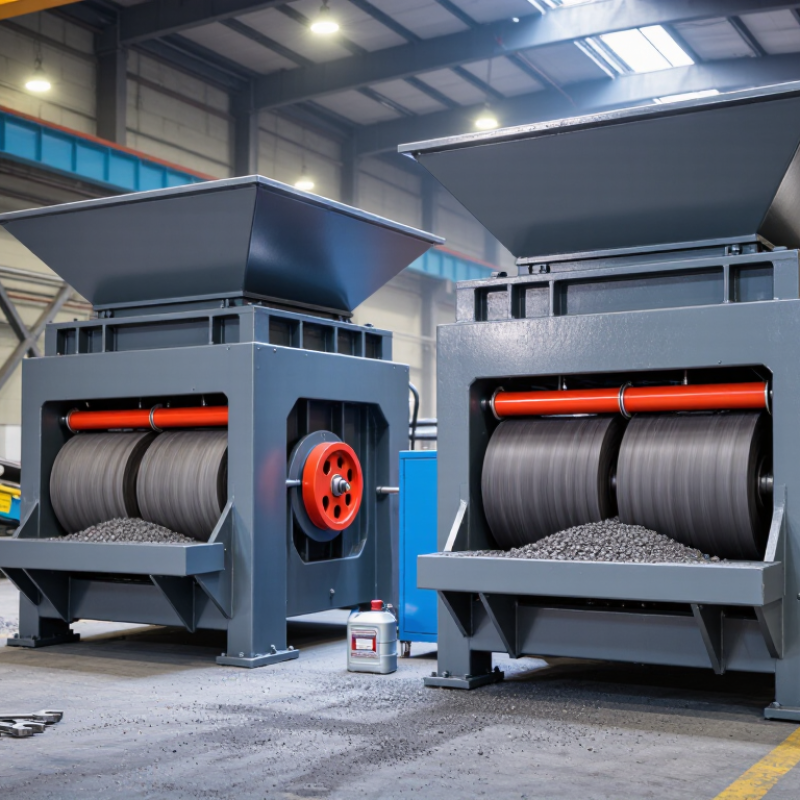
7 Roll Crusher Buying Tips for Global Buyers

How Roll Crushers Work and Where They Fit in a Processing Line

A roll crusher reduces material between two counter-rotating cylinders. The rolls draw feed into a set gap and break it mainly through compression and shear. Gap width, roll speed, and feed size shape the product. The gap matters. A tighter setting can produce smaller particles, but may increase wear and fines.

In a processing line, roll crushers commonly handle secondary or tertiary reduction after primary crushing and screening. They can suit friable materials such as limestone and some ores when a controlled product size is needed. Wet, sticky feed can build up on the rolls or choke the feed opening. That is not enough. Operators should also check feed consistency, roll surface condition, and downstream screen capacity before choosing a machine.

The U.S. Geological Survey’s 2025 Mineral Commodity Summaries estimated U.S. crushed-stone output at about 1.5 billion tons in 2024. That scale makes dependable size control important across aggregate operations. For a buying decision, compare the crusher’s stated capacity with the actual feed gradation and moisture, not just a catalog maximum. A useful plant test can reveal a mismatch early; I would still treat one test result cautiously if feed conditions vary by season.

Match Crusher Type and Roll Design to Your Material

A roll crusher should be selected around the material, not just the target capacity. Check feed size, hardness, moisture, and abrasiveness before comparing models. Dry, brittle rock may suit smooth rolls and a controlled gap. Tough lumps or materials that need grip may call for toothed rolls. But teeth can leave a less uniform product, so check the required particle shape and downstream process.

Roll design matters. A narrow gap can produce finer material, yet it may increase wear and energy demand. Differential roll speeds can help draw in some feeds, though performance depends on material behavior. Ask for test results using a representative sample, including its moisture and largest feed pieces. Real samples are useful. Supplier estimates can miss variation in a changing feed.

Tip: Match roll surface and gap to the feed’s hardness, size, and moisture. For abrasive material, ask how roll wear affects product size over time. For sticky feed, confirm whether buildup is likely and how it will be managed. One detail is easy to overlook: feed conditions rarely stay perfectly consistent. A little margin may help, but too much can mean unnecessary cost.

7 Roll Crusher Buying Tips for Global Buyers - Match Crusher Type and Roll Design to Your Material

Buying Tip Material and Feed Conditions Crusher Type to Consider Roll Design and Setting What to Confirm Before Buying
1. Define the feed and product sizes Record the maximum feed size, typical feed size, and required product-size range. Include the proportion of fines and any unusually large lumps. Choose a single- or double-roll arrangement according to required reduction, capacity, and the material’s behavior. A roll crusher is generally used for controlled size reduction rather than fine grinding. Check whether the proposed roll diameter, roll width, and adjustable gap are suitable for the feed and target product. The product size is influenced by the gap, feed, and operating conditions. Ask for a sizing proposal based on a representative feed-size distribution—not just the maximum lump size—and agree on how product size will be measured.
2. Match the roll surface to the material Friable materials such as coal and some limestones may break readily; harder or more abrasive feeds can cause faster wear. Conventional smooth-roll designs are often considered for relatively fine, controlled crushing of suitable materials. Toothed or corrugated designs can help grip and draw in coarse, friable feed. Compare smooth, corrugated, and toothed surfaces. Tooth profile and spacing should suit the feed size and material; a more aggressive profile is not automatically better for every feed. Request wear-life assumptions and replacement details for the proposed roll surface using the actual material’s hardness, abrasiveness, and operating duty.
3. Check hardness, abrasiveness, and toughness Hard, abrasive minerals can wear roll surfaces quickly, while tough or blocky feed may require more robust drive and roll construction. Compare crusher options using representative material test data. Do not select solely from a material name, since deposits of the same material can differ in hardness and abrasiveness. Review roll-surface material, replaceable components, shaft and bearing protection, and the available gap-adjustment range. Provide the supplier with test results where available, such as compressive strength and abrasiveness, and ask which assumptions were used for wear and capacity estimates.
4. Assess moisture and stickiness Wet, clay-bearing, or sticky feed can adhere to rolls or obstruct the crushing zone, affecting flow and maintenance needs. Confirm that the proposed roll-crusher arrangement is appropriate for the feed’s moisture and clay content. Some sticky materials may require upstream conditioning or a different crushing solution. Discuss roll profile, clearances, access for cleaning, and any proposed scrapers or other cleaning provisions. These features must be matched to the specific material. Share expected moisture range and seasonal variation. Ask for operating references or test results with comparable feed rather than assuming dry-feed performance will apply.
5. Size for throughput and duty cycle Capacity depends on factors including feed size, gap, roll dimensions, speed, material properties, and how consistently the crusher is fed. Select a configuration for the required tonnes per hour and operating schedule, including expected peaks, start-stop frequency, and upstream or downstream constraints. Compare roll width, diameter, drive power, and speed as a complete design. Larger nominal capacity alone does not ensure the required performance for a particular feed. Request capacity estimates tied to stated feed conditions and product-size targets. Confirm whether figures are theoretical, test-based, or guaranteed under specified conditions.
6. Plan for tramp material and overloads Scrap metal, oversized rocks, or other uncrushable objects can damage equipment or interrupt production. Consider suitable upstream screening or metal removal and ask how the selected crusher handles overloads. Protection arrangements depend on the machine design and application. Review the gap-adjustment mechanism and any spring-loaded or hydraulic relief features offered for the specific model. Confirm how these operate and reset after an overload. Clarify the permitted feed and tramp-material limits, protection-device settings, inspection access, and the required upstream safety measures.
7. Compare maintenance and operating requirements Remote sites, limited maintenance staff, and variable power or environmental conditions can affect equipment availability and lifecycle cost. Choose a design that fits local operating skills, site layout, utilities, and the intended duty. Include the feed and discharge conveyors and access for service in the review. Check roll removal and replacement procedures, bearing access, lubrication requirements, adjustment method, and availability of wear parts. Compare documented maintenance intervals, recommended spare parts, installation requirements, electrical specifications, training, and service support for the destination country.

Selection note: Final capacity, product size, wear life, and suitability depend on the actual feed and operating conditions. Confirm the design with representative material data and, where practical, crushing tests.

Compare Capacity, Feed Size, and Product-Size Requirements

A roll crusher purchase should begin with the material, not the machine’s headline capacity. Ask suppliers to state capacity for your actual feed, including bulk density, moisture, and expected operating hours. A dry, uniform sample may behave differently from damp, variable rock. Capacity is not a fixed promise.

Tip: Compare rated throughput with your required tonnes per hour, then check the assumptions behind the figure. Allow for surges and downtime. Small details matter.

Next, verify the maximum feed size and the crusher’s reduction range. Oversized lumps can bridge at the inlet or cause uneven loading. Share representative feed measurements, not only the largest piece you have seen. Then define the target product size and acceptable percentage of fines. Roll gap, roll condition, and material hardness can all affect the result. Request test data or a sample run using similar material. Test it first. A common oversight is specifying only one target size; in practice, your process may need a range, which can change the best configuration.

How to use this chart: These are illustrative sizing scenarios, not machine ratings. The examples show a 5:1 feed-to-product size ratio; actual reduction and achievable product size depend on the material and crusher configuration. When comparing quotes, confirm rated capacity for your material, feed conditions, and target product size.

Evaluate Manufacturers, Quality Standards, and Customization

When evaluating roll crusher manufacturers, look beyond catalog capacity. Ask for drawings, material specifications, inspection records, and references from plants handling similar feed. A test using representative material can reveal how moisture, hardness, and particle size affect throughput and product shape. Brochures rarely show that.

Small details matter. Check roll surface material, shaft dimensions, bearing protection, and the method for adjusting the gap. Request documented checks for runout, weld quality, and critical dimensions, plus a factory test plan. Confirm that supplied standards and certificates match the project requirements; a certificate alone does not prove the machine suits your duty. It is easy to focus too heavily on motor power. Oversizing it may add cost without improving output.

Discuss customization with actual operating data: feed size, target product size, abrasiveness, hourly capacity, and expected operating hours. Share site drawings, available space, power supply, and control preferences before finalizing the design. Ask which wear parts are interchangeable and how quickly replacements can be supplied. A custom hopper or frame may solve a real layout problem, but added features can also complicate maintenance. Sometimes the first specification misses a constraint; review the drawings with the operators who will service the crusher.

Check Total Cost, Shipping, Installation, and After-Sales Support

A roll crusher’s purchase price is only one part of its cost. Compare the full quotation, including wear parts, motors, controls, packing, and any commissioning fees. Ask which items are included and which are optional. A lower initial price can become expensive if key components are missing. Small details matter. Keep a written cost breakdown for comparison.

Tip: Confirm shipping terms, crate dimensions, estimated delivery dates, and unloading requirements before placing an order. Check whether the machine needs a forklift or crane at your site. Freight delays can affect production plans, so leave a practical time buffer. These estimates are not guarantees; I would allow more time than the schedule first suggests.

Installation and after-sales support deserve the same scrutiny as machine specifications. Request foundation drawings, utility requirements, and a clear installation scope. Ask who supervises commissioning and what training operators receive. Get response times, spare-parts availability, and warranty conditions in writing. Ask for a maintenance checklist and a parts list for routine wear. A promise of support sounds reassuring, but it is hard to assess without clear contacts and procedures. During acceptance, record test results and any unresolved issues. That may feel cautious, yet it gives both sides a useful reference later.

Go to Top