
Blog

What Is a Sewer Grate and Which Type Is Best?

A Sewer Grate is more than a metal cover over a drainage channel. It is a working part of a larger stormwater system. Its design affects safety, water flow, maintenance, and pavement durability. A weak grate may bend under traffic. A poorly shaped opening may trap leaves, stones, or litter.

Dr. Richard Ashley, a respected urban drainage researcher, has stated, “Drainage is a risk-management problem, not merely a pipe-sizing exercise.” That idea matters when selecting a Sewer Grate. The right choice depends on location, traffic weight, hydraulic demand, surface slope, and maintenance access. A pedestrian walkway needs different protection than a loading yard. A residential driveway may not require the same load class as a busy road.

Small details matter.

A grate with narrow slots can reduce hazards for bicycle tires and high-heeled shoes. Anti-slip surfaces can improve footing during heavy rain. Galvanized steel may suit many outdoor settings, while ductile iron often handles heavier loads. However, corrosion, theft risk, debris buildup, and installation quality can change the result.

There is no universal “best” Sewer Grate. That conclusion is easy to overlook. The most expensive model may still perform poorly if its outlet is undersized or its frame sits unevenly. This guide compares common grate types, explains practical selection criteria, and examines where each design can fail. Some recommendations may need adjustment after a site inspection. Good drainage decisions require measurements, not assumptions.
What Is a Sewer Grate and Which Type Is Best?

What Is a Sewer Grate?

A sewer grate is a removable metal cover fitted over a drainage opening. It allows rainwater and surface runoff to enter underground pipes. At the same time, it helps stop leaves, stones, and larger debris from blocking the system. Unlike a solid manhole cover, a grate has openings across its surface.

Most sewer grates are made from ductile iron, cast iron, steel, or reinforced composite materials. Their shape may be square, rectangular, or circular. The frame supports the grate and transfers traffic loads into the surrounding pavement. A secure fit also reduces rocking, rattling, and unsafe gaps.

The best grate depends on its location. A driveway may need a medium-duty design, while a road entrance requires a higher load rating. Narrow slots can improve pedestrian safety, especially near bicycles, wheelchairs, and narrow tires. Wider openings may drain heavy rain faster but can collect more debris. That trade-off is easy to overlook.

During inspection, check the frame, hinge, bolts, and nearby concrete. Look for cracks, corrosion, blocked slots, or uneven settlement. A grate that looks strong may still fail if its frame is poorly supported. I once assumed a heavier cover was always better; that was too simple. Drainage capacity, maintenance access, surface safety, and local engineering requirements must be considered together.

How Does a Sewer Grate Work?

A sewer grate is the visible intake where rainwater enters an underground drainage system. Its bars stop leaves, stones, and loose debris while allowing water to pass through. During a storm, water moves along the road gutter and reaches the grate’s openings. The inlet then directs flow into a catch basin, pipe, or larger stormwater network. Small details matter. A blocked grate can turn a shallow gutter into a dangerous pool within minutes.

The Federal Highway Administration’s HEC-22 drainage method evaluates grate performance through opening area, road slope, gutter spread, and bypass flow. These factors explain why a larger grate is not always the best choice. A bicycle-safe grate with narrow, correctly aligned slots may suit a busy street, while a heavy-duty ductile-iron grate can better handle repeated truck loads.

The U.S. Environmental Protection Agency’s 2022 Clean Watersheds Needs Survey identified approximately $115.6 billion in stormwater infrastructure needs. That figure shows why reliable inlet design deserves careful attention.

In field inspections, sediment often gathers beneath the grate, not only above it. Maintenance access, frame stability, and local rainfall intensity should guide selection. I would not choose by appearance alone. That remains an easy mistake.

What Are the Main Types of Sewer Grates?

What Is a Sewer Grate and Which Type Is Best?

Sewer grates are not one-size-fits-all components. Their design should match traffic, rainfall, debris, and drainage speed.

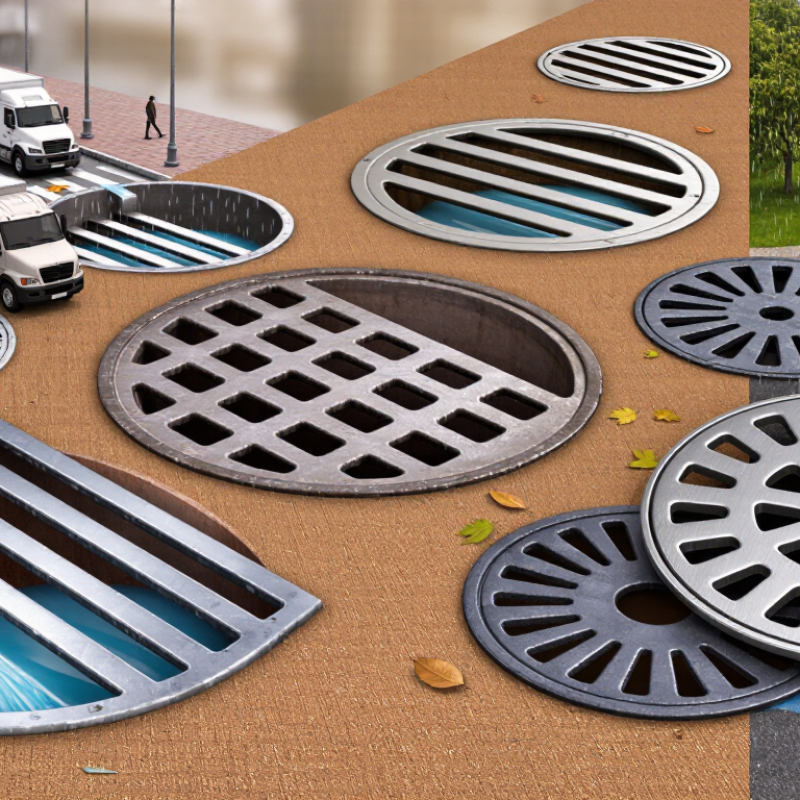
Bar grates use repeated openings and suit roads, parking areas, and sidewalks. Parallel bars improve water entry but can trap bicycle wheels. Transverse bars offer better cyclist safety, although leaves may collect across the opening.

Slot grates provide narrow, continuous drainage and create a cleaner surface. They can clog quietly. That matters.

Curb-opening grates work well where pavement slopes toward a roadside channel. Trench grates suit driveways, plazas, and industrial floors because they collect water along a line. Solid covers belong over access chambers, not active intake points.

Material also changes performance. Ductile iron handles heavy wheel loads, while galvanized steel is lighter but may need stronger corrosion protection. Polymer concrete is useful where chemical exposure matters, but installation quality remains critical.

The Federal Highway Administration’s HEC-22 Urban Drainage Design Manual explains that inlet efficiency depends on opening geometry, flow depth, approach velocity, and blockage. A larger grate is not automatically better.

The U.S. Environmental Protection Agency’s 2022 Clean Watersheds Needs Survey reported approximately 115.6 billion dollars in stormwater infrastructure needs, highlighting the cost of poor drainage decisions.

EN 124 classifies covers and grates from A15, rated at 15 kilonewtons, to F900, rated at 900 kilonewtons. Site loading must guide selection.

A common weakness is ignoring maintenance access. Even a correctly rated grate fails when sediment fills its openings.

How Do Materials and Designs Affect Grate Performance?

What Is a Sewer Grate and Which Type Is Best?

A sewer grate covers a drainage opening and allows stormwater to enter safely. Its material and design strongly affect strength, service life, and maintenance.

Cast iron handles heavy traffic, making it suitable for roads and loading areas. Ductile iron offers similar strength with improved resistance to impact.

Steel can provide clean lines, but untreated steel may corrode quickly in wet environments. Stainless steel resists corrosion better, although its higher cost may not suit every project.

Design Matters as Much as Material

A grate with narrow, closely spaced bars blocks larger debris, but leaves and mud can clog it faster. Wider openings improve water flow, yet they may create safety concerns for bicycles, shoes, or small wheels. Anti-slip textures help during rain. Hinged or locking designs reduce theft and simplify inspection.

Engineers should check the expected traffic load, drainage volume, local climate, and accessibility requirements. One mistake is choosing the strongest grate without considering cleaning access.

Tips: Measure the opening carefully before ordering. Inspect nearby grates after heavy rain. Look for rust, cracked frames, loose hinges, and blocked channels. In coastal or chemically exposed areas, specify corrosion-resistant protection. A grate that looks solid may still fail if its frame does not sit level. Performance depends on the whole installation, not the cover alone.

Which Sewer Grate Type Is Best for Different Applications?

What Is a Sewer Grate and Which Type Is Best?

The best sewer grate depends on traffic, water flow, debris, and maintenance access. For sidewalks, courtyards, and light landscaping, heel-safe slotted grates reduce trip risks while allowing steady drainage. Cast iron offers strong impact resistance. Polymer concrete can weigh less and resist many corrosive environments. Small details matter.

Road crossings require stronger choices. Ductile iron or reinforced steel grates suit areas exposed to buses, trucks, and repeated wheel loads. Engineers should verify load classes under EN 124 or equivalent local standards, rather than trusting appearance alone. A grate that survives one storm may still fail under years of traffic. Field inspections often reveal rocking frames, blocked openings, and poor bedding. These are installation problems, not always product problems.

For flood-prone streets, a wide-opening grate can improve capture, but it may admit leaves and plastic waste. A sump or removable basket helps where maintenance crews can reach it frequently. In coastal or industrial settings, corrosion-resistant materials deserve closer attention. The United States Environmental Protection Agency’s 2022 Clean Watersheds Needs Survey estimated $115.6 billion in stormwater infrastructure needs, showing the scale of deferred drainage work. Budget pressure is real. Still, choosing only the cheapest grate can increase cleaning and replacement costs. The right decision should match hydraulic calculations, local rainfall records, vehicle loads, and a realistic maintenance schedule. Some projects still overlook the last factor.

Article Source:

Go to Top