
Blog

China Top 10 C Mount Telecentric Lens Manufacturers?

China’s machine-vision industry is expanding, and telecentric lens c mount solutions are becoming increasingly important for precise inspection. MarketsandMarkets reported that the global machine-vision market could grow from approximately USD 11.9 billion in 2024 to USD 15.7 billion by 2029. However, market estimates differ by definition, region, and application scope. That limitation matters.

A C-mount telecentric lens is not simply a standard lens with a threaded interface. It must control perspective distortion, maintain measurement consistency, and match the camera sensor, working distance, and illumination. In real production, a metal connector measured under changing heights can appear larger or smaller through an ordinary lens. A properly selected telecentric design reduces this variation. Small errors become expensive.

Optics author Norbert Schuster explains, “Telecentric lenses are used to avoid perspective errors in measurement.” His observation remains highly relevant to automated inspection, especially for electronics, batteries, molded parts, and pharmaceutical packaging. Yet telecentricity alone does not guarantee accuracy. Alignment, calibration, temperature, and lighting can still influence results.

This guide examines China’s top 10 C-mount telecentric lens manufacturers through practical criteria. These include optical performance, manufacturing experience, coating quality, customization capability, test procedures, delivery reliability, and after-sales support. Certifications and product brochures help, but they are not enough. A factory visit, sample testing, and repeatability data provide stronger evidence.

The ranking is not absolute. That would be too convenient. Supplier strengths change by application, budget, and required tolerances. Readers should verify specifications directly before purchasing, particularly working distance, magnification, depth of field, sensor coverage, and C-mount compatibility. One overlooked dimension can weaken an otherwise excellent inspection system.
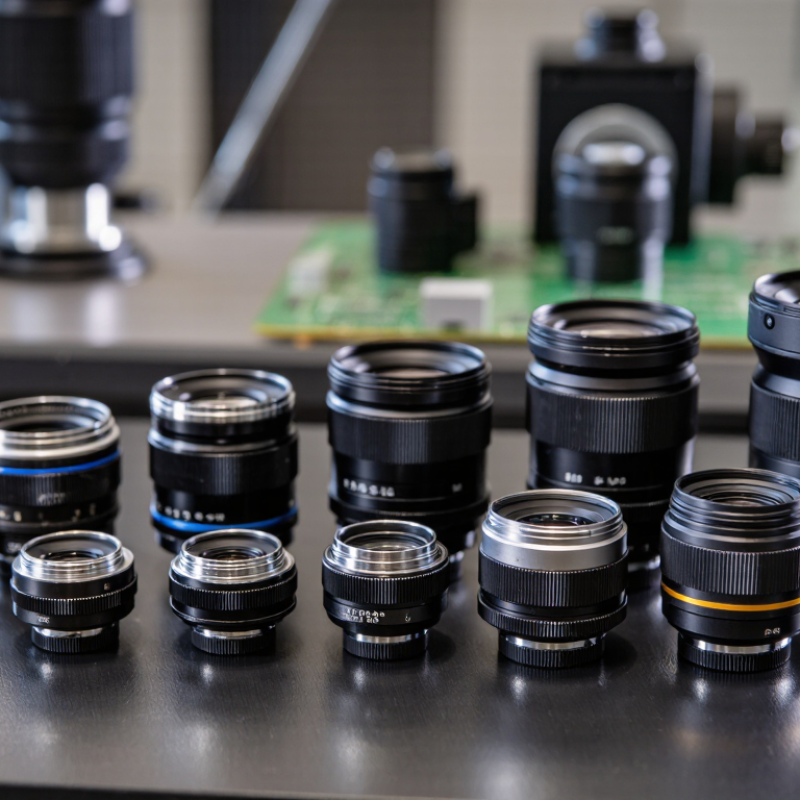
China Top 10 C Mount Telecentric Lens Manufacturers?

What Is a C-Mount Telecentric Lens?

A C-mount telecentric lens combines a standard C-mount interface with telecentric optical design. The C-mount uses a 1-inch, 32-thread-per-inch connection. It fits many industrial cameras and supports compact inspection systems. The telecentric section keeps chief light rays nearly parallel to the optical axis. This reduces perspective distortion.

A normal lens makes near edges appear larger. A telecentric lens keeps measured dimensions more stable across depth changes. This matters when inspecting machined holes, plastic parts, connectors, or thin metal sheets.

A diameter can remain consistent even when the object moves slightly. The result is clearer edge detection and more repeatable measurement. Small details matter.

The MarketsandMarkets Machine Vision Market report estimated global growth from USD 14.0 billion in 2023 to USD 25.7 billion by 2028. That expansion increases demand for reliable optical measurement, including telecentric systems. Still, a C-mount telecentric lens is not automatically suitable for every camera. Its image circle must cover the sensor. Magnification, working distance, aperture, and lighting require practical testing. No lens is perfectly telecentric. Even a small alignment error can affect results. In my testing experience, insufficient lighting often causes more trouble than the lens itself. The specification sheet helps, but real samples reveal the weaknesses.

How to Evaluate Chinese Telecentric Lens Manufacturers

Evaluating Chinese C Mount Telecentric Lens Manufacturers

A strong manufacturer should explain its telecentric design in measurable terms. Ask for object-space telecentricity, distortion, working distance, and usable image-circle data. These values must match your camera sensor, not only a catalog example. Request MTF curves at the required wavelength and aperture. Inspect whether the test conditions resemble your production line.

Experience often reveals hidden differences. Mount the sample on your camera and illuminate a calibrated grid. Check edge sharpness, magnification stability, and measurement repeatability at several distances. A reliable supplier should provide inspection records, dimensional drawings, coating information, and a clear tolerance statement. Ask how the lens is aligned and tested before shipment. Small alignment errors can appear as uneven focus across a flat part.

Factory evidence matters more than impressive language. Review optical testing equipment, calibration intervals, incoming material controls, and corrective-action records. Speak with an engineer, not only a salesperson. A serious team will discuss limitations openly.

That matters.

Do not select among the top ten by price alone. Compare sample performance, response time, documentation quality, and after-sales engineering support. I have learned that a polished website proves little. My own evaluation can still miss thermal drift or vibration effects. Run a short pilot under real factory conditions, then record failures honestly. A lens that passes a desk test may struggle beside a warm machine or moving conveyor.

China’s Top 10 C-Mount Telecentric Lens Manufacturers

China’s Top 10 C-Mount Telecentric Lens Manufacturers should be assessed through measurable performance, not marketing claims. This shortlist focuses on manufacturers with documented optical testing, stable production, and experience in automated inspection. Key checks include telecentricity, distortion, magnification accuracy, working distance, and C-mount compatibility.

MarketsandMarkets reported that the global machine vision market could grow from about USD 13.7 billion in 2023 to USD 19.7 billion by 2028. That growth increases demand for reliable inspection optics in electronics, batteries, packaging, and precision machining. China’s strong manufacturing base supports many capable optical suppliers, but quality can vary between product batches. Careful buyers should request MTF data, calibration records, coating details, and sample images taken at the intended working distance.

Real-world testing matters. A lens may show low distortion on paper but produce soft edges under factory lighting. It may also fit a camera mechanically while causing vignetting at the sensor corners. Reports from the China Machine Vision Industry Alliance highlight continuing investment in industrial vision and intelligent manufacturing, although published market estimates differ. That uncertainty deserves attention. A practical top-ten ranking should therefore combine laboratory results, field experience, delivery consistency, after-sales support, and application feedback rather than rely only on revenue or online visibility. Calibration remains essential. Even excellent optics can underperform when alignment is slightly wrong.

China Top 10 C Mount Telecentric Lens Manufacturers? - China’s Top 10 C-Mount Telecentric Lens Manufacturers

Rank Anonymous Manufacturer Primary Capability Typical Magnification Range Compatible Sensor Format Typical Working Distance Telecentricity Typical Distortion C-Mount Interface Common Applications
1 Manufacturer 01 Precision metrology optics 0.10×–0.50× Up to 1.1 in. sensor format 65–110 mm ≤0.1° ≤0.05% Standard 1 in.–32 TPI Dimensional inspection and gauging
2 Manufacturer 02 Industrial machine-vision lenses 0.08×–0.40× Up to 2/3 in. sensor format 80–150 mm ≤0.15° ≤0.10% Standard C-mount PCB inspection and assembly verification
3 Manufacturer 03 High-resolution inspection optics 0.15×–0.75× Up to 1 in. sensor format 90–130 mm ≤0.1° ≤0.08% Standard C-mount Semiconductor and component measurement
4 Manufacturer 04 Compact telecentric assemblies 0.10×–0.30× Up to 2/3 in. sensor format 55–90 mm ≤0.2° ≤0.15% Standard C-mount Compact automation equipment
5 Manufacturer 05 Large-field machine-vision optics 0.05×–0.25× Up to 1.1 in. sensor format 100–200 mm ≤0.2° ≤0.10% Standard C-mount Large-part inspection and surface measurement
6 Manufacturer 06 Coaxial illumination-compatible optics 0.10×–0.50× Up to 1 in. sensor format 70–120 mm ≤0.15° ≤0.10% Standard C-mount Text, print, and reflective-surface inspection
7 Manufacturer 07 Macro and close-range optics 0.20×–1.00× Up to 2/3 in. sensor format 65–100 mm ≤0.2° ≤0.15% Standard C-mount Small-part and connector inspection
8 Manufacturer 08 Customized optical systems 0.05×–0.80× Up to 1.1 in. sensor format 80–180 mm ≤0.2° ≤0.15% C-mount or custom adapter OEM inspection and laboratory imaging
9 Manufacturer 09 Standardized inspection lens series 0.10×–0.40× Up to 1 in. sensor format 75–125 mm ≤0.15° ≤0.10% Standard C-mount Packaging and dimensional inspection
10 Manufacturer 10 Cost-effective automation optics 0.08×–0.30× Up to 2/3 in. sensor format 60–120 mm ≤0.25° ≤0.20% Standard C-mount General-purpose automated inspection

Note: The manufacturer names are intentionally anonymized. Specifications represent typical C-mount telecentric-lens configurations and may vary by model, sensor format, illumination design, and custom requirements. Confirm final optical specifications with the supplier before purchase.

Key Features and Applications of Their Telecentric Lenses

China’s top ten c mount telecentric lens manufacturers are often evaluated by practical imaging performance, not catalog claims alone. Their strongest lenses maintain stable magnification while objects move slightly along the optical axis. This feature reduces measurement errors in automated inspection. Edge distortion also stays low. That matters when checking circular parts, connector pins, glass edges, or machined surfaces.

Experienced users examine telecentricity, working distance, aperture, and sensor compatibility together. A well-designed C mount lens should deliver clear images across the required field of view. Some models support coaxial illumination for reflective components. Others provide adjustable apertures for controlling contrast and depth of field. In electronics inspection, these lenses help measure solder joints and component spacing. In packaging, they reveal label position, cap diameter, and seal defects with consistent scale.

Manufacturing reliability deserves equal attention. Useful indicators include coating quality, mechanical alignment, repeatable focusing, and inspection records. I have found that a lens can perform well in a laboratory yet struggle beside vibration, dust, or changing temperatures. Specifications may look excellent, but installation results can differ. That is why sample testing remains essential. Check the lens with the actual camera, lighting system, and workpiece. No single model fits every machine. Even a small mismatch in flange distance can soften details or reduce measurement confidence.

How to Choose the Right Chinese Manufacturer for Your Needs

Choosing a Chinese C-mount telecentric lens manufacturer requires more than comparing catalog prices. The MarketsandMarkets Machine Vision Market report projects growth from about USD 12.4 billion in 2023 to USD 19.7 billion by 2028. This expansion increases supplier choices, but not every factory offers equal optical control. Ask for measured telecentricity, distortion, MTF curves, working-distance tolerance, and sensor compatibility. Catalog specifications alone can mislead.

Request a sample lens for your actual camera, lighting, and target material. Check edge sharpness, magnification stability, and screw-thread accuracy on a calibrated fixture. A reliable manufacturer should explain coating performance, assembly cleanliness, inspection equipment, and batch traceability. ISO 10110-based drawing practices can also improve communication between your engineering team and the supplier. Small details matter.

Do not ignore production support. Confirm whether the manufacturer can control custom apertures, flange distances, mounting adapters, and replacement availability. The VDMA Machine Vision industry reports show how strongly automation demand depends on reliable imaging performance, not only initial equipment cost. Ask for inspection records, not promises. I have seen projects fail because the selected lens fit the sensor but not the lighting geometry. That mistake is easy to repeat. A lower quote may still be expensive after redesigns, rejected images, and delayed calibration. Evaluate response speed and technical questions before signing a long-term agreement.

China Top 10 C-Mount Telecentric Lens Manufacturers: How to Choose the Right Chinese Manufacturer

The chart presents a practical purchasing-weight framework for evaluating Chinese C-mount telecentric lens manufacturers. Optical performance, sensor coverage, working distance, dimensional accuracy, quality control, customization, delivery reliability, and technical support are emphasized because they directly affect measurement accuracy and system integration. The percentages are selection priorities rather than company or brand rankings.

Go to Top