
China’s process industries are expanding, but dependable measurement still depends on disciplined calibration. Process Calibrators help technicians verify pressure, temperature, electrical, and signal-loop instruments in demanding environments. A small reading error can affect an entire production line.
This guide examines ten notable Process Calibrators suppliers in China. It considers product range, measurement accuracy, traceable certificates, manufacturing experience, technical support, and export capability. The review also looks at practical details, including HART communication, thermocouple simulation, pressure modules, mA sourcing, and field usability. A calibrator should not merely display a number. It should help engineers trust that number.
Lord Kelvin stated, “When you can measure what you are speaking about, and express it in numbers, you know something about it.” His observation remains relevant to modern calibration work. Reliable suppliers connect measurement theory with equipment that survives workshops, control rooms, and outdoor maintenance tasks.
The phrase “top ten” requires caution. Market position can change. Product quality may vary between models, batches, and service teams. A supplier with excellent documentation may offer limited local support. Another may provide fast assistance but weaker international certification. That difference matters.
This introduction does not treat ranking as absolute truth. Instead, it offers a practical comparison framework for engineers, procurement managers, and distributors. Readers should confirm specifications, accreditation, calibration intervals, warranty terms, and after-sales response before purchasing. Even experienced teams can overlook one detail. That is where careful evaluation begins.
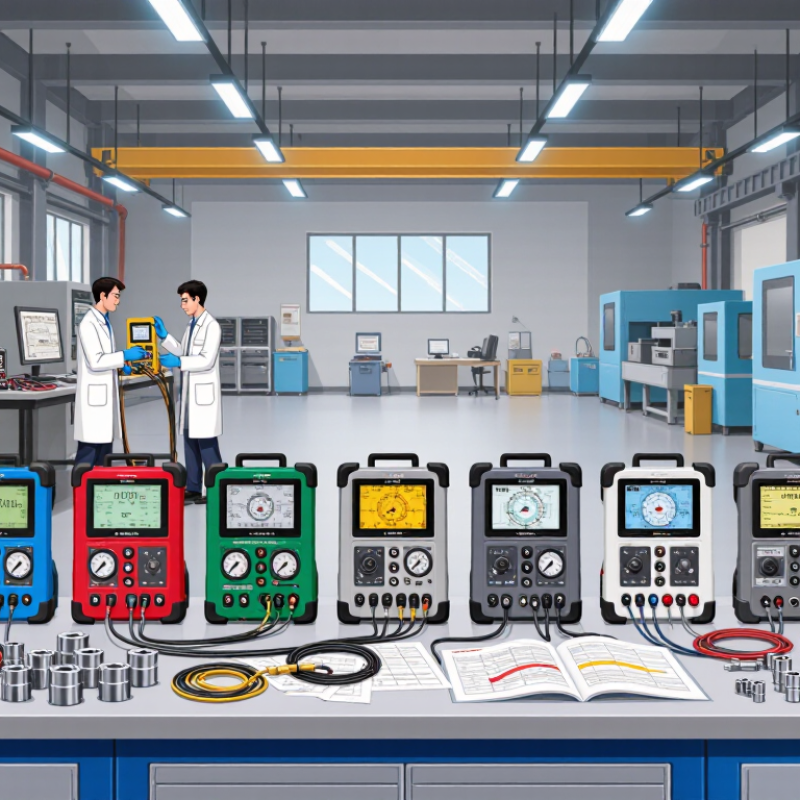
A process calibrator is a portable reference instrument for checking industrial measurement loops. It generates or measures signals used by pressure, temperature, flow, and level instruments. Technicians compare field readings with known values, then adjust transmitters or controllers when necessary. Small errors matter. A two-degree temperature deviation can affect product quality, energy use, and safety decisions. In practice, calibrators help maintenance teams verify instruments without removing every device from the production line.
Demand is linked to wider industrial automation. Grand View Research valued the global industrial automation market at approximately USD 211.3 billion in 2023. Its report projects strong growth through 2030. Deloitte’s 2024 Smart Manufacturing Survey also found that 86% of manufacturing executives view smart manufacturing as important for future competitiveness. More connected equipment creates more measurement points. It also creates more opportunities for unnoticed drift. That assumption deserves caution.
A useful calibrator should support suitable accuracy, signal ranges, documentation, and environmental protection. A loop calibrator can test common current signals, while a multifunction model may cover pressure and temperature tasks. The instrument itself needs periodic verification. ISO/IEC 17025 principles emphasize competent laboratories, documented methods, and measurement traceability. Field records should include the reference standard, test conditions, uncertainty, and technician. Reports can look complete while hiding poor test connections or unstable temperatures. Calibration is practical engineering, not merely pressing a button.
Evaluating process calibrator suppliers in China requires more than comparing prices. Check their experience with pressure, temperature, electrical, and flow applications. A capable supplier should explain measurement uncertainty in clear language. Ask for calibration certificates, traceability records, and test procedures before placing an order.
Inspect the instrument specifications carefully. Confirm accuracy, resolution, operating temperature, input protection, and supported signal ranges. For example, a 4–20 mA loop calibrator should perform steadily during long field checks. A pressure model should match your required range, media, and connection type. Request a sample report. Details matter.
Supplier reliability appears in small actions. Do they answer technical questions directly? Can they provide spare parts and repair guidance? Check factory quality controls, technician training, inspection photos, and independent customer references. Video demonstrations can help, but they are not proof. An on-site audit or third-party inspection gives stronger evidence.
No supplier is perfect. I would treat vague accuracy claims as a warning, even when the product looks polished. Delivery promises also need written confirmation, including packaging and acceptance testing. One overlooked point is software compatibility; a calibrator may work well but create problems during data transfer. Compare total ownership cost, not only the initial quotation. A supplier that documents limitations honestly may deserve more trust than one making flawless promises.
China Top 10 Process Calibrators Suppliers?
This profile-based review examines ten leading Chinese process calibrator suppliers through practical purchasing criteria. The comparison considers measurement accuracy, pressure and temperature ranges, documentation, export experience, and service response. Field engineers usually need more than a low quotation. A stable handheld unit should survive dust, repeated terminal changes, and long maintenance shifts. Small errors matter.
The profiles also examine traceability and quality controls. ISO’s 2023 Survey recorded more than 1.2 million valid ISO 9001 certificates worldwide, showing how widely formal quality systems are used. However, certification alone does not prove calibrator performance. Buyers should request sample calibration certificates, uncertainty statements, software details, and evidence of testing under realistic conditions. The strongest suppliers typically support current, voltage, resistance, frequency, pressure, and thermocouple signals in one workflow. Some also provide custom ranges for demanding industrial sites.
A useful supplier profile includes production capability, laboratory competence, repair procedures, and international communication. ISO/IEC 17025 principles are especially relevant when traceability affects audits or safety records. Public rankings remain imperfect because export data, private-label production, and regional service capacity are not always transparent. That limitation deserves attention. The ten profiles should therefore be treated as a verification shortlist, not a final buying decision. On-site trials and reference checks can reveal weaknesses that brochures hide.
This reference chart presents common process-signal standards covered by professional process calibrators, including 4–20 mA, 0–10 V, RTD, thermocouple, and frequency measurement. These technical dimensions are useful for comparing supplier product profiles without displaying company or brand data.
China’s top ten process calibrator suppliers differ more in practical capability than in catalog size. Some focus on compact loop calibrators for field technicians. Others build advanced multifunction systems for laboratories and production lines. A reliable comparison should examine measurement range, accuracy, stability, and operating temperature. These details affect real maintenance work.
Product design reveals important differences. Basic units may source and simulate voltage, current, resistance, and frequency. Higher-level models can measure pressure, temperature, HART signals, or other digital communication protocols. Some include automatic step testing and data storage. Others still depend on manual records. That can slow inspections. Display readability also matters beside noisy equipment or under weak plant lighting. Battery life, enclosure strength, and connector quality often decide whether a tool survives daily use.
Technology alone does not prove value. Supplier experience appears in calibration procedures, uncertainty statements, and traceable reference standards. Strong technical teams provide application guidance, firmware support, repair services, and local training. Response time matters when a production line is waiting. Documentation should explain test conditions clearly, not hide behind impressive specifications. A weakness remains common: service promises may sound better than actual response during peak periods. Buyers should request sample certificates, warranty terms, and realistic turnaround times. Trial testing is wiser than trusting a brochure.
Supplier names and brands are intentionally omitted. The comparison uses anonymous supplier profiles and common, publicly documented specifications for Chinese process-calibration equipment categories. Exact ranges, accuracy, interfaces, and certifications vary by model and configuration and should be verified against the current datasheet.
| Rank | Anonymous Supplier Profile | Primary Product Focus | Typical Measurement or Source Functions | Common Technology Differentiators | Typical Accuracy Positioning | Connectivity and Software | Calibration and Service Capability | Best-Fit Application |
|---|---|---|---|---|---|---|---|---|
| 1 | Supplier A | Multifunction process calibrators | DC voltage, DC current, resistance, thermocouple, RTD, frequency, pulse, and switch testing | Integrated sourcing and measurement in one handheld unit; loop-power support; automatic step and ramp functions | Generally positioned from basic field accuracy to approximately 0.05% of reading, depending on model | USB commonly available; selected models may provide Bluetooth or PC logging | Factory verification, optional ISO/IEC 17025 calibration through qualified laboratories, and firmware support | General instrument maintenance, commissioning, and plant troubleshooting |
| 2 | Supplier B | High-accuracy electrical calibrators | Precision voltage, current, resistance, frequency, and 4–20 mA loop signals | Low-drift reference circuits, enhanced cold-junction compensation, and high-resolution display | Typically aimed at approximately 0.02%–0.05% of reading for selected electrical functions | USB or RS-232 is common; data export and calibration records may be supported | Traceable calibration certificates, adjustment services, and repair of electronic assemblies | Metrology rooms, control-loop verification, and higher-accuracy maintenance work |
| 3 | Supplier C | Temperature process calibrators | Thermocouple types commonly include J, K, T, E, R, S, and B; RTD simulation commonly includes Pt100 | Dry-block or liquid-bath compatibility, automatic sensor-type selection, and programmable stability checks | Temperature performance depends strongly on range, block uniformity, sensor type, and reference probe | USB and local memory are common; selected systems support computer-controlled test sequences | Sensor verification, block uniformity testing, reference-probe calibration, and service replacement | Food, pharmaceutical, laboratory, HVAC, and process-temperature maintenance |
| 4 | Supplier D | Pressure and multifunction calibrators | Pressure measurement with external or internal modules, plus voltage, current, switch, and loop tests | Interchangeable pressure modules, pressure-switch testing, leak-test functions, and optional hand pumps | Pressure accuracy commonly varies from about 0.05% to 0.25% of full scale by module and range | USB is common; module identification and stored test results may be available | Pressure-module calibration, pneumatic or hydraulic pump repair, and certificate issuance | Oil and gas, water treatment, utilities, and industrial pressure instruments |
| 5 | Supplier E | HART and smart-instrument communicators | 4–20 mA sourcing and measurement, loop power, HART configuration, and transmitter diagnostics | Digital communication support layered onto conventional loop calibration; device configuration and trim workflows | Analog accuracy is commonly specified separately from communication capability; model-dependent | USB, internal storage, and PC software are common; HART compatibility depends on installed protocol support | Device database updates, application support, loop troubleshooting, and calibration documentation | Smart transmitters, distributed control systems, and plant instrumentation teams |
| 6 | Supplier F | Portable loop calibrators | 4–20 mA source and measure, 0–10 V, loop power, percentage output, and switch testing | Compact form factor, simple menu operation, loop-powered transmitter testing, and rugged field housing | Usually focused on practical field accuracy, commonly around 0.05%–0.1% of reading | Basic models may have no wireless interface; USB data transfer is available on advanced versions | Routine verification, battery replacement, repair, and optional traceable calibration | Fast field checks, maintenance rounds, panel testing, and technician toolkits |
| 7 | Supplier G | Handheld multifunction calibrators for OEM integration | Electrical signals, thermocouples, RTDs, pulse, frequency, resistance, and switch inputs | Configurable firmware, multilingual interfaces, customized connectors, and private-label or OEM production options | Often available in several accuracy classes, from general-purpose to laboratory-oriented configurations | USB, serial communication, or optional wireless connectivity depending on the platform | Custom test procedures, production inspection support, user manuals, and batch documentation | Equipment manufacturers, system integrators, and distributors requiring customized configurations |
| 8 | Supplier H | Industrial pressure calibrator systems | Gauge and absolute pressure measurement, pressure-switch testing, and optional electrical signal measurement | Modular sensors, pneumatic or hydraulic pressure generation, automatic leak testing, and ruggedized enclosures | Common specifications range from approximately 0.05% to 0.25% of full scale, depending on sensor selection | USB and stored readings are common; advanced systems may support remote monitoring | Sensor replacement, pressure-line inspection, pump maintenance, and traceable calibration options | Industrial plants, pipeline maintenance, pump stations, and field pressure verification |
| 9 | Supplier I | Laboratory and bench-top calibrator instruments | Precision DC voltage, DC current, resistance, frequency, temperature simulation, and signal measurement | Higher resolution, stable internal references, programmable outputs, and extended data logging | Designed for better repeatability and stability than entry-level handheld instruments; exact accuracy is model-specific | USB, RS-232, LAN, or GPIB may be offered on bench-top configurations | Formal verification, adjustment, uncertainty documentation, and laboratory calibration support | Calibration laboratories, research facilities, production test benches, and quality departments |
| 10 | Supplier J | Value-oriented process calibration instruments | Core voltage, current, resistance, frequency, thermocouple, RTD, and loop functions | Reduced function set, economical component selection, straightforward operation, and interchangeable accessories | Generally intended for routine verification rather than primary-standard laboratory work | Local display and keypad are standard; USB or PC software depends on the model | Basic factory test reports, replacement parts, user training, and distributor-based after-sales support | Education, small factories, contractor maintenance, and cost-sensitive applications |
Choosing a Chinese process calibrator supplier requires more than comparing prices. Check the supplier’s experience with pressure, temperature, and electrical calibration applications. Ask for sample test reports, uncertainty statements, and calibration certificates. These documents reveal technical discipline.
Look for traceability to recognized national or international standards. A capable supplier should explain reference instruments, adjustment procedures, and measurement limits clearly. ISO/IEC 17025 accreditation can support confidence, but verify its scope. Accreditation alone does not cover every product or function. Request evidence for your required ranges.
Practical testing matters. Ask whether the calibrator supports your sensors, signal types, connectors, and operating environment. Confirm accuracy, resolution, battery life, data storage, and communication functions. A short video of factory testing may show more than a sales brochure. Check how the supplier manages firmware updates, spare parts, repairs, and response times.
Do not ignore communication quality. Technical questions should receive precise answers, not repeated marketing phrases. I once trusted a low quotation and overlooked the cost of recalibration after delivery. That mistake changed my evaluation process. Now, I request a pre-shipment inspection and a detailed acceptance checklist. Some suppliers may lack strong English documentation, yet provide excellent engineering support. Others may look polished but struggle with basic uncertainty calculations. The difference appears during technical discussions and trial orders.
Phone: (256) 845-1255 or (256) 845-4493
Fax: (256) 845-1321 or (256) 845-4468
© 2025 Heritage Wire Harness, LLC