Blog

Top 10 Types of Stainless Steel Clamps for Buyers

Choosing the right clamp can prevent leaks, vibration, and avoidable maintenance. Stainless Steel Clamps are used across plumbing, automotive, marine, and industrial applications, but one design rarely suits every job. The right choice depends on the hose or pipe, operating pressure, temperature, exposure, and access for installation. Details matter.

This guide introduces ten common clamp types, from worm-drive and T-bolt designs to spring, ear, and heavy-duty options. Each offers practical strengths and limits. Some allow quick adjustment; others provide steadier compression or suit tighter spaces. Even a well-made clamp can disappoint when its size or band width is wrong. Fit comes first.

Buyers should compare material grade, corrosion exposure, fastening method, and the manufacturer’s stated operating range. “Stainless steel” alone does not describe every performance difference; alloy, finish, and construction matter too. Check the dimensions against the actual hose or pipe, and avoid overtightening, which can damage softer materials. Where failure could cause significant damage, confirm specifications with the equipment maker or a qualified installer. The following overview is a starting point, not a substitute for application-specific checks. Some choices look similar on a shelf. Their behavior in service may differ.
Top 10 Types of Stainless Steel Clamps for Buyers

What Stainless Steel Clamps Are and How They Work

Stainless steel clamps are fastening devices that hold a hose, pipe, or cable firmly in place. A common clamp has a metal band and a tightening mechanism. As the screw turns, the band contracts around the item, creating pressure that helps limit movement or fluid leakage. The clamp does not create a seal by itself; the hose and fitting must also be compatible and properly seated. Simple, but important.

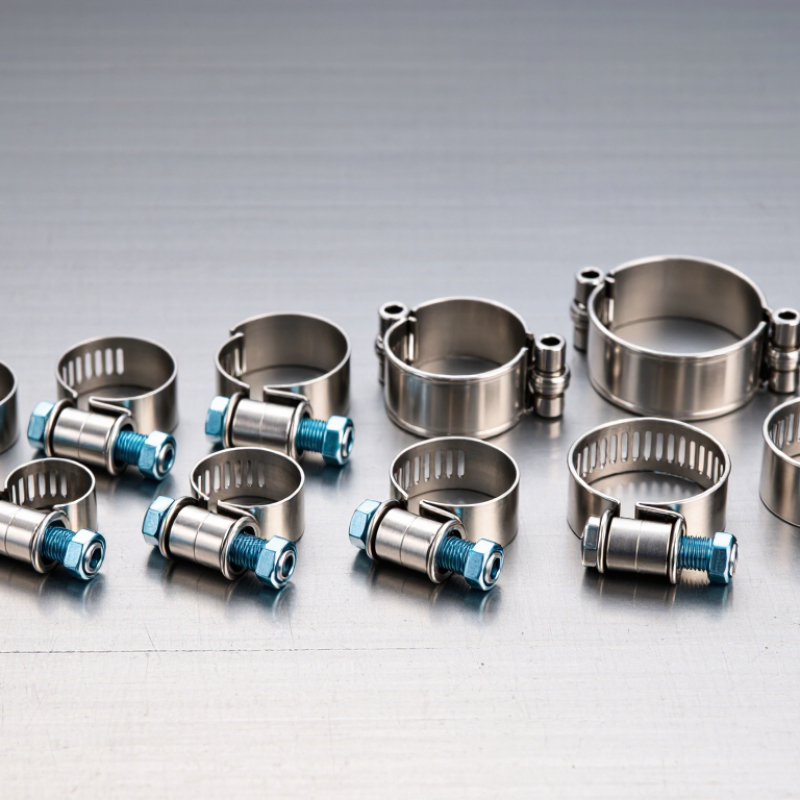
Different designs apply force in different ways. A worm-drive clamp uses a screw that pulls a slotted band tight, making adjustment straightforward. T-bolt clamps use a bolt and wider band to distribute pressure across larger hoses. Spring clamps flex as temperatures change, while ear clamps are crimped to create a fixed fit. Stainless steel offers useful resistance to moisture and corrosion, though grade and exposure conditions matter.

During installation, position the band behind the fitting’s raised edge and tighten it evenly. Stop when the hose is secure; excessive force can damage soft rubber or distort the fitting. A hand-tightened clamp can feel secure but still leak under pressure, so inspect the connection during operation. I would not assume one clamp suits every hose: diameter, temperature, vibration, and working pressure all affect the choice.

Key Features That Distinguish Stainless Steel Clamp Types

Stainless steel clamps differ in how they tighten, distribute pressure, and handle movement. Worm-drive clamps use a screw to pull a slotted band snug around a hose. They are easy to adjust, though the slots can mark soft rubber if overtightened. A smooth inner liner reduces that risk. T-bolt clamps use a wider band and bolt closure for strong, even pressure on larger hoses. They need more installation space. Spring clamps flex as temperatures change and hoses expand or contract. Small, but useful.

Ear clamps are compact and are crimped into place with a tool. They suit installations where space is tight, but removal usually means cutting them off. V-band clamps join matching flanges and can make equipment access faster during servicing. Their fit depends on accurate flange alignment. U-bolt pipe clamps secure rigid piping to supports rather than sealing a flexible hose. P-clips hold tubing or cable in position; they are not pressure-sealing clamps.

Constant-tension designs help maintain pressure as a connection shifts, while double-bolt clamps offer adjustable force on larger assemblies. Stainless grade matters too: 304 suits many general environments, while 316 offers better resistance to salt exposure. It is easy to focus on material and overlook fit. Check the clamp’s diameter range, band edges, and access for tightening before choosing. A clamp that fits the measurement on paper may still be awkward to install.

Ten Common Types of Stainless Steel Clamps for Buyers

Stainless steel clamps serve very different jobs, from sealing a flexible hose to securing a pipe against vibration. The World Stainless Association reported global stainless steel melt shop production of 58.4 million tonnes in 2023, up 4.6% from 2022. That industry figure gives useful material context, but it does not measure clamp quality or demand. For hose connections, buyers commonly compare worm-drive clamps, T-bolt clamps, constant-tension clamps, spring-band clamps, and ear clamps. Check the hose’s outside diameter and temperature range before choosing. A polished finish alone tells little about the clamp’s load capacity.

For larger ducts or exhaust connections, V-band clamps provide a compact joint that can be opened for service. Pipe-repair clamps wrap around damaged pipe sections, while U-bolt clamps secure pipes to frames or supports. Cushioned P-clamps hold tubing and reduce metal-to-metal contact. Cable clamps grip wire bundles or secure cables along a panel. Small details matter. Inspect the band edges, closure, and screw engagement; rough edges can cut a soft hose, and a clamp that bottoms out may not tighten safely. One easy mistake is buying by nominal pipe size instead of the actual outside diameter.

Material grade should match the environment, not just the product label. Chloride exposure, cleaning chemicals, heat, and outdoor moisture can change corrosion risk. A clamp that works well indoors may disappoint near salt spray. Check manufacturer specifications for grade, size range, and installation torque, then test the fit on the actual assembly when practical. Some applications still need engineering review.

How to Match Clamp Types to Applications and Operating Conditions

Matching a clamp starts with the joint, not the catalog photo. For flexible hoses under moderate pressure, a worm-drive clamp offers easy adjustment; choose a smooth inner band when the hose is soft. T-bolt clamps suit larger, high-load connections exposed to vibration, but the hose maker’s maximum compression still matters. For exhaust or other flanged joints, a V-band clamp can provide a compact, removable connection. Fit comes first.

Operating conditions guide material choice. ASTM A240/A240M composition tables specify 304 stainless steel at 18–20% chromium and 8–10.5% nickel; 316 includes 2–3% molybdenum. That added molybdenum can improve resistance to chloride-related corrosion, but it is not a guarantee in every environment. Salt spray, trapped moisture, cleaning chemicals, and contact with dissimilar metals can still shorten service life. Check the actual exposure.

Match the remaining clamp styles to their jobs: spring clamps accommodate small thermal changes; ear clamps create compact, fixed hose joints; U-bolts secure pipe; and cushioned P-clamps support lines without sealing them. Sanitary clamps are designed for compatible flanged process connections, while band clamps can secure ducts or large sleeves. Check operating temperature, pressure, vibration, diameter range, and installation torque. A tidy spec sheet can miss the awkward detail: real assemblies are often misaligned. Inspect the installed joint under working conditions.

What Buyers Should Compare Before Purchasing Stainless Steel Clamps

When comparing the top 10 types of stainless steel clamps, start with the job, not the appearance. Common options include worm-drive, T-bolt, spring, constant-tension, wire, ear, V-band, pipe, saddle, and exhaust clamps. They are not interchangeable. Worm-drive styles suit adjustable hose connections, while T-bolt clamps provide firm, even pressure on larger hoses. Spring and constant-tension designs can handle some movement as temperatures change. V-band clamps connect flanged sections.

Check the hose or pipe’s outside diameter, working pressure, temperature range, and exposure to moisture or chemicals. A clamp that is too small may damage the hose; one that is too large may not seal securely. Compare band width, edge finish, screw or bolt strength, and the manufacturer’s installation torque. Stainless steel grades also matter: 304 suits many general settings, while 316 may offer better resistance in saltier environments. Neither grade is immune to corrosion. Vibration, poor alignment, or overtightening can still cause leaks or early wear.

Tips: Measure the part where the clamp will sit, not just the loose hose. Check the fit after installation. If access is awkward, allow room for a tool before choosing a bulky clamp; that detail is easy to miss.

Go to Top