
Choosing the right Stone Hammer Crusher manufacturer in China requires more than comparing prices or catalog photographs. A reliable evaluation must examine crushing capacity, rotor balance, feed opening, discharge size, wear resistance, motor efficiency, and after-sales support. In a working quarry, dust, moisture, hard rock, and uneven feeding quickly expose weak design choices.
Dr. Barry A. Wills, a respected mineral-processing specialist, has stated, “Comminution is the largest consumer of energy in mineral processing.” This principle matters when reviewing China’s leading Stone Hammer Crusher manufacturers. A machine may offer impressive output, yet consume excessive power or require frequent hammer replacement. That hidden cost deserves attention.
This guide introduces ten notable Chinese manufacturers and compares their practical strengths. The assessment considers factory experience, engineering capability, export history, customization, spare-parts availability, and customer support. Site experience also matters. A crusher that performs well in a dry laboratory may struggle beside a wet limestone feed hopper.
No ranking is perfect. Some companies publish limited technical data, while others present unusually polished performance claims. Therefore, readers should request test results, installation references, material samples, and clear warranty terms. Asking for a complete wear-parts schedule is wise. It reveals how seriously a manufacturer understands long-term operation.
The selected companies are not presented as suitable for every project. Quarry size, feed hardness, required product shape, and maintenance skills can change the final choice. Careful verification remains essential. In practical terms, the best Stone Hammer Crusher is not always the largest model. It is the machine that delivers stable output, manageable maintenance, and predictable operating costs.
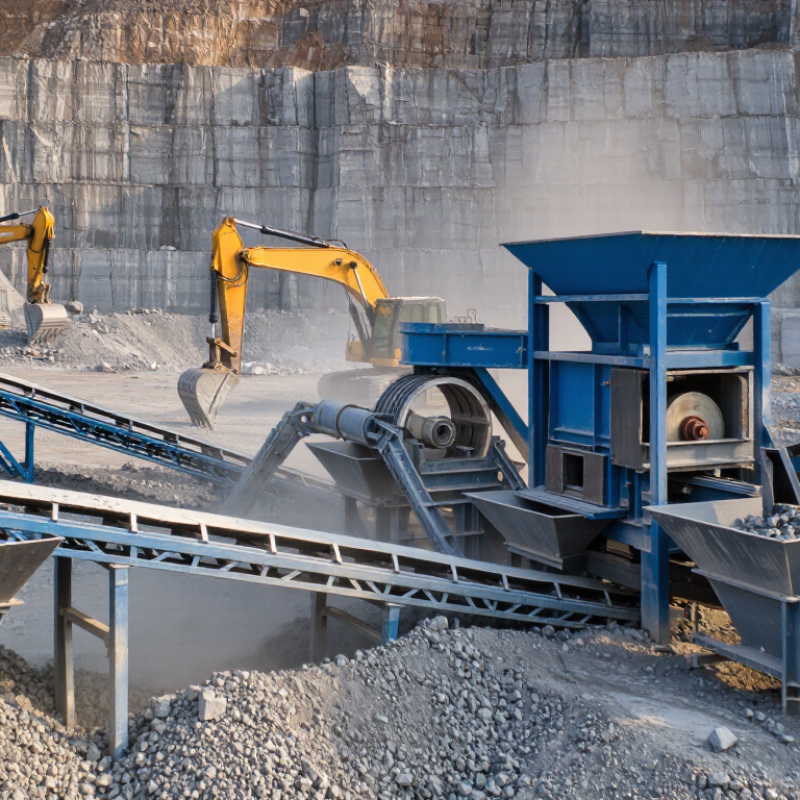
Evaluating a Chinese stone hammer crusher manufacturer requires more than comparing quotations. Check production records, factory testing, and after-sales evidence.
A serious supplier should provide rotor balancing reports, material certificates, and wear-part specifications. Ask to inspect a running machine, not only polished catalog photographs. The difference becomes obvious when feed size changes.
Capacity claims need careful checking. The USGS Mineral Commodity Summaries 2024 reported about 1.5 billion metric tons of crushed stone consumption in the United States during 2023. This figure reflects demanding, continuous applications.
Therefore, request performance data under similar rock hardness, moisture, and feed conditions. Confirm whether stated capacity is laboratory output or site output. It is often not the same.
Review motor efficiency, dust-control design, noise protection, and access for routine maintenance. ISO 9001 certification can support process control, but it does not prove crusher performance. Ask for customer references in comparable climates and quarry conditions.
Examine spare-part lead times, remote troubleshooting, warranty limits, and installation training. A factory visit helps verify machining equipment and assembly discipline.
I once treated a low quotation as efficiency. It was not. Transport, downtime, and replacement hammers later changed the calculation.
Buyers should also compare total operating cost over three years, using measured power consumption and realistic maintenance intervals. Some decisions still remain uncertain. That is why independent inspection before shipment is worth considering.
China’s strongest stone hammer crusher manufacturers are judged by market strength, not catalog size. Buyers should examine installed capacity, export records, uptime, and service coverage. The China Construction Machinery Industry Association reported steady demand for crushing and screening equipment in infrastructure and aggregate projects. This supports a competitive domestic manufacturing base.
Independent data adds useful context. The U.S. Geological Survey estimated global crushed-stone production at more than 20 billion metric tons in 2023. China remains one of the world’s largest construction-material producers, according to national industrial statistics. Market studies from Grand View Research also identify Asia-Pacific as a leading region for crushing equipment demand. These figures suggest strong opportunities, but they do not prove that every supplier offers equal engineering quality.
Experienced buyers should compare rotor balance, feed opening, wear-part life, dust control, and test results using similar limestone. A reliable manufacturer should provide commissioning records and clear maintenance intervals. Export volume matters, yet local service response can matter more. Small details decide uptime.
The ranking is imperfect. Public data rarely separates hammer crushers from complete crushing lines. Some manufacturers also report shipments differently. Therefore, market strength should be verified through factory audits, customer references, spare-part availability, and documented production tests. A low purchase price may hide frequent liner replacement or weak technical support.
This benchmark evaluates the market strength of leading Chinese stone hammer crusher manufacturers without displaying company names or brand-specific data. The assessment uses five practical dimensions: production capacity, export coverage, product range, technical support, and compliance capability. Scores are normalized to a 100-point scale for comparison.
China’s leading ten stone hammer crusher manufacturers are often compared by product depth, not catalog size. Their core ranges usually include heavy-duty hammer crushers, reversible hammer mills, impact crushers, feeding systems, and screening units. The strongest suppliers offer forged or composite hammers, replaceable grate bars, hydraulic opening systems, and sealed bearings. These details matter when processing limestone, granite, or recycled aggregates.
USGS Mineral Commodity Summaries 2024 reported about 1.5 billion metric tons of crushed stone produced in the United States during 2023. That scale explains the demand for higher throughput and longer wear life.
Leading Chinese manufacturers now use rotor dynamic balancing, PLC monitoring, overload protection, and automated gap adjustment. Some models also combine crushing and screening in one line, reducing transfer points and dust exposure.
Not every advertised capacity survives hard, wet stone.
Field experience shows that hammer material, feed moisture, and maintenance access can influence output more than brochure figures. High-chrome alloy hammers suit abrasive rock, while manganese options can reduce replacement costs in less abrasive applications. Several top suppliers provide customized discharge sizes, low-noise enclosures, dust suppression, and remote diagnostics.
The World Bank’s commodity outlook also highlights continuing infrastructure demand, but market forecasts remain sensitive to construction cycles. Buyers should verify test results, wear rates, energy consumption, and after-sales response before ranking any manufacturer. Some comparisons still rely too heavily on laboratory data.
China’s top 10 stone hammer crusher manufacturers should be assessed through evidence, not attractive catalogs. Quality begins with verified material selection, including high-strength steel for the rotor, hammer heads, and main frame. A reliable factory can provide hardness reports, welding procedures, and dimensional inspection records. ISO 9001 certification is useful, but it cannot replace hands-on testing. Ask for factory acceptance data.
Production performance needs clear numbers. A crusher rated for 30–50 tons per hour may perform differently with limestone, granite, or damp feed. Engineers should review feed size, discharge range, moisture, and expected wear rate.
Trial runs can reveal vibration, bearing temperature, and product consistency. Small details matter. A loose inspection cover can become a costly problem.
Customization separates capable manufacturers from simple assemblers. Options may include motor configuration, inlet dimensions, dust-control connections, liner materials, and automatic lubrication. Strong suppliers use drawings, load calculations, and documented change control before production.
Visit the workshop when possible. Check machining accuracy, balance testing, paint preparation, and spare-parts storage. No factory is perfect, and some production schedules slip during peak demand. That weakness deserves open discussion. A dependable supplier explains corrective actions instead of hiding them. Performance records, technician experience, and responsive after-sales support provide stronger evidence than ranking claims alone.
When comparing China’s top 10 stone hammer crusher manufacturers, export experience deserves close attention. A capable supplier should provide clear quotations, packing photos, inspection records, and complete shipping documents. Ask how many similar machines reached your region. Port familiarity can prevent delays with customs clearance and spare-part shipments.
Customer support often reveals more than a factory visit. Reliable manufacturers offer installation guidance, operating videos, and responsive engineering contact. Check whether manuals include rotor inspection, hammer replacement, lubrication points, and safe feeding limits. Ask for spare-part drawings and recommended stock levels. Small details matter.
Buying decisions should match the stone’s hardness, moisture, feed size, and required output. Request test results using material similar to yours, not only laboratory samples. Compare motor power, wear-part life, warranty conditions, and delivery terms. Confirm whether the quoted price includes electrical controls, steel frames, tools, and export packing. A low price can mislead. It may exclude essential components.
I have seen buyers focus heavily on capacity numbers. That choice sometimes causes unexpected wear and unstable output. No supplier gets every forecast right. Keep written records of promised performance, response times, and technical limits. Independent inspection before shipment adds useful evidence, although it cannot replace careful commissioning. Also review local service availability and import regulations before paying a deposit.
Phone: (256) 845-1255 or (256) 845-4493
Fax: (256) 845-1321 or (256) 845-4468
© 2025 Heritage Wire Harness, LLC