Who Are the China Top 10 VCB Breaker Manufacturers?
Choosing a Vcb Breaker manufacturer involves more than comparing prices or product photographs. Buyers need to understand rated voltage, breaking capacity, operating mechanism, insulation design, and the conditions in which equipment will run. A breaker suited to an indoor substation may not fit an outdoor installation. Small specification differences can matter.
This guide introduces ten Chinese manufacturers for readers researching medium-voltage vacuum circuit breakers. It offers a practical starting point, not a definitive ranking. Company capabilities, product ranges, and export support can change, so verify current information directly. Review technical data sheets, type-test reports, quality certifications, factory capabilities, and warranty terms before making a decision. Ask how the manufacturer supports commissioning and spare-parts needs. Details matter.
A polished brochure is not proof of performance. Compare models against the same requirements, and confirm that test documentation matches the exact product configuration. Look for clear answers about delivery, customization, and service response. No list is perfect. The most suitable supplier depends on your application, budget, and risk tolerance—not simply its position in a top-ten article. Use the profiles that follow to prepare better questions and narrow your shortlist, then conduct your own technical and commercial checks.
What Is a VCB Breaker and Where Is It Used?
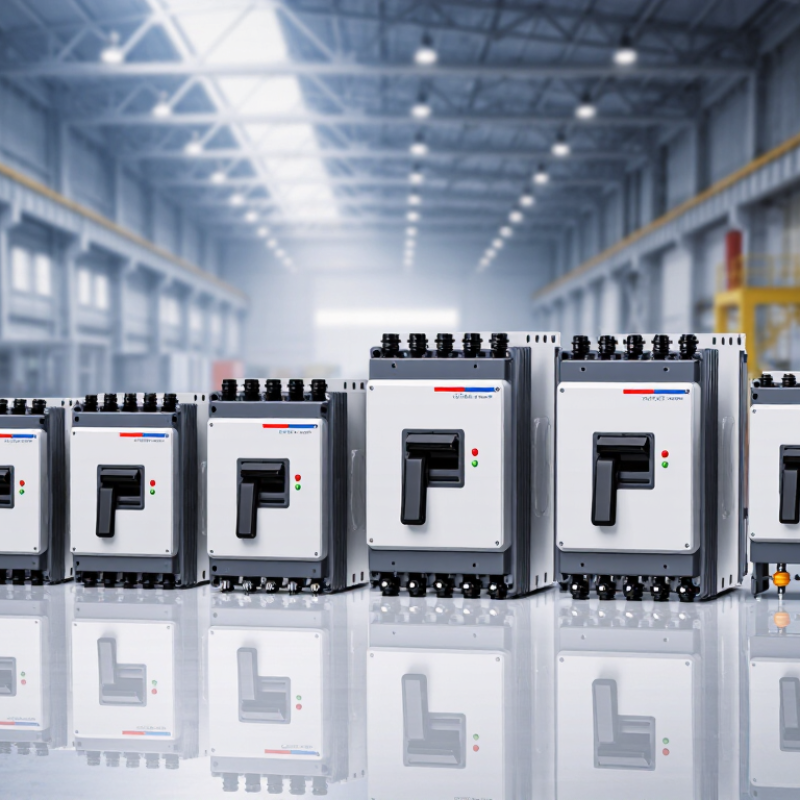
A vacuum circuit breaker (VCB) interrupts electrical current inside a sealed vacuum interrupter. When its contacts separate, an arc forms briefly, then the vacuum helps extinguish it. This design avoids using oil or gas as the arc-quenching medium. VCBs are commonly used in medium-voltage power systems, including substations, factories, commercial buildings, and some renewable-energy installations. Exact voltage ranges vary by equipment design.
Tips: Check rated voltage, continuous current, and short-circuit breaking capacity against the system requirements. Confirm that the breaker suits the installation environment, such as an indoor switchgear room or an outdoor substation. These details matter.
A VCB works with protective relays, which detect abnormal conditions and send a trip signal. The breaker then opens to isolate the affected circuit. It is not a substitute for correct protection settings or system design. Selection can look simple on a specification sheet; site conditions often reveal missing details, such as humidity, operating frequency, or limited maintenance access. That deserves a second look. Regular inspection should follow the equipment maker’s instructions and site procedures, with attention to mechanical operation and contact wear.
Who Are the China Top 10 VCB Breaker Manufacturers? - What Is a VCB Breaker and Where Is It Used?
VCB means vacuum circuit breaker. The table below provides a manufacturer-neutral reference to common medium-voltage VCB applications and representative ratings. Actual ratings depend on the specific product and system design; these are not a manufacturer ranking.
| Application | Typical system voltage | Common rated current options | Representative short-circuit breaking ratings | Typical use |
| Utility distribution feeder | 6–12 kV | 630–1,250 A | 20–31.5 kA | Switching and protection of medium-voltage distribution circuits. |
| Industrial plant main incoming supply | 6–12 kV | 1,250–3,150 A | 25–40 kA | Main switchgear protection, selected to match the calculated fault level. |
| Transformer primary protection | 6–35 kV | 630–2,500 A | 20–31.5 kA | Protection and switching of transformer circuits, coordinated with the transformer and relay scheme. |
| Motor feeder | 3.3–12 kV | 630–1,250 A | 20–40 kA | Switching and short-circuit protection for medium-voltage motors; motor duty must be checked. |
| Capacitor bank circuit | 6–12 kV | 630–1,250 A | 20–31.5 kA | Switching reactive-power equipment; capacitor-switching and transient duties require suitable selection. |
| Mining distribution system | 6–12 kV | 630–1,250 A | 20–31.5 kA | Feeder and equipment protection in appropriately rated mine switchgear. |
| Commercial building substation | 6–12 kV | 630–1,250 A | 20–25 kA | Incoming and outgoing circuit switching in medium-voltage building substations. |
| Renewable-energy collector system | 12–35 kV | 630–2,500 A | 20–31.5 kA | Collection feeder and transformer-bay switching, based on network fault studies. |
| Railway or transit power supply | 6–35 kV | 630–2,500 A | 20–31.5 kA | Switchgear protection for utility or auxiliary supply circuits; application requirements vary by system. |
| 40.5 kV substation feeder | 35–40.5 kV equipment class | 630–2,500 A | 20–31.5 kA | Medium-voltage feeder switching where the selected breaker matches the system voltage and fault duty. |
Note: Values are representative examples of commonly encountered medium-voltage ratings, not guaranteed specifications. Verify rated voltage, insulation level, rated current, breaking capacity, operating duty, and applicable standards for each installation.
How China’s VCB Breaker Manufacturing Industry Is Structured
China’s vacuum circuit breaker (VCB) industry is not a single-factory story. It includes equipment makers, component suppliers, testing laboratories, and engineering teams. Some manufacturers build complete switchgear, while others focus on interrupters, operating mechanisms, or control modules. This division supports specialization, though product boundaries can blur.
Production depends on supply chains and application needs. A VCB for an indoor 12 kV panel differs from equipment designed for an outdoor substation. Engineers check rated voltage, short-circuit breaking capacity, insulation performance, mechanical endurance, and enclosure compatibility. They also review test reports and traceability records, not just catalogue figures. Small details matter. Contact wear, spring force, and assembly tolerances can affect repeatability.
The market includes large electrical groups, regional specialists, and export-oriented manufacturers. Their capabilities vary, even when product descriptions look similar. Buyers often compare factory audits, routine-test procedures, delivery consistency, and after-sales support. Rankings can be imperfect because public data rarely captures every production line or service record. A careful assessment matches verified test evidence to actual network conditions and project specifications. Even a neat chart may miss a factory’s most important skill: reliable adjustment by experienced technicians.
Who Are China’s Top 10 VCB Breaker Manufacturers?
Who are China’s top 10 VCB breaker manufacturers? A credible shortlist should compare verified performance, not promotional claims.
The China Electricity Council reported that China’s installed power-generation capacity reached 2.92 billion kW in 2023, rising 13.9% year on year.
This signals a large and expanding electrical infrastructure, but it is not a measure of VCB sales or manufacturer rankings. That distinction matters. Public, independently audited shipment data for a definitive national top ten is difficult to verify.
For a practical comparison, check rated voltage, short-circuit breaking capacity, mechanical endurance, and compatibility with the intended switchgear. IEC 62271-100 provides a useful reference for high-voltage circuit-breaker requirements.
Ask for type-test reports, routine-test records, and evidence of service support; a polished catalogue cannot replace these documents. Look closely at the test conditions.
A breaker suited to a compact indoor substation may not fit a dusty industrial site. I would treat any fixed top-ten list cautiously until its ranking method and reporting period are clear.
Even careful buyers can overlook maintenance access or spare-part availability.
How the Leading Manufacturers Compare in Products and Capabilities
Comparing China’s top ten vacuum circuit breaker manufacturers takes more than checking rated voltage or a product catalog. Look at rated current, short-circuit breaking capacity, insulation design, and operating life. These figures show whether a breaker suits a compact indoor switchgear panel or a demanding industrial installation. Ask for test reports and clear model-specific specifications. A polished brochure is not enough.
Tips: Compare like with like. Check whether test conditions match your application, then review spare-parts availability, customization options, and technical support. Small details matter.
Manufacturers can differ in production scale, testing equipment, and experience with particular voltage classes. One may offer broader configurations, while another may provide more responsive engineering support. Neither advantage guarantees the better choice. Request drawings, installation clearances, and maintenance intervals before comparing quotations. Check how the mechanism performs after repeated switching, not just how it looks on a test sheet. I would also verify delivery promises in writing; published lead times can be optimistic. That detail is easy to overlook. A careful comparison connects product data with the actual panel, duty cycle, and service conditions.
What to Consider When Choosing a VCB Breaker Manufacturer
Choosing a vacuum circuit breaker manufacturer starts with evidence, not a polished brochure. Ask for type-test reports against IEC 62271-100, covering the breaker’s rated voltage, short-circuit breaking capacity, and operating endurance. Check that the tested configuration matches the unit offered, including its mechanism and control voltage. Small details matter.
The IEA’s Electricity 2024 report forecasts global electricity demand will grow by an average of 3.4% annually through 2026. That puts pressure on grids and makes dependable equipment support important. Compare the manufacturer’s delivery history, production quality controls, spare-parts availability, and response times. Ask for evidence. A test certificate alone cannot show how quickly a supplier will resolve a field issue.
Match the breaker to the actual installation. Confirm ambient temperature, altitude, installation type, duty cycle, and the switchgear’s busbar requirements. Request drawings, maintenance intervals, and a clear warranty scope before placing an order. If a specification is vague, ask for a written clarification. I would not treat a low price as proof of poor quality, either; compare the documented scope and lifecycle support. Some procurement checks feel tedious. They can prevent expensive surprises.