China Top Heavy Duty Truck Radiator Suppliers?
Choosing among China’s top heavy-duty truck radiator suppliers takes more than comparing prices. A Heavy duty truck radiator must withstand long climbs, heavy loads, vibration, dust, and sudden changes in ambient temperature. In a workshop, the warning signs can be tangible: rising coolant temperature, a leaking seam, or fins clogged with road debris. Small details matter.
A useful supplier comparison should examine core construction, materials, pressure testing, production consistency, and replacement-part availability. Ask how the supplier checks for leaks and verifies heat-transfer performance. Request test records, warranty terms, and references for comparable truck models. A polished product photo proves little. That is easy to overlook.
I can’t responsibly attach a quotation to a named industry expert without a verifiable source. A fabricated attribution would weaken the trust this guide should earn. The comparison that follows should therefore rely on checkable specifications and documented supplier evidence, not impressive claims alone. Even then, the best choice may depend on your fleet’s climate, duty cycle, and maintenance capacity. No single ranking fits every operator.
What Defines a Heavy-Duty Truck Radiator?
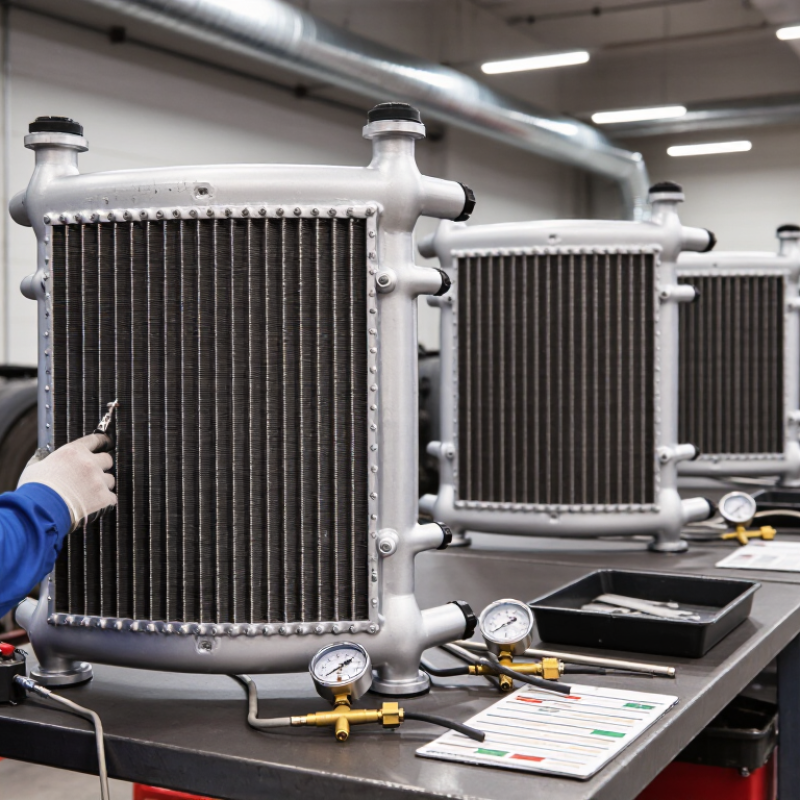
A heavy-duty truck radiator is not simply a larger passenger-car radiator. It is a heat exchanger designed to keep engine coolant within its operating range during sustained loads, slow climbs, hot weather, and dusty work. Coolant flows through tubes, while fins transfer heat to passing air. Tanks, joints, mounts, the fan, and pressure rating all affect performance. Fit matters.
The defining measure is heat rejection under demanding conditions, not core size alone. A useful supplier specification should state coolant flow, inlet and outlet temperatures, airflow, pressure drop, and test conditions. It should also address vibration, corrosion, stone impact, and cleaning access. A dense core may hold more cooling surface, but it can restrict airflow or trap chaff. More cooling area is not automatically better.
Duty cycles and efficiency requirements continue to evolve. The U.S. EPA and NHTSA’s 2016 Phase 2 standards analysis projected up to 25% lower fuel consumption and CO2 emissions for new heavy-duty vehicles in model year 2027, compared with 2017 levels. That figure is not a radiator target, but it highlights the need to balance cooling with efficiency and available space. Ask for measured heat-rejection results at your engine load and ambient temperature, rather than relying on catalog claims. Honestly, these field conditions are sometimes poorly documented. That gap can leave a radiator that looks right on paper but runs hot on a long grade.
How China's Heavy-Duty Radiator Supply Market Is Structured
China’s heavy-duty truck radiator market is best understood as a network, not a single supplier list. Manufacturers may produce complete radiator assemblies, while specialist workshops supply cores, headers, tanks, or cooling modules. Some focus on original-equipment programs; others serve replacement distributors and repair networks. The distinction can blur.
Production capability varies. A supplier may have automated fin forming and controlled brazing, yet outsource plastic tanks or pressure testing. Ask how each process is managed. A useful factory review includes core dimensions, tube and fin materials, leak-test records, and sample inspection. Details matter. A radiator that fits a mounting frame may still struggle with airflow, vibration, or heat rejection in a specific truck configuration.
Supply channels add another layer. Direct factory purchasing can suit repeat orders and custom specifications, while regional distributors may offer faster access to common replacement models. Before comparing prices, confirm vehicle application, engine output, operating climate, and installation dimensions. Request drawings and test evidence, then compare like with like. One weakness in many sourcing decisions is relying too heavily on catalog descriptions; they rarely show how consistently a product performs across production batches.
Which Types of Suppliers Serve the Truck Radiator Market?
Heavy-duty truck radiator suppliers generally fall into four groups. Original equipment suppliers build units to vehicle-maker specifications and may provide detailed fitment records. Independent manufacturers produce replacement cores or complete radiator assemblies for common truck platforms. Distributors and wholesalers stock parts from multiple sources, helping buyers compare availability and delivery times. Specialist radiator shops repair units, replace cores, or assess unusual cooling problems.
These categories can overlap. A distributor may also offer technical support, while a repair shop may source a complete replacement. Look beyond the label. Check the radiator’s dimensions, mounting points, inlet and outlet positions, core material, and pressure-test details. A part that looks right in a catalog can still require awkward modifications in the workshop.
Tips: Share the truck’s model, engine, and year with the supplier, then confirm measurements before ordering. Ask about testing, warranty terms, and replacement-part availability. Fit matters. For older or heavily modified trucks, clear photos of the existing radiator can help. Still, photos do not replace measurements; that extra check is easy to skip.
How to Evaluate Chinese Heavy-Duty Truck Radiator Suppliers
China Top Heavy-Duty Truck Radiator Suppliers?
How to Evaluate Chinese Heavy-Duty Truck Radiator Suppliers
Choosing a radiator supplier takes more than comparing quotations. The International Energy Agency’s Global EV Outlook 2024 reports that electric truck sales reached nearly 54,000 worldwide in 2023, up about 35% year over year. This shift adds cooling demands for batteries and power electronics alongside engine heat. A supplier’s testing capability matters.
Request thermal-performance curves, pressure-test records, and vibration-test results for the specific radiator model. Check that core dimensions, mounting points, and hose connections match your truck drawings. Ask how the supplier controls fin spacing, soldering, and leak rates across production batches. Inspect sample units for uneven joints or bent fins. Fit matters. I would still verify performance on the actual vehicle; a laboratory result cannot capture every operating condition.
Tips: Ask for material certificates and traceability records, then review a recent inspection report. Confirm the test method, sample size, and acceptance limits. Request a pilot batch before scaling orders. If documents are incomplete, treat that as a risk—not proof of poor quality, but a reason to investigate further.
How to Evaluate Chinese Heavy-Duty Truck Radiator Suppliers
Suggested evaluation weights for a supplier assessment—not survey results or measured market data. Adjust them to match your vehicle, operating conditions, and sourcing priorities.
Prioritize verified thermal and pressure-test performance, then assess durability, quality controls, delivery capability, and technical support. Request test reports and supporting records before comparing suppliers.
What to Check Before Sourcing Radiators from China
Before sourcing a heavy-duty truck radiator from China, confirm that the supplier understands your exact vehicle application. Share the model year, engine type, mounting points, and available space. Check core dimensions, inlet and outlet positions, operating pressure, and material specifications. Small details matter. Ask for a technical drawing and a sample that matches the proposed production unit. A radiator that looks right may still interfere with a fan shroud or hose routing.
Review how the supplier checks quality, not just the claims in a brochure. Ask for documented leak and pressure-test procedures, plus inspection records for tube joints, fins, and tanks. Find out how corrosion protection is applied and whether batch numbers link units to production records. If possible, inspect a sample and its packaging. Bent fins or poorly protected connections can become problems during long-distance shipping. Not always obvious.
Compare warranty terms, lead times, minimum order quantities, and the process for handling defects. Confirm which costs are included, such as export packaging and inland transport. Then test the sample on the intended truck under realistic operating conditions, including sustained load and heat. A polished sample is not proof of consistent production. I would also document agreed tolerances and any design changes in writing; verbal assurances are easy to misremember. Even careful checks cannot remove every risk, but they make supplier comparisons more concrete.