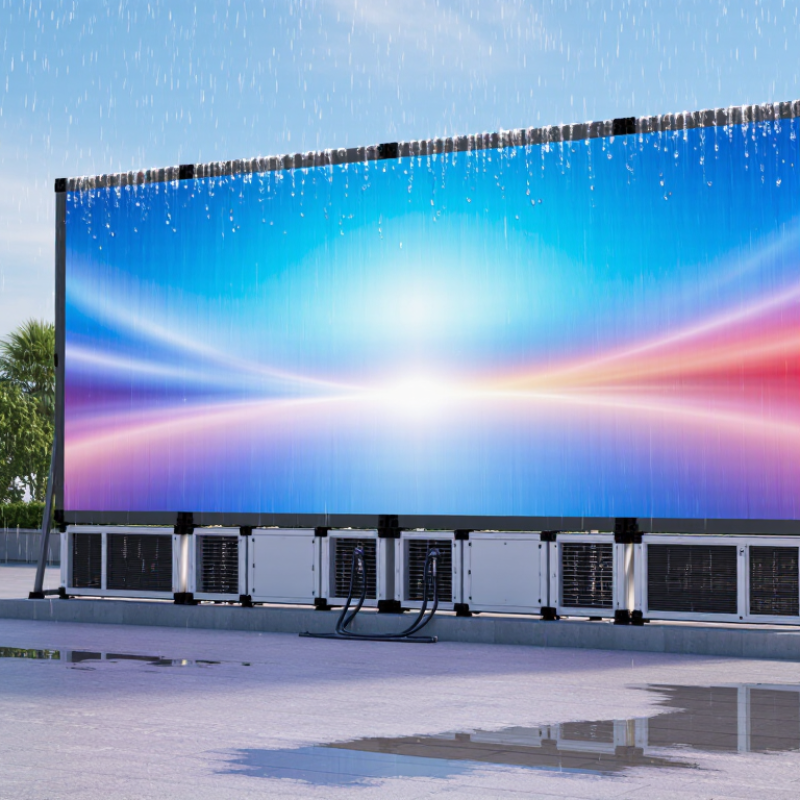
Choosing a waterproof outdoor LED screen supplier involves more than comparing pixel pitch and quoted prices. Outdoor installations face rain, dust, heat, wind, sunlight, and sudden temperature changes. A reliable supplier should explain how its cabinets resist water, protect internal components, and maintain brightness after repeated exposure. Look for documented IP ratings, factory testing, warranty terms, and service records. Real performance matters.
This guide examines leading suppliers through practical criteria used by integrators, venue operators, and event production teams. It considers display quality, cabinet design, thermal management, spare-parts availability, software support, and installation guidance. Experienced suppliers should provide clear test reports rather than vague promises. They should also discuss viewing distance, refresh rate, power consumption, and maintenance access. A bright screen is not automatically a good screen.
The strongest candidates usually combine engineering knowledge with responsive communication. Ask for samples, inspect cable seals, and request project references from similar climates. A supplier may offer an impressive specification sheet, yet weak after-sales support can create expensive delays. Some ratings also depend on installation details. That point is easy to miss. This review is not a perfect ranking, because budgets, weather, and project goals differ. Instead, it offers a careful framework for selecting a waterproof outdoor LED screen that remains readable, serviceable, and dependable in real conditions.
Waterproof outdoor LED screens are digital displays engineered for rain, dust, humidity, and changing temperatures. Unlike indoor panels, they use sealed cabinets, protected connectors, and drainage paths. Their waterproof performance is commonly described through an IP rating. The first number indicates dust protection. The second measures resistance to water.
Core features include high brightness, strong contrast, and automatic brightness control. These functions keep images visible under direct sunlight without wasting energy after sunset. A reliable screen also manages heat through ventilation, thermal sensors, or carefully designed cabinet materials. Heat matters. Excessive temperature can shorten LED life and distort colors.
In field installations, I examine cabinet seams, power sockets, and module edges before reviewing image quality. Small gaps can become serious problems during heavy rain. Corrosion-resistant hardware is useful near coastal areas, where salt air attacks exposed metal. Front or rear maintenance access also reduces service time, especially on large outdoor structures.
A higher IP rating is not magic. Poor installation can still cause water entry. Installers should inspect seals, cable bends, grounding, and drainage after setup. I have seen screens pass initial testing but develop moisture problems months later. Regular inspections remain necessary, even with strong materials. Suppliers with clear test records, stable spare-part support, and practical installation guidance deserve closer attention. Some specifications look impressive, yet field performance depends on every small connection.
Waterproof outdoor LED screens are commonly specified by their IP rating under IEC 60529. The first digit indicates protection against solid particles, while the second digit indicates protection against water. IP65 provides dust-tight protection and resistance to water jets; IP66 adds protection against powerful water jets; IP67 protects against temporary immersion; and IP68 supports continuous immersion under conditions specified by the enclosure manufacturer.
Choosing among top waterproof outdoor LED screen suppliers requires more than comparing pixel pitch and price. The 2024 MarketsandMarkets LED display report estimates strong market growth through 2029, increasing supplier competition. That growth makes verification more important, not less.
Check documented weather performance first.
An outdoor cabinet should show an IP65 or higher rating for the front surface, based on IEC 60529 testing. Ask for test reports, not marketing claims. Confirm brightness under direct sunlight, ideally with measured nit values and automatic dimming. A 5,000-nit screen may look impressive, but poor calibration can waste energy and reduce viewing comfort.
Review the supplier’s engineering experience.
Request installation records from hot, wet, dusty, or coastal locations. Examine cabinet seams, drainage paths, cable seals, and spare-module policies. The U.S. Department of Energy reports that LED systems can deliver substantial energy savings over conventional lighting, but actual performance depends on controls and maintenance. Ask for power data at typical content levels, not only maximum load.
Communication matters too.
A supplier may pass every checklist and still respond slowly during a failed module. Test this before signing. Ask who handles remote diagnostics, replacement parts, and on-site service. I would not rely on a single sample unit. Inspect several cabinets, review warranty exclusions, and speak with an installer who has used the equipment in real weather. Something may still go wrong. Planning for that weakness is part of professional evaluation.
Top Waterproof Outdoor LED Screen Suppliers
Leading Supplier Types and Their Product Capabilities
Outdoor LED screen suppliers usually fall into three groups: direct manufacturers, specialist integrators, and regional distributors. Direct manufacturers often provide broader cabinet options, custom dimensions, and firmware control. Integrators add structural design, installation planning, and on-site commissioning. Distributors can offer faster local support, but their technical control may be limited. Buyers should ask who tests the display before shipment.
Reliable suppliers specify measurable protection standards. Look for sealed cabinets rated at least IP65 on the front surface. Stronger designs may use IP66 protection for exposed installations. Good products include high-brightness LEDs, typically above 5,000 nits, for daylight visibility. Fine pixel pitches suit close viewing, while larger pitches reduce cost for distant audiences. Useful features include front-service modules, corrosion-resistant frames, drainage channels, and temperature monitoring.
Ask for sample test reports.
Experienced suppliers can explain power use during peak brightness, not only average operation. They should also describe refresh rate, color calibration, spare module ratios, and warranty procedures. A proper factory test may run the screen continuously in heat and moisture simulations. Installation experience matters too, especially with wind loads and cable routing. No supplier gets every detail right. I would still request independent verification, because attractive specifications can hide weak maintenance planning. A dependable supplier responds clearly when questions become inconvenient.
Top Waterproof Outdoor LED Screen Suppliers
Installation quality determines whether an outdoor LED screen survives its first storm. IEC 60529 classifies IP65 equipment as dust-tight and protected against water jets. However, IP ratings do not measure wind load, ultraviolet exposure, or temperature cycling. A reliable installation needs corrosion-resistant cabinets, sealed cable glands, drainage paths, and structural calculations based on local wind conditions. ASCE 7-22 remains a widely used reference for wind-load design in the United States. Leaving even one lower cabinet without drainage can trap rainwater behind the display.
Maintenance should be planned before the screen is powered on. Inspect seals, fans, connectors, and cabinet locks after severe weather, then check them at least quarterly in dusty or coastal locations. Salt deposits can create hidden corrosion. Thermal cameras may reveal hot modules before visible failures appear. The U.S. Department of Energy notes that LED systems can offer long service lives, but actual performance depends heavily on heat management and operating conditions. That warning matters: a screen advertised as “waterproof” can still fail from blocked ventilation, poor grounding, or careless washing. I have found that cleaning pressure is often underestimated. Gentle, controlled cleaning is safer than directing a powerful hose at cabinet joints.
Weather resistance also requires realistic operating limits. Use temperature-rated power supplies, surge protection, and ventilation suited to the site. IEC 60529 is useful, but it is not a complete maintenance plan. Suppliers who provide inspection records, replacement procedures, and measured test data deserve more confidence than those offering only an IP number.
Supplier-neutral purchasing and project evaluation guide for outdoor LED display systems
| Evaluation Area | Key Dimension | Recommended Specification or Practice | Why It Matters | Verification Method |
|---|---|---|---|---|
| Weather Resistance | Front and rear protection rating | IP65 or higher for outdoor applications; the first digit indicates protection against dust, while the second digit indicates protection against water jets. | Reduces the risk of dust ingress, rain damage, and cleaning-related water penetration. | Request the product IP test report and confirm whether the rating applies to the complete assembled display or only individual modules. |
| Mechanical Protection | Impact resistance | Consider an enclosure and protective surface tested to an appropriate IK rating where vandalism, sports activity, or public access is expected. | Helps protect LEDs, masks, cabinets, and front covers from accidental or deliberate impact. | Review the applicable IEC 62262 impact-test classification and inspect the proposed cabinet construction. |
| Operating Temperature | Temperature range | Choose equipment with a published operating range suitable for the installation site. Common outdoor designs support approximately −20°C to +50°C, but the actual range varies by model. | Prevents brightness instability, component stress, condensation, and unexpected shutdowns during seasonal extremes. | Compare the supplier’s temperature specification with local historical low and high temperatures, including solar-heating effects. |
| Climate Control | Heat dissipation | Prefer sealed cabinets with passive ventilation or thermostatically controlled fans where required. Avoid designs that allow unfiltered humid air to circulate directly over electronics. | Efficient thermal management extends component life and reduces brightness drift and power-related failures. | Request thermal test data, cabinet airflow details, fan-replacement procedures, and maximum internal temperature limits. |
| Moisture Management | Condensation control | Use sealed cable glands, correctly installed gaskets, drainage paths, and anti-condensation measures appropriate to the local humidity and temperature cycle. | Condensation can cause corrosion, short circuits, image defects, and intermittent communication failures even when rain protection is adequate. | Inspect enclosure seals and ask for the recommended installation orientation, drainage design, and humidity limitations. |
| Structural Installation | Wind-load design | Design the supporting structure for the site-specific basic wind speed, exposure category, mounting height, screen area, and local building-code requirements. | Wind pressure is often a greater structural risk than the display’s own weight, especially for large freestanding or rooftop screens. | Require stamped structural calculations or engineering review by a qualified local professional before fabrication. |
| Structural Installation | Mounting and access | Provide secure anchoring, corrosion-resistant hardware, service clearance, lifting points, and safe front or rear access for cabinet replacement. | Correct access planning reduces installation time and prevents unsafe maintenance practices. | Review installation drawings, anchor details, maintenance clearances, load paths, and lifting instructions. |
| Electrical Installation | Power distribution | Use correctly rated circuits, overcurrent protection, grounding, surge protection, and cable sizing based on the display’s maximum power demand and installation distance. | Protects personnel and equipment from overloads, lightning-related surges, voltage drop, and unstable operation. | Check single-line diagrams, maximum current calculations, protective-device ratings, and local electrical-code compliance. |
| Electrical Installation | Lightning and surge protection | Evaluate the need for site grounding, bonding, surge protective devices, and lightning protection according to local risk and electrical regulations. | Outdoor displays are exposed to long cable runs, elevated structures, and weather-related transient voltages. | Obtain a grounding plan and confirm testing procedures for earth resistance and bonding continuity. |
| Image Performance | Brightness selection | Typical outdoor displays use approximately 5,000–10,000 cd/m², depending on sunlight exposure, viewing distance, and local regulations. | Insufficient brightness reduces daytime visibility, while excessive brightness increases energy use and may cause glare. | Request calibrated brightness data, automatic light-sensor control, and a nighttime brightness limit. |
| Image Performance | Viewing distance and pixel pitch | Select pixel pitch according to viewing distance, content type, and required image detail. Smaller pitch generally supports closer viewing but increases cost. | A suitable pitch improves readability and avoids unnecessary resolution or budget increases. | Review pixel-pitch calculations, sample content, and an on-site viewing test when possible. |
| Maintenance | Routine inspection frequency | Perform visual inspections at least monthly in normal conditions; inspect more frequently in coastal, dusty, industrial, or high-humidity environments. | Early detection of loose hardware, blocked drainage, corrosion, damaged seals, and abnormal modules reduces downtime. | Use a documented checklist covering cabinets, cables, seals, structure, brightness, temperature, and fault logs. |
| Maintenance | Cleaning procedure | Clean the display with manufacturer-approved methods after isolating power where required. Do not use abrasive tools, high-pressure water, or unapproved solvents. | Improper cleaning may damage LED surfaces, protective coatings, gaskets, and electrical connections. | Request a written cleaning method, approved materials list, and water-pressure limitations. |
| Maintenance | Spare-parts planning | Keep critical spare modules, power supplies, receiving cards, cables, fuses, and sealing components available for the expected service period. | Local spare parts shorten repair time and reduce the impact of shipping delays or product discontinuation. | Confirm the recommended spare-parts ratio, storage conditions, compatibility, and guaranteed availability period. |
| Maintenance | Remote monitoring | Use monitoring for temperature, power status, communication faults, brightness, and cabinet-level alarms where the control system supports it. | Remote alerts allow operators to address faults before they become visible or cause extended outages. | Request a demonstration of alarm reporting, access controls, event logs, and network-security measures. |
| Reliability | Power and signal redundancy | Consider redundant power supplies, signal paths, or control components for mission-critical displays and high-availability applications. | Redundancy can limit the affected area and maintain operation when an individual component fails. | Review the redundancy architecture, automatic failover behavior, and failure-recovery test results. |
| Compliance | Testing and documentation | Request electrical safety, electromagnetic compatibility, environmental, structural, and ingress-protection documentation relevant to the project location. | Complete documentation supports permitting, safety reviews, insurance requirements, and future maintenance. | Verify test reports, declarations, installation manuals, wiring diagrams, and revision-controlled drawings. |
| Total Cost | Lifecycle cost | Evaluate purchase price together with energy consumption, structure, installation, spare parts, access equipment, maintenance labor, software, and disposal. | The lowest initial price may result in higher energy use, maintenance costs, or downtime over the display’s service life. | Compare a multi-year total-cost-of-ownership model using the same operating hours and brightness schedule. |
| Supplier Evaluation | Warranty and service support | Confirm warranty coverage, response times, remote support, on-site service availability, software updates, and exclusions for weather or improper installation. | Clear service obligations reduce disputes and help maintain performance after commissioning. | Review the contract, service-level commitments, escalation process, and commissioning acceptance criteria. |

Pricing varies sharply. Indicative 2025 market quotations range from $600 to $2,000 per square meter. Pixel pitch, brightness, cabinet material, control systems, and installation drive the difference. A fine-pitch screen costs more, but it may be unnecessary for highways or stadium roofs.
MarketsandMarkets estimates the global LED display market could grow from about $7.5 billion in 2022 to $12.1 billion by 2027. This growth attracts capable suppliers, but also inconsistent quotations.
Compare complete project costs, not only the panel price.
Certification needs careful checking. For outdoor use, request an IEC 60529 test report supporting at least IP65 protection. IP65 resists dust and water jets, but it does not mean submersion.
Ask for electrical safety, electromagnetic compatibility, and photobiological safety documentation. CE, UKCA, FCC, or other marks depend on the installation market. UL-related certification may be required for certain North American applications.
Certificates should identify the exact model and factory. Generic documents are weak evidence.
Buyer selection should include a live rain test, brightness records, spare-module terms, and response times.
A 5,000–7,000 nit specification is common for daylight visibility, yet excessive brightness can waste energy and annoy nearby viewers. Check power consumption during normal operation, not only peak load.
Warranty wording matters. Some low quotes exclude steelwork, shipping, calibration, and lifting equipment. That omission is easy to miss.
An experienced buyer should inspect sealing gaps, cable glands, and cabinet locks.
I would not trust a perfect quotation; real projects usually contain one uncomfortable detail.
Phone: (256) 845-1255 or (256) 845-4493
Fax: (256) 845-1321 or (256) 845-4468
© 2025 Heritage Wire Harness, LLC