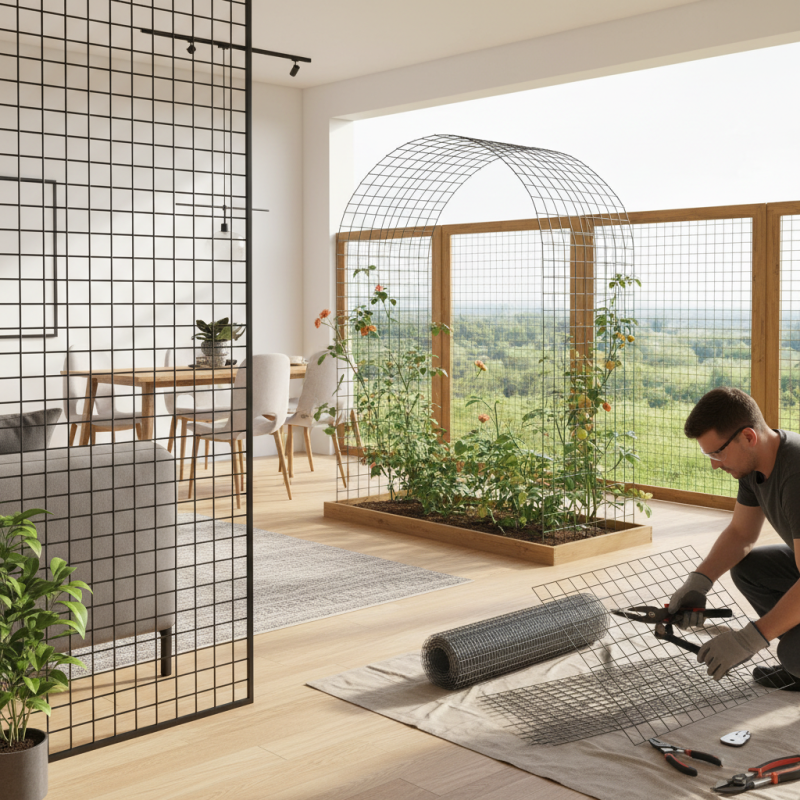
How to Use Welded Wire Mesh for Your Home Improvement Projects?
welded wire mesh is a versatile material for home improvement projects. It offers strength and durability, making it ideal for various applications. Whether used in gardens, fencing, or DIY crafts, it can add both functionality and aesthetics to your space.
Many people overlook welded wire mesh's potential. They might think it’s only for industrial use, but that’s not true. This material can elevate your home’s design while serving practical purposes. For example, it can create strong garden trellises or stylish room dividers.
However, working with welded wire mesh can be challenging. Proper tools and safety measures are essential. Mistakes could lead to sharp edges or weak structures. Reflecting on your approach is crucial. Understanding how to use this material will enhance your projects immensely.
Understanding the Basics of Welded Wire Mesh in Home Improvement
Welded wire mesh is a versatile material for home improvement. It consists of interwoven wires that create a sturdy grid. This grid can support various projects, from garden fencing to concrete reinforcement. Many homeowners appreciate its strength and adaptability.
When using welded wire mesh, consider your project's needs. For example, if you're creating a trellis, cut the mesh to size. It can help plants climb while adding structure to your garden. Additionally, for concrete work, this mesh can reinforce your slabs. However, ensure the mesh is properly placed in the mix to avoid weak points.
You might face challenges when cutting or installing the mesh. It could be difficult to achieve perfect angles or secure connections. Don’t be discouraged if you make mistakes. Take time to reflect on what went wrong and adjust your approach. Learning through trial and error is part of the process.
Common Applications of Welded Wire Mesh for Home Construction Projects
Welded wire mesh is becoming popular for home improvement projects. Its versatility is evident in numerous applications. Many homeowners use it to strengthen concrete structures. According to a recent industry report, the global demand for welded wire mesh is expected to reach over over 12 billion dollars by 2026. This growth reflects its wide-ranging uses in residential construction.
One common application is for fencing. Welded wire mesh provides security while allowing visibility. It's sturdy against the elements, making it suitable for outdoor uses. Additionally, many choose it for garden projects. The mesh can support climbing plants, enhancing garden aesthetics. A study noted that using wire mesh for gardens can improve plant health by providing better airflow.
In some cases, people may overlook installation difficulties. Proper tensioning is crucial; too loose or tight can lead to failure. Not everyone considers these details before starting. Mistakes in mesh size selection can complicate projects. It is essential to measure accurately. Instances of using incorrect mesh can lead to repairs that are costly and time-consuming. Focusing on these aspects can improve the overall outcome of any home project.
Selecting the Right Gauge and Size for Your Wire Mesh Needs
When selecting wired mesh for home improvement projects, gauge and size play critical roles. Wire mesh comes in various gauges, which represent its thickness. A lower gauge means a thicker wire, offering greater strength. For instance, a 14-gauge wire is robust enough for structural uses but may not be necessary for light tasks like garden fencing. According to industry reports, using a 19-gauge mesh can suffice for basic projects, ensuring adequate durability while being more cost-effective.
Size is equally important. The spacing between wires impacts the projects' effectiveness. A mesh with 2-inch by 2-inch openings might be great for animal enclosures, providing enough support while keeping the area visible. Conversely, smaller openings are better for holding soil in raised garden beds. However, it’s important to note that not every project needs the highest gauge or smallest openings. Over-engineering can lead to unnecessary expense. Sometimes, a simpler solution can meet your needs.
Compatibility with your project is paramount. Measure your space accurately. A common pitfall is choosing a gauge or size based on assumption instead of actual needs. The aesthetic appeal can also guide your choice, especially for visible structures. Ensure the selected wire mesh doesn’t clash with your home’s design. Balancing strength and appearance can often be a challenge, but it’s crucial for achieving satisfactory results.
Installation Techniques: Practical Steps for Using Welded Wire Mesh
Welded wire mesh is a versatile material for home improvement. It can be used for fencing, building supports, and garden projects. To start, measure the area you want to cover. Accuracy is key; a small mistake in measurement can lead to frustrating results. Cut the mesh to size using wire cutters. Ensure your cuts are neat. Messy edges can be sharp and dangerous.
Next, installation varies depending on the project. For fencing, prepare the ground by digging post holes. The mesh needs to be attached to sturdy posts. Using screws or ties ensures a secure fit. Don't rush this step; a poorly attached mesh won't hold up over time. In gardening, lay the mesh flat around plants. This protects them from pests but requires careful placement. Examining local wildlife habits can prevent future issues.
After installation, regularly check the mesh for signs of wear and tear. Rust can be a concern. Adjustments may be needed as plants grow or weather changes. It’s important to reflect on how well the mesh meets your needs. If it falls short, consider alternative solutions. Flexibility in your approach will lead to better results.
Welded Wire Mesh Use in Home Improvement Projects
Maintenance Tips for Longevity of Welded Wire Mesh in Home Projects
Welded wire mesh is a versatile material for home improvement. However, its longevity depends on proper maintenance. Regular inspections are essential. Look for signs of rust or damage. According to industry reports, over 20% of welded mesh failures arise from neglect.
Cleaning the mesh is crucial. Use a mixture of water and mild soap. Avoid harsh chemicals, as they can weaken the wire. After cleaning, consider applying a protective coating. This can enhance durability. A simple touch-up with rust-resistant paint can extend its life significantly.
Proper installation plays a key role, too. Poor alignment can lead to stress points. If not addressed, these can result in breakage. Moreover, storing welded wire mesh in dry conditions is important. Moisture accelerates rust formation, impacting performance. Keeping these tips in mind can help ensure your projects last longer.