
7 Cable Connection Tips for Global Buyers
Global cable sourcing can look straightforward until a connector fails to mate, a jacket cracks during installation, or delivery slips by weeks. Buyers need more than a low unit price. They need clear specifications, dependable samples, and suppliers who answer technical questions with evidence.
Signal-integrity expert Dr. Eric Bogatin’s work highlights an important principle: an interconnect must be evaluated as part of the complete signal path. Put simply, “A cable is only as reliable as its weakest connection.” This is an editorial summary, not a verbatim quotation. For global buyers, that means checking both ends of every assembly, from pin layout and shielding to strain relief and labeling. Small details matter.
This guide presents seven practical tips for evaluating cables connections across suppliers and markets. It covers specification checks, sample testing, material choices, quality records, communication, packaging, and delivery planning. A drawing may look complete. It may still leave room for interpretation. Ask suppliers to confirm dimensions, test criteria, and acceptable tolerances in writing. Compare samples under realistic conditions, not just on a desk.
No checklist removes every risk. A rushed approval can still miss a mismatch, and even experienced buyers sometimes learn that after installation. Careful questions, documented decisions, and a little healthy skepticism can make the next sourcing choice more dependable.
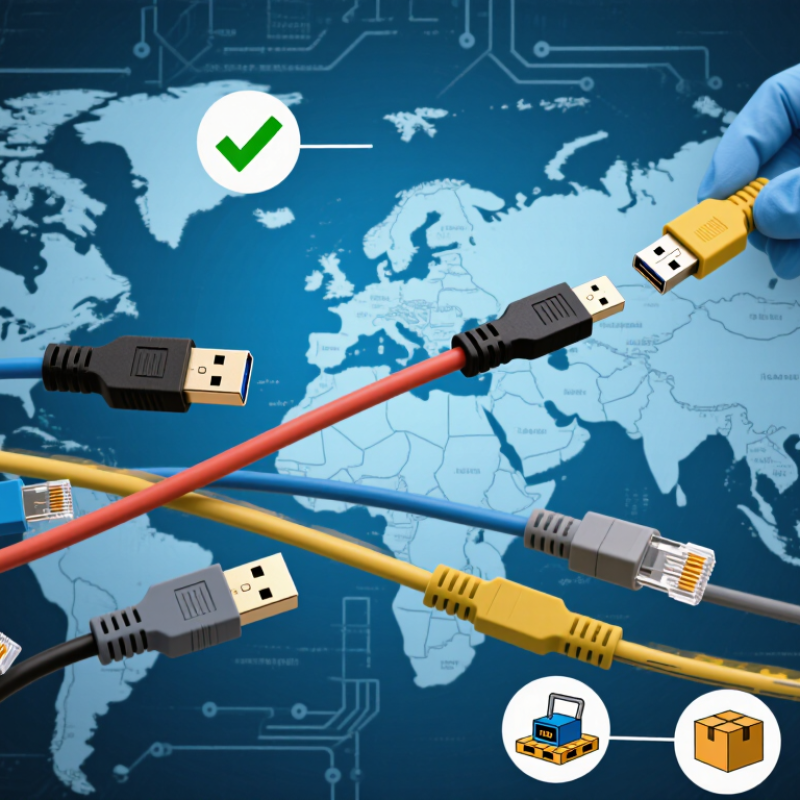
Understanding Cable Connection Types and Standards
7 Cable Connection Tips for Global Buyers
Understanding Cable Connection Types and Standards
A cable connection must match the equipment, not just look compatible. Check connector shape, pin count, keying, and pinout against the device documentation. A plug may fit while its wiring does not. Confirm polarity and signal assignments before ordering, especially when two similar connector versions exist. Small details matter.
Choose the termination method for the installation. Crimp contacts suit many production applications, while screw terminals can simplify field replacement. Soldering may work well, but it requires controlled technique and strain relief. Check conductor size, current, voltage, temperature range, and shielding needs. A connection that passes a quick bench test may still loosen under vibration.
Standards help buyers compare products, but one marking rarely answers every question. Confirm which IEC or UL requirements apply to the cable assembly and intended equipment, then request the relevant test reports. For outdoor or washdown use, verify the stated IP rating for the complete mated connection. Ask for samples and inspect fit, labeling, and cable flexibility. It is easy to assume a familiar standard is enough; that assumption deserves another look.
7 Cable Connection Tips for Global Buyers - Understanding Cable Connection Types and Standards
| Tip | Connection Type | Common Applications | Relevant Standard or Reference | What Buyers Should Check |
|---|---|---|---|---|
| 1. Match the terminal to the conductor | Screw or screwless terminal connection | Control panels, equipment terminals, and low-voltage wiring | IEC 60999-1 covers safety requirements for certain screw-type and screwless clamping units for electrical copper conductors. | Confirm conductor material, cross-section, strand class, terminal range, and the specified tightening torque. Use ferrules only where permitted by the terminal instructions. |
| 2. Specify the correct crimp tooling | Crimped contact or terminal | Wire harnesses, control wiring, and equipment connections | IEC 60352-2 addresses solderless crimped connections, including requirements and test methods. | Match the contact to the wire size and conductor type. Confirm the crimp profile, die, tool calibration, strip length, and inspection requirements. |
| 3. Verify lug compatibility and installation | Compression or mechanical cable lug | Power cable terminations and electrical distribution assemblies | IEC 61238-1-1 applies to compression and mechanical connectors for power cables with rated voltages up to 1 kV (Um = 1.2 kV). | Check conductor material and size, lug barrel dimensions, compatible tooling, number and position of compressions, and whether the connector is rated for the intended application. |
| 4. Confirm plug, socket, and supply compatibility | Industrial plug-and-socket connection | Industrial equipment, temporary power, and site installations | IEC 60309-1 gives general requirements; IEC 60309-2 covers dimensional interchangeability requirements for pin-and-contact-tube accessories. | Compare rated voltage and current, pole count, earthing arrangement, frequency, clock position, and the destination country's supply system. |
| 5. Check the complete M12 interface | M12 circular connector | Sensors, actuators, and industrial data or control links | IEC 61076-2-101 specifies details for M12 circular connectors with screw-locking. | Match coding, pin assignment, number of contacts, cable construction, and connector gender. Check the required ingress-protection rating for the assembled connection, not just the component. |
| 6. Match coaxial impedance end to end | RF coaxial connector | Radio-frequency, antenna, and test-equipment connections | The IEC 61169 series provides specifications for radio-frequency coaxial connectors. | Confirm the connector interface, cable dimensions, operating frequency, and system impedance. Common systems use 50 ohms or 75 ohms; avoid impedance mismatches. |
| 7. Specify fiber type and connector interface | Fiber-optic connector | Data networks, telecom links, and optical equipment | The IEC 61754 series specifies fiber-optic connector interfaces, including interfaces for common connector formats. | Confirm single-mode or multimode fiber, connector format, end-face polish, mating compatibility, and expected insertion-loss and return-loss performance. |
Standards and regulatory requirements vary by application and destination market. Verify the applicable edition, local requirements, and product documentation before purchasing.
Related Posts
-
How to Find the Best Cable Connections in China?
-
Why Choose Wire Harness Solutions for Global Buyers?
-
2026 Best Harness Wire Types for Global Buyers?
-

2025 Guide: How to Optimize Wire Harness Assembly for Maximum Efficiency
-
How to Choose the Right Assembly Wire for Your Specific Project Needs
-
7 Wire Assembly Tips for Choosing the Right Supplier