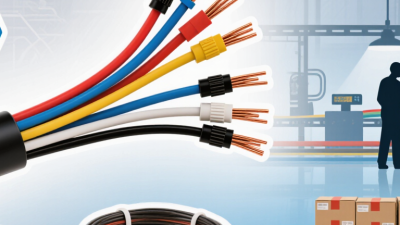
Choosing harness solutions for international projects is not just a price comparison. Buyers must match each assembly to its operating environment, production volume, and service life. A compact automotive harness may need to withstand heat, vibration, and repeated movement. An industrial control harness may instead prioritize clear labeling, dependable connections, and straightforward maintenance. Small details matter.
Market data shows why supplier evaluation deserves care. Fortune Business Insights estimated the global automotive wiring harness market at USD 48.09 billion in 2023, with growth projected through 2032. The International Energy Agency’s Global EV Outlook 2025 reported that electric car sales exceeded 17 million in 2024, representing more than one-fifth of new car sales worldwide. These figures point to expanding demand and changing vehicle designs. They do not, by themselves, prove that any one supplier is the right choice.
This guide compares 10 harness solutions for global buyers, focusing on practical selection factors: application experience, customization, material traceability, testing, delivery capacity, and technical support. Buyers should verify claims against drawings, sample builds, inspection records, and clear acceptance criteria. Ask how a supplier handles revisions and production issues, too. A polished catalog can hide gaps. And no checklist replaces a careful review of the actual application. Market forecasts also vary by scope and methodology, so treat them as context—not a purchasing guarantee.
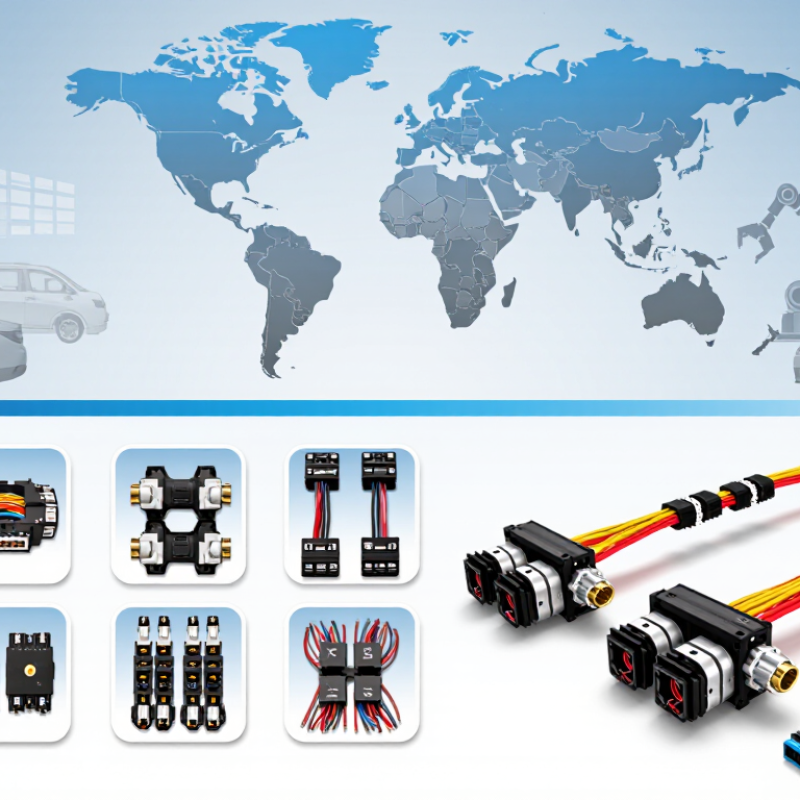
A harness solution is an organized assembly of wires or cables, connectors, terminals, and protective materials designed to carry power or signals within equipment. Rather than routing loose wires one by one, a harness groups them into a defined path. It may include labels, clips, sleeves, or sealed connectors to support installation and maintenance. The exact design depends on the equipment, operating conditions, and connection points.
Buyers can classify harnesses by function, such as power distribution, signal transmission, or combined power and data. Construction offers another useful distinction: a simple point-to-point cable assembly differs from a branched harness with multiple connectors and mounting features. Environmental requirements also shape the category. A harness near heat, vibration, moisture, or abrasion may need different insulation and protection than one inside a sheltered control cabinet. Small details matter.
For a practical comparison, review conductor size, circuit count, connector type, length, branch locations, and expected temperature range. A drawing or sample can help clarify these details, but it should match the final installation. Specifications are sometimes incomplete. That is worth questioning. Terms such as “heavy-duty” or “custom” do not define measurable performance, so buyers should request clear test criteria and confirm that the proposed assembly fits the actual equipment.
When comparing harness solutions, begin with the actual operating conditions, not a polished catalogue image. Define voltage, current, temperature range, vibration exposure, routing space, and expected service life. A harness designed for a dry indoor cabinet may fail in a damp, vibrating vehicle bay. Details matter.
Ask suppliers how they control materials, crimping, assembly, and inspection. Request sample records, test results, and traceability from incoming wire to finished assembly. Check connector fit and cable length against your drawings; even a few millimetres can complicate installation. Ask how design changes are reviewed and communicated across production sites. Clear answers are useful. Vague assurances are not.
Evaluate delivery capability alongside technical quality. Confirm production capacity, lead times, packaging, and support for resolving defects. A low quotation can hide costly rework or inconsistent batches. It is also sensible to compare samples under realistic conditions, rather than relying only on a checklist. No scorecard is perfect. I have seen a neat sample create false confidence when production controls were unclear. Keep records of decisions, then revisit them after pilot builds and early field feedback.
A practical comparison of common wire-harness solution types. The ranking reflects broad procurement versatility; the best choice depends on the equipment, destination market, and applicable product requirements.
| Rank | Harness Solution | Typical Applications | Key Design Priorities | Relevant Standards or References to Discuss | Global Buyer Evaluation Criteria | Best Fit |
|---|---|---|---|---|---|---|
| 1 | Industrial Automation Harness | Machine tools, control cabinets, robotics, production lines, and factory equipment | Clear circuit identification, abrasion protection, dependable connectors, bend-life suitability, and separation of power and signal circuits | IEC 60204-1 for electrical equipment of machinery; IPC/WHMA-A-620 for cable and wire-harness workmanship criteria | Check drawings and revision control, continuity and insulation testing, connector sourcing, labeling language, and capacity for repeat orders | Manufacturers seeking a flexible harness for varied machinery and automation projects |
| 2 | Low-Voltage Automotive Harness | Passenger vehicles, commercial vehicles, body electronics, lighting, and interior systems | Resistance to vibration, heat, fluids, moisture, and routing-related wear; robust terminals and secure retention | ISO 6722 or ISO 19642 cable requirements, as applicable; SAE J1128 is a commonly referenced low-voltage automotive cable standard | Evaluate vehicle-program traceability, change management, crimp-process controls, environmental validation, and delivery continuity | High-volume vehicle programs with established drawings and validation plans |
| 3 | Electric-Vehicle High-Voltage Harness | Battery packs, traction inverters, electric compressors, charging systems, and high-voltage distribution | Voltage-rated insulation, touch protection, mechanical protection, secure interconnection, and clear high-voltage identification | ISO 19642 for road-vehicle cables and ISO 6469-3 for electric-vehicle electrical safety are relevant references; applicability depends on the design and market | Confirm voltage and current ratings, temperature rise, shielding and grounding strategy, connector interlocks where required, and test documentation | EV projects that need purpose-designed high-voltage routing and documented validation |
| 4 | Renewable-Energy Harness | Solar inverters, battery storage, wind-turbine auxiliaries, and energy-management equipment | Outdoor weathering resistance, UV and moisture suitability, electrical protection, strain relief, and maintainable routing | IEC 62930 and EN 50618 address photovoltaic cables; UL 4703 is a photovoltaic-wire reference in North America. These do not alone establish complete harness compliance | Check installation environment, cable and connector compatibility, regional approvals, labeling, and long-term replacement availability | Energy installations exposed to outdoor conditions or requiring serviceable connections |
| 5 | Marine and Shipboard Harness | Vessel control systems, navigation equipment, lighting, engine auxiliaries, and onboard power systems | Resistance to moisture, salt atmosphere, vibration, oil, and installation constraints; fire-performance needs must be defined by vessel and location | IEC 60092 series for electrical installations in ships; additional flag, class, and vessel-specific rules may apply | Confirm vessel classification requirements, cable fire properties, enclosure and ingress protection needs, documentation, and inspection records | Marine equipment suppliers and shipbuilders with defined vessel-rule requirements |
| 6 | Off-Highway and Agricultural Harness | Construction equipment, tractors, mining machinery, and material-handling vehicles | Protection against shock, abrasion, dust, water, oil, temperature changes, and repeated movement | ISO 16750 series for environmental conditions and testing of road-vehicle electrical and electronic equipment may be a useful reference; application-specific requirements should be agreed | Assess sealing strategy, connector locking, vibration test plans, field repairability, and availability of replacement components | Equipment operating in harsh, exposed, or mobile working environments |
| 7 | Appliance and Consumer-Equipment Harness | Household appliances, commercial kitchen equipment, HVAC units, and consumer electronics | Compact routing, insulation appropriate to operating conditions, secure terminations, and protection from heat or moving parts | IEC 60335 series for household and similar electrical appliances; IEC 60227 and IEC 60245 cover certain insulated cable types | Verify the finished product’s certification pathway, component approvals, temperature limits, assembly consistency, and cost at target volume | High-volume products with stable designs and cost-sensitive assembly requirements |
| 8 | Telecommunications and Data-Center Harness | Server racks, network equipment, storage systems, and communications infrastructure | Correct conductor size, polarity control, manageable routing, dependable contact performance, and separation of power and data where needed | IEC 60228 for conductor classes and IEC 62368-1 for safety of audio/video, information, and communication technology equipment are relevant references; requirements depend on the assembly | Review connector compatibility, power and signal requirements, identification, rack-service access, and repeatable test results | Infrastructure projects requiring organized, serviceable interconnects at scale |
| 9 | Aerospace and Avionics Harness | Aircraft instrumentation, cabin systems, avionics, and aerospace ground-support equipment | Weight control, controlled routing, traceable materials, workmanship consistency, and qualification to the applicable program specification | IPC/WHMA-A-620 provides workmanship criteria; aerospace programs may specify additional requirements, such as SAE AS50881, and customer-specific qualification | Require full material traceability, approved-process controls, documented inspections, configuration management, and program-specific acceptance criteria | Low-volume, high-documentation projects with strict configuration and quality controls |
| 10 | Medical-Equipment Harness | Diagnostic devices, patient-monitoring equipment, laboratory instruments, and medical carts | Reliable connections, controlled assembly, suitable insulation, cleanability where needed, and clear separation of circuits as specified by the device design | IEC 60601-1 addresses basic safety and essential performance of medical electrical equipment; it is not a standalone harness standard | Confirm the device manufacturer’s risk controls, supplier qualification, traceability, change notification, and testing required by the finished product | Medical-device programs requiring disciplined supplier and configuration management |
Note: Standards listed are evaluation references, not a claim that every harness in a category complies with them. Buyers should confirm the applicable edition, destination-market rules, end-product requirements, and acceptance tests with the design authority.
Different applications need different harness designs. Automotive harnesses route power and signals through tight body cavities. Electric-vehicle harnesses need suitable insulation, shielding, and separation between high- and low-voltage circuits. Industrial harnesses face oil and abrasion, while robotic harnesses must flex repeatedly. Aerospace designs prioritize low weight and traceable assembly. Marine harnesses resist moisture and salt. Medical-device harnesses support stable signals and cleanable surfaces. Telecom harnesses organize dense data links. Renewable-energy harnesses connect panels, inverters, and storage. Appliance harnesses manage heat and vibration. Ten applications, ten different priorities.
The International Energy Agency’s Global EV Outlook 2024 reports nearly 14 million electric cars sold in 2023, about 18% of global car sales. This scale makes voltage ratings, connector access, and service planning practical design concerns. The International Federation of Robotics’ World Robotics 2024 reports 4,281,585 industrial robots operating in factories in 2023. For robotic harnesses, bend radius and cycle testing matter as much as conductor selection.
Buyers should match wire, terminals, jackets, and protection to the actual installation environment. A harness that passes a bench test may still fail after repeated movement or exposure to heat. That gap is easy to underestimate. Review drawings, test samples, and confirm inspection criteria before production. Even a tidy specification can miss a routing detail; a small pilot run often reveals it.
Representative nominal DC system voltages across common harness applications. Values are illustrative reference points, not universal harness ratings; actual designs depend on system requirements and applicable standards.
A harness that works in one market may not fit another team’s equipment or workflow. Buyers should check the relevant performance standards for the intended application, then request current test documents and clear material specifications. Standards matter. So does the actual fit. A buckle that looks compatible in a drawing can sit awkwardly against a thick work jacket.
Customization should solve a defined problem, not add options for their own sake. Useful adjustments may include strap length, connector placement, labeling, or padding for different uniforms. Ask suppliers to explain how each change affects inspection, replacement, and repeat orders. Small differences can become costly across a large shipment. No specification is perfect on its own, so allow time to review samples with the people who will wear and maintain the harness.
Tips: Compare connector shape and adjustment range against existing gear. Test samples while standing, bending, and reaching. Record measurements and feedback before approving a bulk order. Compatibility is often overlooked until delivery. Check it early.
Sourcing, Quality Control, and Supplier Selection
Global harness sourcing depends on clear specifications and verifiable process controls. Treat each harness as a controlled assembly, not a commodity line item. The World Bank’s 2023 Logistics Performance Index assessed 139 economies across six dimensions, including tracking and timeliness. Use it to screen logistics environments, not to judge an individual supplier. Ask shortlisted suppliers for current process-flow diagrams, equipment lists, and sample inspection records.
A strong RFQ should identify drawing revisions, wire gauges, terminal specifications, crimp-height limits, and acceptance criteria. During audits, observe actual production: check calibration labels, lot traceability, and how operators separate approved parts from suspect material. Request first-article samples and review crimp cross-sections and pull-test results against agreed requirements. Confirm how suppliers manage engineering changes and subcontracted processes. A polished audit report is useful, but it cannot replace seeing the work. Small details matter.
Tips: Send identical specifications to every candidate, then compare responses line by line. Ask for evidence, not just “yes” answers. Set a pilot run before scaling orders, and track defects, delivery consistency, and corrective-action response time. No checklist catches every weakness; document what remains uncertain and revisit it after the first production lot.
Phone: (256) 845-1255 or (256) 845-4493
Fax: (256) 845-1321 or (256) 845-4468
© 2025 Heritage Wire Harness, LLC