Choosing among China’s top 10 wire cutting machine manufacturers requires more than comparing prices. Industrial buyers need dependable accuracy, service support, and clear technical documentation. This guide introduces leading Chinese manufacturers involved in wire cutting, wire EDM, and related precision equipment. It focuses on practical purchasing evidence rather than promotional claims.
In practice, a machine’s performance appears on the workshop floor. Check cutting tolerance, surface finish, wire consumption, control-system stability, and continuous operating capacity. A useful evaluation also examines spindle quality, cooling systems, automation options, and replacement-part availability. Factory experience matters. So does after-sales response.
The strongest manufacturers usually provide application testing, installation guidance, operator training, and documented inspection procedures. Buyers should request sample workpieces, maintenance records, certificates, and references from comparable industries. Export experience can also reveal how well a supplier manages packaging, installation, and communication.
No ranking is permanently correct. A supplier may excel at small precision components but perform poorly on large industrial frames. That difference matters. Some product pages also sound impressive while hiding limitations. Careful verification remains essential. This overview therefore considers manufacturing capability, product range, quality control, customization, customer feedback, and long-term support. It is a starting point, not a final purchasing decision. Every shortlisted company deserves direct technical questions and independent review.
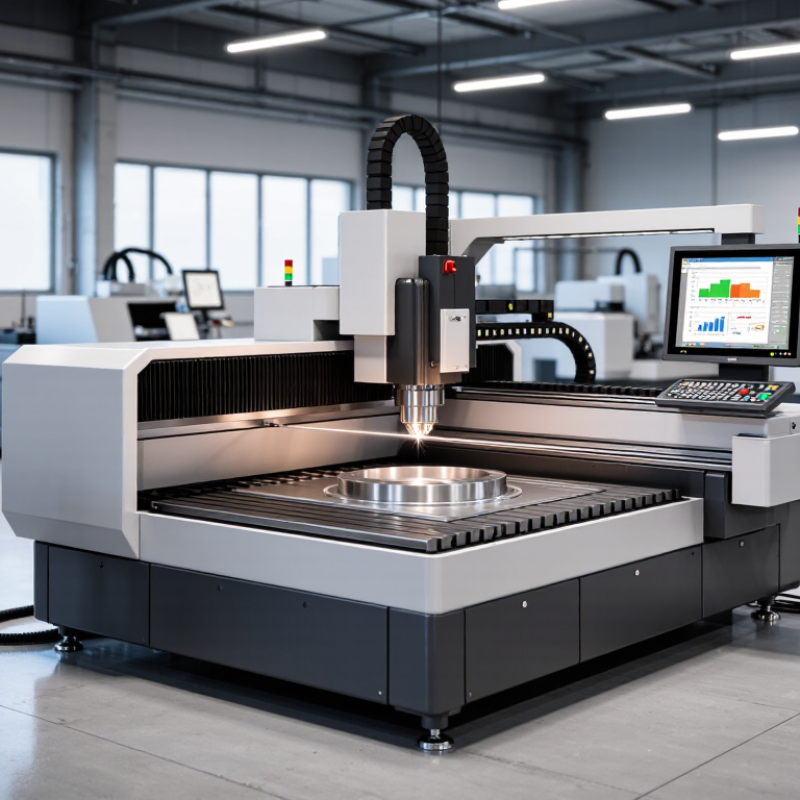
A wire cutting machine uses a thin moving wire to shape hard materials with high precision. In many industrial workshops, this means wire electrical discharge machining, or wire EDM. The wire does not press against the workpiece. Instead, controlled electrical pulses create tiny sparks between the wire and conductive material.
The machine guides the wire through the programmed path. Deionized water surrounds the cutting zone and carries away heat and eroded particles. A CNC system controls movement along several axes, while tension rollers keep the wire straight. The operator sets cutting speed, voltage, pulse duration, and flushing pressure. Small changes matter. Excessive speed can damage the surface, while weak flushing may leave debris in the gap.
From hands-on operation, the first cut is rarely perfect. Material thickness, hardness, and internal stress can affect accuracy. That assumption can be wrong. Skilled technicians inspect the surface, measure the finished profile, and adjust the next pass when needed. Wire EDM is especially useful for intricate slots, narrow corners, and hardened tool steel. However, it cannot cut every material; electrical conductivity is essential. Operators also need guarding, proper grounding, clean dielectric water, and regular filter maintenance. A neglected filter can quietly reduce cutting stability.
Selecting among China’s leading wire cutting machine manufacturers requires more than comparing online rankings. Accuracy comes first. Examine cutting tolerance, wire diameter range, taper capability, table travel, and repeatability. Ask for inspection reports and calibration records. Numbers need evidence. Request test cuts using your actual material, thickness, and design files. A clean sample cut should show stable edges, limited wire marks, and consistent dimensions.
Machine construction also deserves close attention. Inspect the worktable, guide system, servo motors, electrical cabinet, and dielectric filtration unit. Poor filtration can damage cutting stability and increase maintenance costs.
Check control software, remote diagnostics, spare-part availability, and operator training. Shorter delivery promises may hide limited technical support. Review the warranty in writing, including response times and excluded components. Factory audits can reveal assembly quality that product photos cannot show.
Reliable manufacturers should provide traceable quality procedures, documented testing, and relevant safety certifications. Ask how they manage incoming parts and final inspection. Speak with several existing users, preferably in similar industries. Their feedback may reveal downtime, consumable costs, and service delays. A polished showroom can mislead. I would also compare total ownership cost, not only the purchase price. One weakness remains: even strong factory data cannot predict every installation problem. Allow time for local training, power checks, and trial production before full deployment.
China’s Top 10 Wire Cutting Machine Manufacturers
China’s top 10 wire cutting machine manufacturers are best assessed through measurable performance, not advertising claims. A practical shortlist should examine cutting accuracy, surface finish, wire consumption, controller stability, after-sales response, and export experience. These factors separate reliable suppliers from low-cost sellers.
Fortune Business Insights estimated the global electrical discharge machining market at about US$5.1 billion in 2023. Asia-Pacific remains a major production and consumption region. This demand supports China’s strong manufacturing base, especially for precision molds, aerospace parts, medical components, and automotive tooling. However, market size does not prove machine quality. Buyers should request test-cut data, repeatability results, and energy-use records. The “top 10” should therefore mean ten qualified manufacturers, not a fixed ranking. That distinction matters.
Tips: Ask each supplier to cut your material sample. Check a 50-hour endurance test, ±0.005 mm positioning claims, filter replacement costs, and remote service coverage. Confirm whether spare parts are locally available. Cheap machines can become expensive during downtime. I learned that brochure accuracy often looks better than workshop accuracy. A factory visit, when possible, reveals cable routing, cleanliness, operator training, and actual inspection habits. These details are easy to miss.
| No. | Manufacturer Profile | Primary Machine Type | Typical Axis Configuration | Common Wire Diameter | Typical Taper Capacity | Positioning Accuracy | Typical Applications | Common Quality Focus |
|---|---|---|---|---|---|---|---|---|
| 1 | CNC Wire EDM Specialist | High-precision CNC wire EDM | 3-axis or 4-axis | 0.10–0.30 mm | ±15° to ±30° | ±0.005–0.010 mm | Precision dies, punches, mold components | Servo control, surface finish, repeatability |
| 2 | Large-Format Cutting Equipment Builder | Large-travel wire EDM | 3-axis or 5-axis | 0.15–0.30 mm | ±15° to ±25° | ±0.010–0.020 mm | Large stamping dies, aerospace parts, structural components | Rigid frame, thermal stability, long-travel accuracy |
| 3 | High-Speed Production Machine Builder | High-speed wire-cut EDM | 3-axis | 0.12–0.25 mm | Typically up to ±15° | ±0.010–0.020 mm | General tooling, small-batch production, repair work | Cutting speed, automation, low operating cost |
| 4 | Fine-Finish EDM Equipment Builder | Multi-pass precision wire EDM | 4-axis | 0.05–0.20 mm | ±10° to ±30° | ±0.003–0.010 mm | Micro-components, carbide tooling, precision inserts | Low roughness, fine corner accuracy, dielectric filtration |
| 5 | Economical Entry-Level Machine Builder | Basic CNC wire EDM | 3-axis | 0.15–0.30 mm | Typically up to ±15° | ±0.015–0.030 mm | Education, maintenance, general workshop tooling | Simple operation, maintainability, initial purchase cost |
| 6 | Automation-Oriented System Integrator | Wire EDM with robotic loading | 3-axis or 4-axis | 0.10–0.30 mm | ±15° to ±30° | ±0.008–0.020 mm | Unattended production, repeated die components, job shops | Automatic threading, wire re-use, remote monitoring |
| 7 | Mold and Die Industry Specialist | Precision wire EDM for tooling | 4-axis or 5-axis | 0.10–0.25 mm | ±15° to ±30° | ±0.005–0.015 mm | Plastic molds, progressive dies, extrusion tooling | Corner control, taper precision, stable multi-pass cutting |
| 8 | Submerged-Cutting Machine Builder | Fully submerged wire EDM | 3-axis or 4-axis | 0.10–0.30 mm | ±15° to ±25° | ±0.008–0.015 mm | Heat-sensitive alloys, precision plates, complex profiles | Temperature control, flushing performance, dimensional stability |
| 9 | Export-Focused Custom Machine Builder | Configurable wire EDM platform | 3-axis to 5-axis | 0.10–0.30 mm | ±15° to ±30° | ±0.008–0.020 mm | Contract manufacturing, replacement equipment, international workshops | CE-oriented design, documentation, spare-parts support |
| 10 | Application-Specific Cutting System Builder | Customized wire-cutting system | Configured to application | 0.05–0.30 mm | Application-dependent | ±0.005–0.030 mm | Medical parts, electronics tooling, specialty alloys | Process customization, validation, inspection capability |
China’s leading wire cutting machine manufacturers differ in product range, control systems, and service depth. The strongest suppliers usually provide CNC wire EDM, high-speed cutting, precision slow-wire systems, and multi-cut solutions. Some models handle simple steel plates. Others process carbide, hardened tool steel, and complex alloy components. Machine sizes range from compact workshop units to large systems for automotive tooling.
Technology is often the clearest separator. Advanced machines may include automatic wire threading, adaptive power control, closed-loop positioning, and intelligent flushing. A practical system can maintain stable cutting when debris builds inside a narrow slot. Multi-axis interpolation supports tapered profiles and intricate punches. Fine surface finishing is useful for molds, medical components, and precision fixtures. However, impressive specifications do not always guarantee consistent results.
Industry applications remain broad. Toolmakers use wire EDM for dies, punches, inserts, and small production batches. Aerospace workshops require accurate profiles in heat-resistant materials. Electronics manufacturers often need narrow kerfs and clean edges. General engineering plants may prefer faster cutting and easier maintenance. Buyers should inspect sample parts, electrode wire consumption, software usability, and local technical support. I would also verify repeatability over several shifts, not one demonstration. A polished showroom result can hide training gaps, delayed spare parts, or unstable process settings.
Choosing the right Chinese wire cutting machine manufacturer requires more than comparing online prices. Start with your material, wire diameter, cutting length, required tolerance, and daily production volume. A supplier should explain these limits clearly, not promise that one machine fits every job.
Request a live cutting test with your own wire samples. Watch the cutting edge, feeding stability, noise, and waste rate. Ask for measured results, not only catalog figures. Visit the factory when possible, or request detailed videos of assembly, electrical testing, and final inspection. Check whether key components are traceable and whether the control system supports your operators’ language and workflow. Small details matter.
After-sales support often decides the real cost. Confirm installation training, response time, spare-part availability, warranty coverage, and remote troubleshooting procedures. Ask for references from similar manufacturers using comparable wire materials. A low quotation may exclude tooling, shipping, training, or maintenance. Read every line.
A polished showroom is not proof of reliable production. No checklist is perfect. Some buyers focus too heavily on speed and overlook repeatability after six months. Request a sample acceptance standard, service contact, and written delivery schedule before ordering. The strongest manufacturer is usually the one that admits technical limits and offers a practical adjustment plan.
The chart presents a practical purchasing framework for comparing wire cutting machine manufacturers. Cutting accuracy and repeatability are prioritized because they directly affect product quality, followed by cutting speed, automation capability, after-sales service, and total ownership cost.
Phone: (256) 845-1255 or (256) 845-4493
Fax: (256) 845-1321 or (256) 845-4468
© 2025 Heritage Wire Harness, LLC